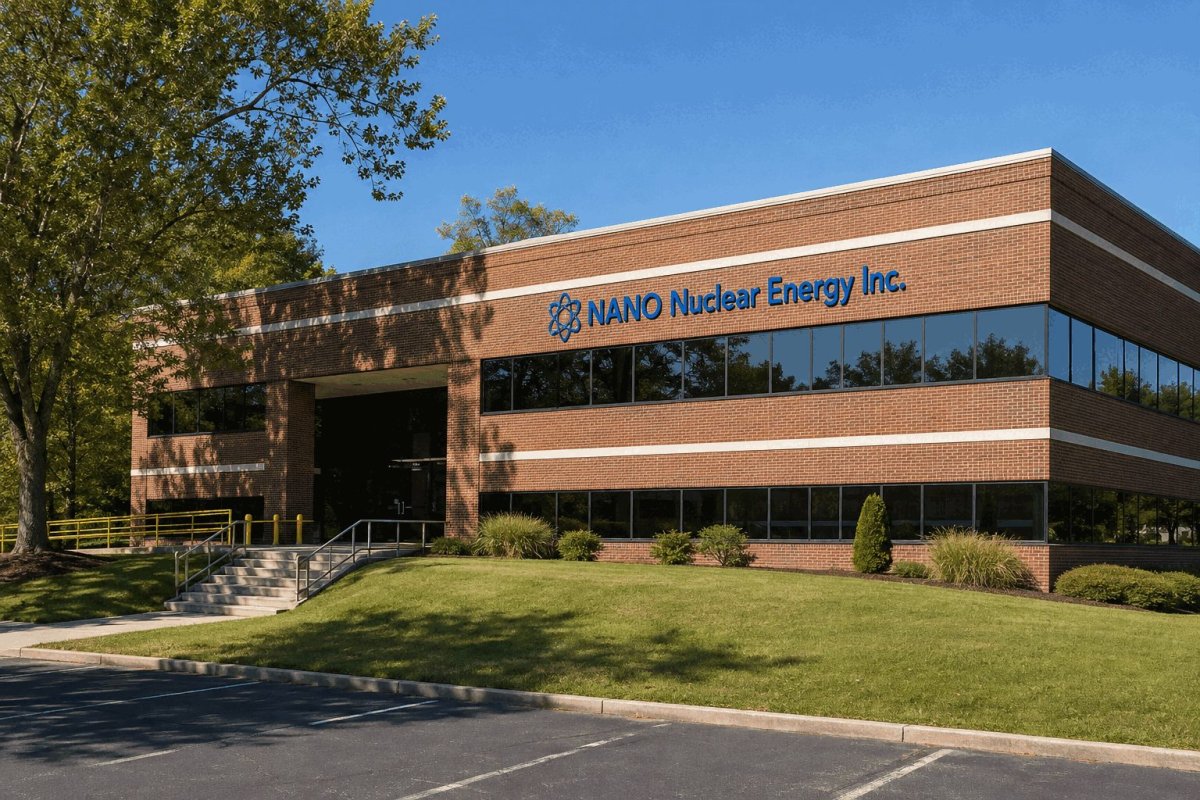
NANO Nuclear Energy Inc. (NASDAQ:NNE) saw its shares decline 5.9% on Thursday, closing at $18.02, as the advanced nuclear reactor sector experienced a broad pullback. The stock now sits approximately 70% below its 52-week high of $60.87, reflecting a significant de-rating from earlier optimism.
The selloff has brought the company's valuation into sharper focus. As of June 30, NANO held approximately $580 million in cash, cash equivalents, and short-term investments. That liquidity buffer represents roughly 60% of the company's implied market capitalization of $968 million, which is based on 53.7 million shares outstanding. Excluding the cash reserve, the market values NANO's operating and development assets at about $388 million.
This cash-heavy balance sheet is primarily the result of financing activities. In the first nine fiscal months, the company raised $411.5 million through financing, with a $378.5 million private placement accounting for the bulk of that amount. Operational cash burn during the same period was $18.7 million, indicating that the company is still in its early commercialization phase.
Revenue, however, remains minimal relative to the balance sheet. In the fiscal third quarter, NANO reported revenue of just $214,040, which annualizes to approximately $856,000. This implies that the post-cash enterprise value of $388 million is nearly 453 times annualized revenue—a staggering multiple that underscores the market's expectations for future growth.
NANO is not entirely pre-revenue anymore. The acquisition of STS Nuclear, which posted audited revenue of $7.1 million and net income of $1.3 million for 2025, provides some revenue base. Including this acquisition, the post-cash valuation is roughly 55 times sales, still a lofty figure but more grounded than the 453x multiple based on organic revenue.
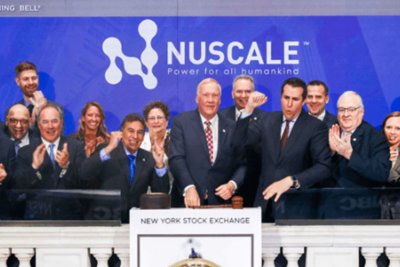
The broader advanced reactor sector also faced downward pressure on Thursday. Oklo Inc. (NYSE:OKLO) fell 4.2% to $41.15, while NuScale Power Corporation (NYSE:SMR) declined 4.3% to $8.89. Despite NANO holding a higher percentage of cash relative to its market cap, it suffered a steeper percentage loss, suggesting investor concerns beyond just valuation.
Short sellers have been active in this space. According to the Financial Times, short sellers have realized approximately $2.1 billion in profits over the past year by targeting NANO, Oklo, and NuScale. The combined market capitalization of these three companies has dropped by roughly $30.3 billion from their respective peaks, reflecting a broader reassessment of the timeline for commercial cash flows.
On Tuesday, NANO announced a nonbinding memorandum of understanding with Quadrant Nuclear Industries to explore long-term agreements for high-assay low-enriched uranium (HALEU) procurement. Quadrant's proposed Idaho facility would target an annual production capacity of 18 metric tons. CEO James Walker emphasized that "access to reliable, domestically produced HALEU will be a key element" for advanced nuclear development, though he noted there is no certainty a binding deal will be reached.
The fuel supply gap is significant. U.S. demand for HALEU could reach 50 metric tons annually by 2035, while current domestic production is only about one metric ton. This highlights the strategic importance of securing supply, but the nonbinding nature of the MOU means it does not guarantee volume or price.
Analyst sentiment remains cautiously optimistic. Of six recent recommendations, four are Buy ratings and two are Holds, with a consensus price target of $41.75—implying about 132% upside from the current price. However, these targets rely on anticipated progress in licensing and fuel agreements that have yet to materialize in the financials.
Key execution milestones include the KRONOS construction permit application, with an environmental assessment targeted for Q1 2027, and a safety review anticipated in Q3 2027. The company also faces risks from licensing delays, fuel shortages, and potential dilution from additional share issuances.
Investors will be watching Friday's session to see if the $18 level holds as support. A tangible fuel agreement or licensing advancement would carry more weight than another memorandum. For now, the $388 million post-cash valuation remains an execution risk.