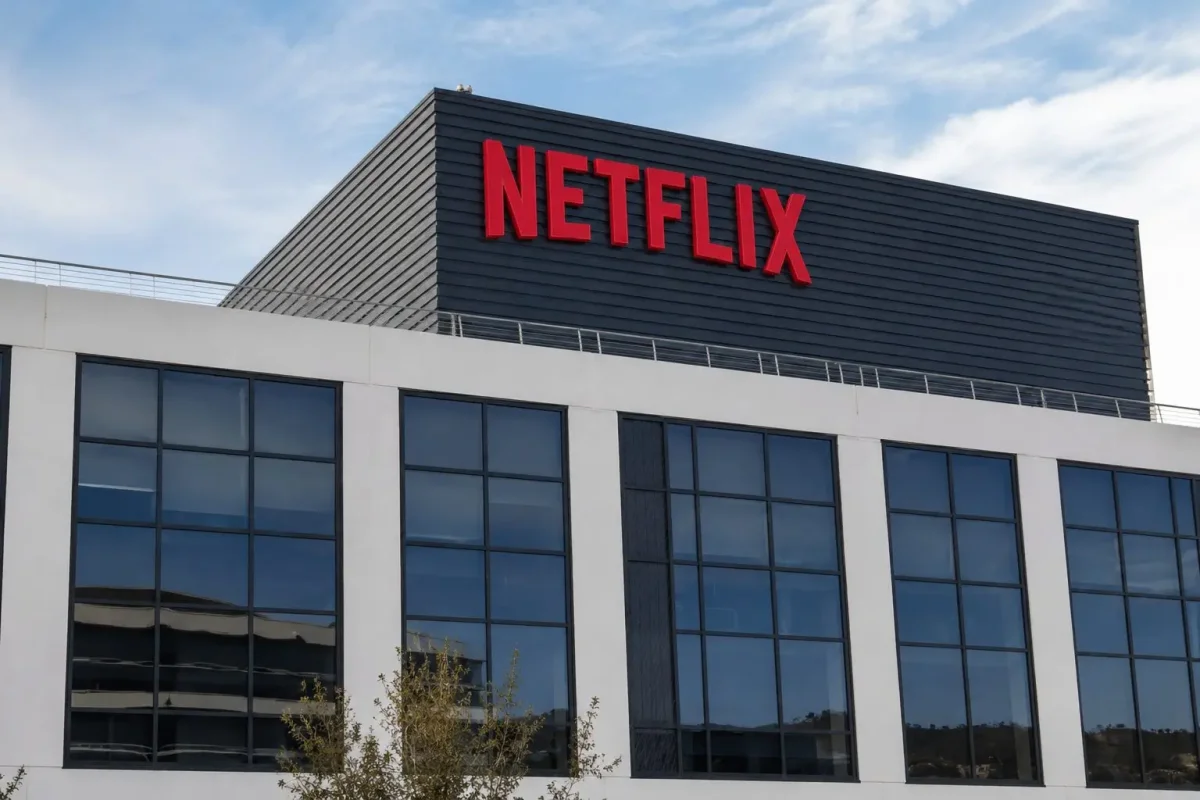
Netflix (NFLX) shares inched up 0.9% to $82.13 on Wednesday, shrugging off a price target reduction from Jefferies analyst James Heaney. The move underscores the stock's current dilemma: the company continues to show solid financial performance, but investors are searching for the next catalyst to drive a sustained rally.
Heaney lowered his price target to $110 from $128 while maintaining a buy rating, citing a "light catalyst path" for Netflix. He also flagged rising competition from short-form video platforms and lingering investor concerns about the impact of artificial intelligence on the entertainment industry. Despite the cut, the stock avoided a sell-off, with volume exceeding 26 million shares.
Financial Fundamentals Remain Strong
Netflix's first-quarter results paint a picture of a company that is executing well. Revenue rose 16% year-over-year to $12.25 billion, while operating income reached approximately $4.0 billion. Diluted earnings per share hit $1.23, benefiting from a $2.8 billion termination fee from the Warner Bros. deal. The company reaffirmed its full-year revenue guidance of $50.7 billion to $51.7 billion, representing 12% to 14% growth, and reiterated its goal of roughly doubling ad revenue while maintaining an operating margin target of 31.5%.
Operating margin remains a key pillar of the Netflix bull case. The company has demonstrated an ability to grow profitably, even as it invests in new content and market expansion. However, the stock's recent decline has left many wondering what will drive the next leg higher.
Asia-Pacific Mobile Push Takes Center Stage
At its APAC Product Innovation Showcase on Wednesday, Netflix announced a revamped mobile app coming to South Korea and Japan in July. The update introduces "Clips," a personalized vertical video feed for quick viewing, along with themed clip bundles and additional games for children. This follows earlier launches in Australia, New Zealand, the Philippines, India, and Malaysia.
The Asia-Pacific region is becoming an increasingly important growth driver. First-quarter revenue from the region reached $1.51 billion, a 20% year-over-year increase, outpacing the 14% growth seen in the UCAN segment. The new mobile features are designed to capture user attention on smartphones, where short-form content has trained consumers to scroll quickly. "Innovation has to play a very important role at a company bringing beloved entertainment to nearly a billion people around the world," said Chief Product and Technology Officer Elizabeth Stone.
Leadership Changes and Competitive Landscape
Last week, Netflix named Jay Hoag as chairman, replacing co-founder Reed Hastings, who departed the board. Hoag, a board member since 1999, had served as lead independent director for over a decade. The leadership transition comes as Netflix faces intensifying competition from YouTube, Amazon Prime Video, and a host of short-form video platforms vying for viewer screen time.
In its shareholder letter, Netflix acknowledged that new features and upgrades may not immediately translate into subscriber gains. The company cited risks including missed subscriber growth, lower viewer engagement, reduced demand for its content, higher production costs, and macroeconomic headwinds. Wall Street is closely monitoring these factors, particularly as rivals continue to gain traction.
Looking ahead, Netflix is pointing to the second quarter as a potential catalyst. The company guides for 13% revenue growth and an operating margin of 32.6%, down from 34.1% in the same period last year. Management noted that content amortization costs will peak in the first half of 2026. The key question for investors is whether the company can lift margins sufficiently in the back half of the year to make Jefferies' $110 target look conservative rather than optimistic.