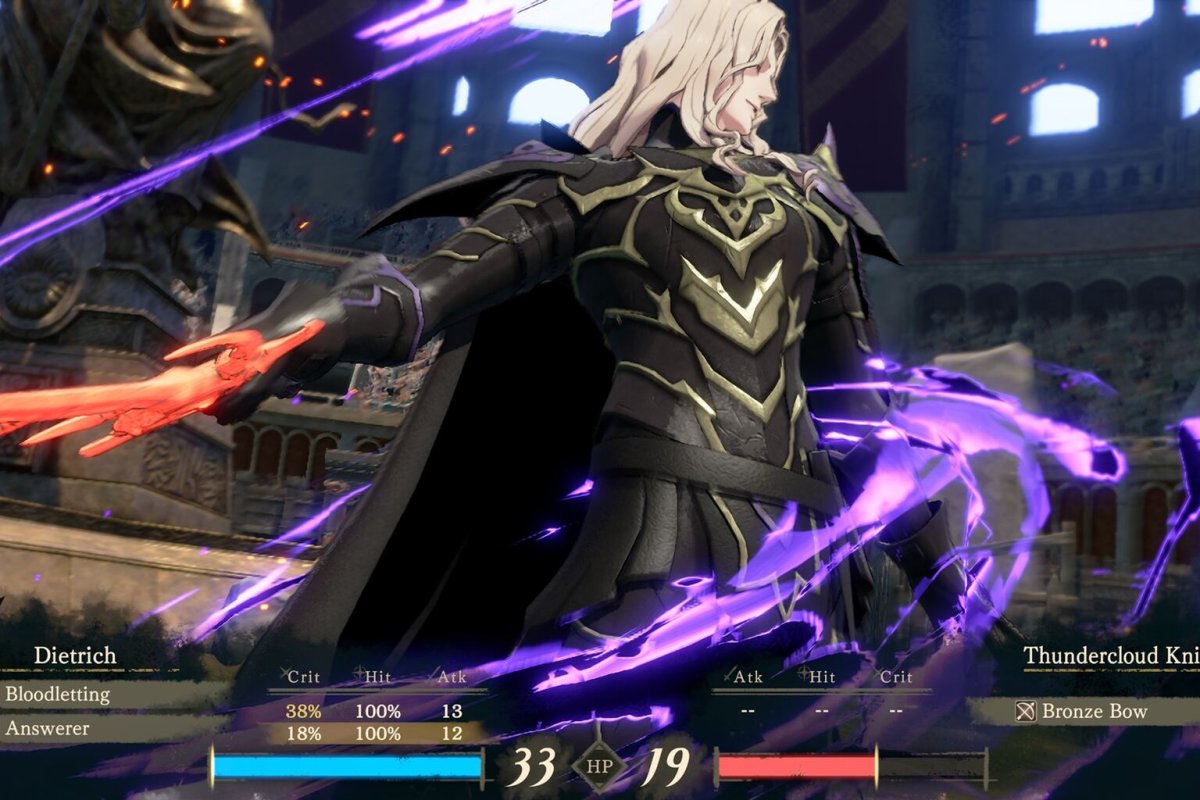
Nintendo is making a bold design decision with its upcoming tactical RPG, Fire Emblem: Fortune's Weave, by consolidating all campaign routes into a single save file. This breaks from the traditional multiple-slot approach that strategy fans have come to expect. The game, priced at $69.99 and exclusive to the Nintendo Switch 2, launches on Thursday, September 17, turning this developer choice into a real-world commercial test almost immediately.
The single-save system is not a simple autosave limitation. In a developer interview released on September 15, director Toshiyuki Kusakihara explained that progress across the four parallel story paths and subsequent playthroughs is designed to converge. Characters can inherit strengths from different runs—for instance, a mage built in one playthrough and a melee-focused warrior in another can combine their abilities. The game records the start of each chapter for every protagonist, allowing players to revisit maps, cutscenes, and battles. Nintendo assures that no content is permanently missable.
This approach makes replaying a core part of the progression system rather than a clean restart. Associate producer Kenta Nakanishi acknowledged in the same interview that some players prefer multiple files, but he argued that separate slots would complicate tracking progress across the four protagonists. The compromise is a chapter archive stored within a single accumulated record.
On the market front, Nintendo shares closed Wednesday in Tokyo at ¥8,126, up 0.1% from the previous close of ¥8,118, based on delayed data at 3:30 p.m. JST on September 16. That muted movement doesn't indicate a market verdict on the game. For investors, the more relevant question is whether an exclusive title with a long replay loop gives the growing Switch 2 user base another reason to purchase and remain active with software.
The official product listing describes a 29.5 GB, single-player tactical RPG published by Nintendo and developed with Intelligent Systems. Four heroes can be advanced in parallel, with distinct exploration and combat systems for each route. The single-save structure connects these routes before the characters unite for the final portion of the story.
The Scale That Matters to Nintendo
As of June 30, Nintendo had sold 23.68 million Switch 2 consoles and 58.17 million Switch 2 software units worldwide, according to its latest platform data. That translates to roughly 2.46 software units per console sold, though these sell-in figures include bundles and should not be interpreted as per-user purchase counts. Fortune's Weave thus enters an installed base that is already substantial, but it must compete for player time and spending against Nintendo's larger franchises.
The gap is evident in Nintendo's title rankings at the same June 30 date. Mario Kart World had sold 15.39 million units, Donkey Kong Bananza 4.78 million, and the Switch 2 edition of Pokémon Legends: Z-A 3.99 million. Fire Emblem is not expected to match the broadest family franchises, so a credible success test is sustained software demand and player engagement rather than a one-week chart position.
Nintendo's May 8 forecast for the fiscal year ending March 2027 calls for ¥2.05 trillion in revenue, down 11.4%, and ¥370 billion in operating profit, up 2.7%. It also assumes roughly ¥100 billion in costs from higher component prices and tariffs. A single role-playing release is unlikely to determine that forecast. Its value lies as one piece of the exclusive-software pipeline that can lift utilization of already-sold hardware, where software economics are not exposed to memory costs in the same way as consoles.
The Risk of a Single Save File
The strongest objection is also the most immediate product risk: one file can feel like lost control to players who want independent campaigns, challenge runs, or a preserved first playthrough. Chapter rollback and repeatable routes address much of that concern, but only if the interface makes accumulated progress easy to understand. Early reviews should reveal whether the system feels liberating or restrictive; subsequent unit disclosures will show whether the replay design helped turn a specialized tactical series into a stronger Switch 2 software contributor.
