NVIDIA Corporation (NASDAQ:NVDA) closed Tuesday's regular session at $217.43, down 1.52%, as investors weighed the upcoming launch of DLSS 5 against broader market pressures. Trading volume reached 106.94 million shares, reflecting heightened activity ahead of the technology's debut in NBA 2K27 on Thursday, September 3, at 21:00 PDT.
The decline came amid a wider tech selloff, with the Nasdaq Composite falling 1.0% as the yield on the 10-year Treasury climbed to 4.79%. Nvidia's stock had been volatile since its earnings report, surging 8.74% in the immediate aftermath before dropping 4.58% the following session. Over the past week, shares are still up 4.29% from the August 24 close, though they remain below the peak close of $227.98.
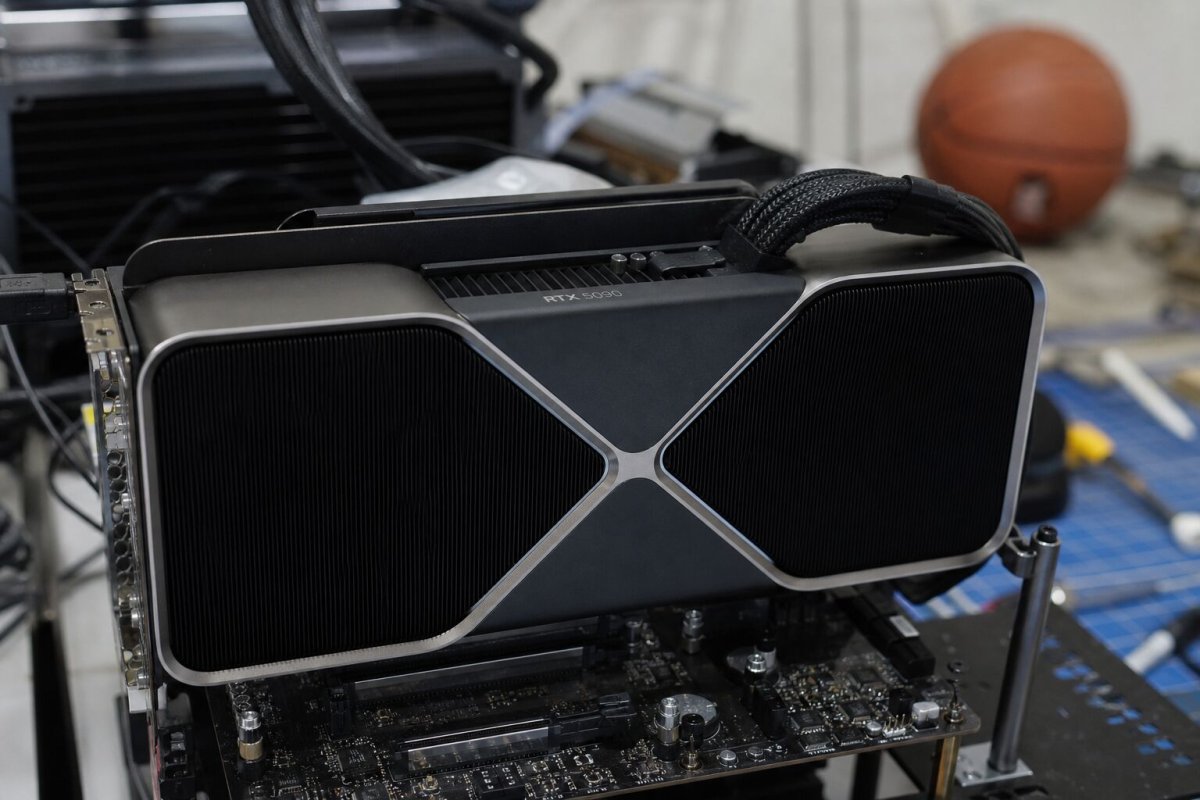
DLSS 5, Nvidia's latest neural-rendering technology, will be available for all RTX 50-series desktop and laptop GPUs, as well as GeForce NOW subscribers. The update promises significant performance improvements, with Nvidia claiming the RTX 5090 can achieve up to 590 frames per second at 1440p resolution with ray tracing and the full DLSS suite enabled. The RTX 5070, the entry-level card in the lineup, is rated at 260 fps under the same conditions.
However, the launch also highlights the relatively small but strategically important role of Nvidia's Edge Computing segment, which generated $7.2 billion in the fiscal second quarter, accounting for just 7.5% of total revenue of $96.221 billion. The segment encompasses PCs, game consoles, workstations, robotics, and other edge applications, but Nvidia has stopped breaking out gaming-specific results, making it harder to gauge DLSS-related sales.
Edge Computing posted a 13% sequential increase and a 27% year-over-year gain, but the segment's contribution remains dwarfed by Data Center, which brought in $89.0 billion, or 92.5% of revenue. Nvidia's overall GAAP gross margin stood at 75.0%, and the company projects fiscal third-quarter revenue of $108 billion, plus or minus 2%, with a gross margin of 74.0%.
The DLSS 5 launch is seen as a test of consumer appetite for RTX 50 upgrades, but analysts caution that a single title provides limited data. Independent testing is not yet available, and Tom's Hardware noted that Nvidia's benchmarks are company-reported and may not reflect real-world performance across a broader range of games. The technology operates locally at resolutions up to 4K and is claimed to be five times faster than the March version, according to Nvidia's research note.
Peter Kavic, senior producer at Visual Concepts, praised the enhancements to materials and lighting as "a real jump to photorealism," but the market's reaction suggests investors are more focused on the broader demand outlook. With rising interest rates pressuring AI valuations and competition from alternative rendering solutions, the success of DLSS 5 may hinge on rapid expansion of supported titles beyond NBA 2K27.
Thursday's driver update will allow reviewers to assess latency, image stability, and frame rates, providing a clearer picture of the technology's real-world impact. For now, the launch serves as a product indicator rather than a fundamental earnings driver, with data-center supply remaining the primary constraint on near-term growth.
Risks remain, including the possibility that DLSS 5 fails to meaningfully boost RTX 50 sales, elevated bond yields, and potential resistance to AI-generated graphics. However, a strong lineup of supported games could reinforce Nvidia's competitive edge in the consumer GPU market. The initial real-world trials are set for Thursday, and the results will likely influence investor sentiment in the coming weeks.