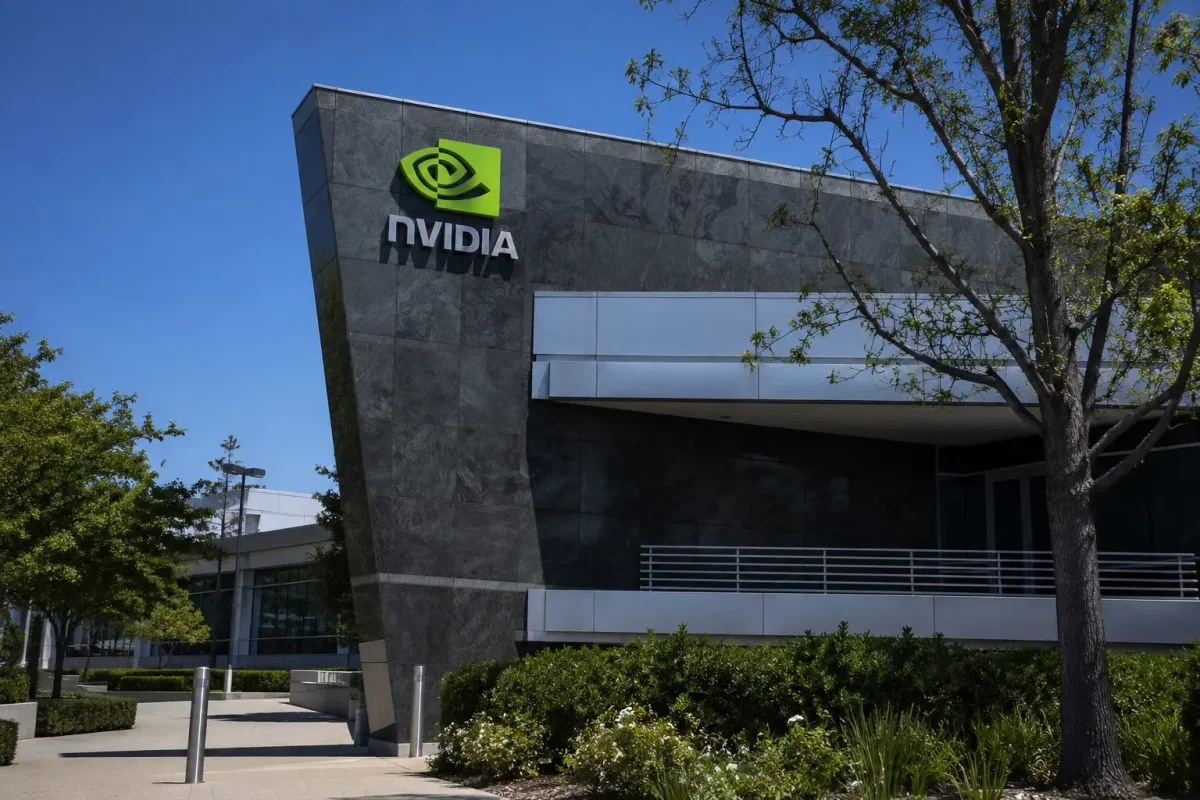
NVIDIA Corporation (NASDAQ:NVDA) experienced a sharp decline in early trading on Wednesday, falling 2.3% to $195.44 as of 9:48 a.m. EDT. The stock slipped back below the $200 threshold after briefly surpassing it on Tuesday, marking a significant reversal that erased roughly $114 billion in market capitalization within the first 30 minutes of trading.
The magnitude of the move was staggering, with NVIDIA's market value swing exceeding the total dollar changes from larger percentage moves in smaller semiconductor stocks over an entire session. The chipmaker's market cap now stands at approximately $4.77 trillion, down from Tuesday's close of $200.09.
NVIDIA's outsized weighting in major exchange-traded funds amplified the impact. The stock accounts for 7.50% of the SPDR S&P 500 ETF Trust (NYSEARCA:SPY) and around 7.60% of the Invesco QQQ Trust (NASDAQ:QQQ). As a result, NVIDIA's early slide immediately dragged down these passive funds, with SPY falling 0.40% and QQQ dropping 1.03%. The chipmaker contributed roughly 0.17 percentage points to SPY's decline and about 0.18 percentage points to QQQ's loss.
The broader semiconductor sector also felt the pressure, with the VanEck Semiconductor ETF (NASDAQ:SMH) declining 2.78% and the iShares Semiconductor ETF (NASDAQ:SOXX) falling 3.22%. Advanced Micro Devices Inc. (NASDAQ:AMD) dropped 3.46%, losing approximately $33 billion in market value. While NVIDIA's percentage decline was smaller than AMD's, its massive market cap meant the dollar impact was far greater.
This decline comes amid a broader shift in the chip rally. Unlike the previous two years, when NVIDIA led the AI-driven surge, 2026 has seen other semiconductor names outperform. Barron's reported that NVIDIA had gained only 7.3% year-to-date through Tuesday, while the PHLX Semiconductor Index surged 101%. The VanEck Semiconductor ETF posted an 82.30% gain through June 30, highlighting the divergence.
The key question for investors is whether AI spending can sustain chip demand. Reuters reported that the five largest hyperscalers are on track to invest nearly $1 trillion in AI capital expenditures this year, with Goldman Sachs projecting total spending could reach $7.6 trillion by 2031. However, the Bank for International Settlements warned in its annual report that weak returns could trigger a sudden pullback in financing, potentially turning the capex boom into a protracted investment bust.
NVIDIA continues to expand its product lineup, with CEO Jensen Huang unveiling the Vera CPU at Computex in Taipei on June 2, describing it as a major new growth driver. Despite this, shares have slipped from their May peak of $236.54, trading about 21% below that level.
U.S. stock markets are open Wednesday, with both Nasdaq and NYSE closing early on Friday, July 3, for Independence Day observance.