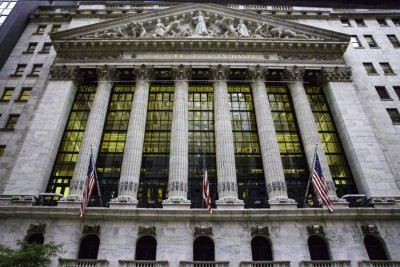
U.S. equities closed lower on Monday, August 31, 2026, as a spike in crude oil prices—triggered by a U.S. military strike on Iranian rocket launchers near the strategic Strait of Hormuz—reignited inflation concerns and weighed on the broader market. The energy sector, however, defied the downtrend, posting solid gains as investors rotated into oil-related names.
The S&P 500 fell 0.44% on the day, with the benchmark hovering near $765.96 on the SPY proxy. The decline was modest in the final hour, with the index easing just 0.04% between 14:00 and 15:00 EDT, suggesting that the market had largely digested the geopolitical news but remained cautious. The Nasdaq-100 showed relative resilience, slipping 0.24%, while the Dow Jones Industrial Average dropped 0.59% and the small-cap Russell 2000 underperformed with a 0.84% decline.
Market breadth was firmly negative, with 345 S&P 500 components closing lower versus 158 advancers, a ratio of 2.18 to 1. This broad-based selling was led by rate-sensitive and cyclical sectors, with utilities, communication services, and industrials each falling at least 1%. In contrast, energy shares surged 1.43%, making it the standout performer of the session.
The oil market reaction was immediate and sharp. West Texas Intermediate crude climbed approximately 2.5% to $85.51 per barrel, while Brent crude advanced a similar margin to $90.34. The move followed the U.S. strike near a waterway that handles a significant portion of global oil shipments, heightening supply risk concerns.
Energy giants benefited directly from the crude rally. Exxon Mobil (XOM) advanced 2.04%, and Chevron (CVX) gained 1.53%, helping the sector outperform. However, the XLE energy ETF slipped 0.13% in the final hour, indicating that the initial oil-driven momentum had cooled slightly by the close.
In the technology space, Tesla (TSLA) was a notable winner, jumping 4.96% to $366.05, as investor focus shifted to the company's autonomy and AI initiatives. Meanwhile, Amazon (AMZN) fell 2.88% and Alphabet (GOOGL) dropped 2.24%, reflecting weakness in megacap growth names and the communication services sector.
The most dramatic declines came from California utilities. Edison International (EIX) plunged 23.22% and PG&E (PCG) tumbled 18.83% after reports suggested that new state wildfire legislation could allow insurers to more easily seek reimbursement from utilities, reviving a financial liability risk that investors had previously considered manageable.
Looking ahead, market participants are closely monitoring several key indicators. The ability of the S&P 500 to hold near the $766 level, the persistence of energy's relative strength, and any shifts in the negative breadth ratio will be critical in determining whether this is a contained geopolitical adjustment or the start of a broader risk-off move. Additionally, the upcoming release of August labor data and the September 11 CPI report will be pivotal in shaping expectations for Federal Reserve policy.
Analysts caution that a prolonged oil price surge could pressure consumer spending and corporate margins, potentially limiting the Fed's flexibility to cut interest rates. While energy companies stand to gain, sustained shocks of this nature could lead to lower overall equity valuations as discount rates rise. Conversely, any de-escalation in tensions near the Strait of Hormuz could quickly unwind energy positions and provide relief to the broader market.