Global oil markets are facing severe disruption as geopolitical tensions escalate, sending crude prices sharply higher. On Tuesday, Brent crude futures traded near $115 per barrel, while U.S. West Texas Intermediate (WTI) held above $104. Both benchmarks are on track for their largest monthly gains on record for March.
Supply Chokepoint Closed
The catalyst for the latest price spike was an attack on the Kuwait-owned Al Salmi tanker off the coast of Dubai. The vessel, carrying 2 million barrels of crude destined for Qingdao, was reportedly struck. Kuwait Petroleum Corporation attributed the incident to an Iranian strike, though Dubai officials described it as a drone-triggered fire that was extinguished. No injuries or oil spill was reported.
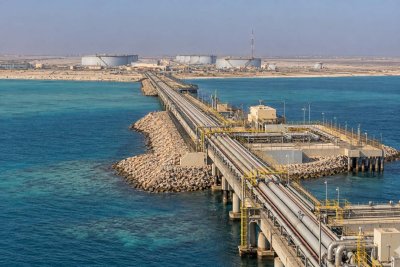
The attack has led to the effective closure of the Strait of Hormuz, a narrow maritime passage that handles approximately one-fifth of the world's seaborne oil and liquefied natural gas (LNG). With tanker movement blocked, Gulf producers have been forced to curtail output and reroute exports. Saudi Arabia has shifted a significant volume—4.658 million barrels per day—to the Red Sea port of Yanbu, a massive increase from the 770,000 barrels per day average in January and February. The International Energy Agency has labeled this the most significant recorded disruption to global oil supply.
Pain at the Pump
The oil shock is translating directly to higher costs for consumers. According to data from AAA, the U.S. national average price for a gallon of regular gasoline reached $4.018 on Tuesday. This follows GasBuddy data from Monday showing prices crossing the $4 threshold for the first time in over three years. The rapid rise in energy costs is stoking fresh inflation concerns, causing investors to dial back expectations for Federal Reserve interest rate cuts.
Mixed Signals and Market Uncertainty
Political rhetoric has added to market volatility. Former President Donald Trump issued conflicting statements, first threatening to "obliterate" Iran's oil infrastructure unless the waterway reopened, then suggesting crude-hungry nations should "TAKE it" from Hormuz or buy American. Meanwhile, The Wall Street Journal reported that aides indicated Trump was open to concluding the military campaign regardless of the strait's status.
Analysts view the situation with deep caution. "Uncertainty will persist," said Sugandha Sachdeva of SS WealthStreet. Ole Hansen from Saxo Bank warned of a critical risk: if the Strait of Hormuz does not reopen soon, the market could enter "demand destruction territory," where prices rise so high they begin to suppress fuel consumption.
Wall Street Divide and Long-Term Forecasts
A clear sectoral split has emerged in equity markets. While broader U.S. indexes trend toward their steepest quarterly decline since 2022, the S&P 500 energy sector has jumped more than 11% in March, standing alone in positive territory. Notable outperformers include Exxon Mobil (XOM), Chevron (CVX), and Phillips 66 (PSX).
Forecasters have drastically revised their longer-term oil price outlooks. A March survey of 38 economists and analysts raised the average 2026 Brent crude price estimate to $82.85 per barrel, a sharp increase from February's $63.85 forecast. This marks the most significant monthly jump since 2005. Frank Schallenberger of LBBW noted that the IEA's planned release of 400 million barrels from strategic reserves covers only about 20 days of typical Hormuz flows. In a related move, U.S. officials have temporarily waived Jones Act restrictions for foreign-flagged vessels to transport fuel between domestic ports.
Potential Price Trajectories
The market's future path hinges on the duration of the supply disruption. Analysts present two starkly different scenarios:
- If tanker routes return to normal in April, the current war premium could rapidly unwind, potentially reversing a significant portion of Brent's nearly 60% surge in March.
- If the Strait of Hormuz remains closed for another month, the situation could deteriorate sharply. JPMorgan analysts see oil potentially pushing toward $150 a barrel, while Stratas Advisors warns Brent could test $190 if the supply squeeze intensifies.
For drivers, immediate relief appears unlikely. Raymond James analyst Pavel Molchanov suggested this price spike may not be as prolonged as the 2022 surge following Russia's invasion of Ukraine. He anticipates gasoline prices could "cool in the next few weeks," but only if crude prices stabilize and stop climbing—a prospect that remains highly uncertain given the current geopolitical landscape.