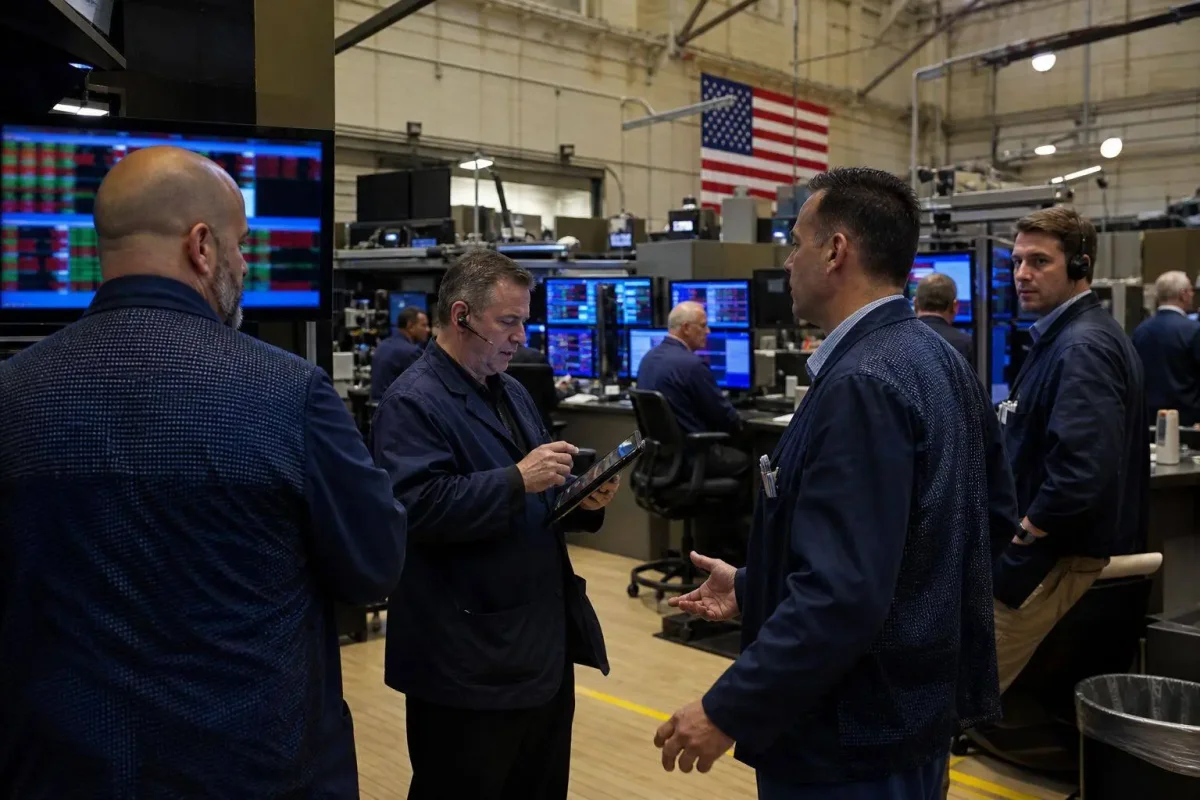
WTI crude oil broke above the $90 mark on Tuesday, while the Nasdaq Composite fell 1.1% as Treasury yields continued their upward trend, creating a sharp divergence between energy and technology sectors.
At 15:00 EDT, the Nasdaq Composite was down 1.11% to 26,077.80, while the S&P 500 slipped 0.80% to 7,624.92. The Dow Jones Industrial Average declined 0.83% to 52,743.09. Market breadth was negative, with decliners outpacing advancers by a 2.7-to-1 ratio on the NYSE.
Oil Prices Surge on Geopolitical Tensions
October WTI crude futures climbed 5.36% to $90.36 a barrel, marking a significant intraday move. The surge followed fresh U.S. military strikes targeting Iran, escalating concerns about supply disruptions. According to the Associated Press, roughly one-fifth of global oil supplies typically transit through the Strait of Hormuz, a critical chokepoint.
The spike in oil prices coincided with a rise in the 10-year Treasury yield, which reached 4.798% at 14:45 EDT, up four basis points from Monday's close. This combination weighed heavily on long-duration growth stocks, particularly in the technology sector.
Sector Rotation: Energy Outperforms Tech
Energy stocks led the market, advancing 1.15%, while technology fell 1.69% and consumer discretionary dropped 1.84%. This created a 2.84 percentage point gap between energy and technology, with energy also outperforming discretionary by 2.99 points.
Oil producers benefited from the price surge. Exxon Mobil Corporation (NYSE: XOM) climbed 2.21%, and Chevron Corporation (NYSE: CVX) was up 1.94%. In contrast, technology heavyweights struggled: Advanced Micro Devices, Inc. (NASDAQ: AMD) fell 3.00%, NVIDIA Corporation (NASDAQ: NVDA) slid 1.37%, and Intel Corporation (NASDAQ: INTC) dropped 1.44%.
Apple's CEO Transition Provides Some Support
Apple Inc. (NASDAQ: AAPL) bucked the downtrend, rising 2.79% following the announcement of John Ternus's appointment as chief executive. The company had revealed the September 1 handover back in April, and investors appeared to welcome the leadership change.
Economic Data and Fed Expectations
Fresh economic data showed job openings rose to a preliminary 7.271 million in July, up from 7.182 million, while hires declined to 5.054 million, according to the Labor Department. The mixed signals come as investors gauge the Federal Reserve's next move.
Jay Hatfield, portfolio manager at InfraCap, described the Fed as "very, very hawkish." Futures markets indicated a 68.2% probability of a rate hike in September, according to Reuters.
Market Outlook
The final trading hour will be crucial in determining whether Apple can continue to support technology stocks. The upcoming payroll report on Friday is seen as the next major catalyst for interest rate expectations.
Risks remain elevated. An abrupt reversal in oil prices could ease inflationary pressures and boost growth stocks, while additional supply disruptions could intensify the selloff and increase credit stress. Investors are closely monitoring geopolitical developments and their potential impact on global energy markets.