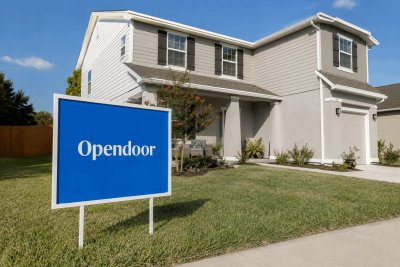
Opendoor Technologies Inc. (NASDAQ:OPEN) edged higher in Wednesday's regular session, closing up 1.9% at $4.28, before adding further gains in after-hours trading to $4.3499. The move came as the company prepares for its inclusion in the Russell 3000 Index, effective after the market close on June 26.
Volume for the day reached 36.91 million shares, roughly 102% of the 65-day average, representing about 4.6% of the company's public float. While the stock outperformed a mixed broader market—the Nasdaq Composite fell 0.43%, the S&P 500 slipped 0.10%, and the Dow posted a 0.35% gain—the lack of a volume surge suggests the market is still waiting for a larger rebalancing-driven move.
Russell 3000 Inclusion Details
Opendoor announced on May 27 that it will be added to the Russell 3000 Index, with the change taking effect after the U.S. market close on June 26. The company noted that inclusion in the Russell 3000 typically leads to membership in the Russell 1000 or Russell 2000, along with relevant style indexes. Friday's close will be critical for near-term positioning, as FTSE Russell's rebalanced indexes go live after the market shuts on June 26. For Nasdaq-listed stocks, the reconstitution uses Nasdaq's Closing Cross, where all trades execute at a single price. Last year, FTSE Russell reported $102.5 billion in U.S. stocks traded in Nasdaq's closing minutes, with $114.7 billion on the NYSE.
Housing Data Weighs on Sentiment
U.S. single-family home sales fell 7.3% in May to a seasonally adjusted annual rate of 580,000, according to government data from the Census Bureau and HUD. Inventory rose to 10.3 months at the May sales pace, while the median price for new homes stood at $424,900. The weak data kept attention on Opendoor's resale pace and margins, as the company's business model relies heavily on turning over inventory efficiently.
FWDBONDS chief economist Christopher Rupkey told Reuters, “There are not enough homes on the market,” while Stephen Stanley, chief U.S. economist at Santander U.S. Capital Markets, described demand for new homes as “tepid.”
Opendoor's 2026 Outlook and Operational Progress
Opendoor's 2026 outlook hinges on its ability to accelerate home sales and expand inventory. In May, the company reported a 45% quarter-over-quarter increase in homes bought, acquisition contracts surpassing 5,000, and the share of houses listed over 120 days dropping to 10% from 33% in the prior quarter. “The machine is working,” CEO Kaz Nejatian said.
However, financial risks remain. First-quarter revenue was $720 million, down from $1.15 billion a year earlier, with a net loss of $173 million. Opendoor guides for roughly 25% sequential revenue growth in the second quarter, with adjusted EBITDA expected near breakeven.
Cost-Cutting and Analyst Views
Opendoor is implementing cost cuts as it shifts toward greater AI use. Reuters reported on June 11 that the company will close its India operations and lay off all 250 staff in the country, as confirmed by Nejatian.
Analyst sentiment is mixed. According to Barron’s, the stock has nine ratings: two buys, five holds, and two sells. The average price target is $4.82, roughly 12.6% above Wednesday’s close, with targets ranging from $1 to $8. Shares have declined 26.6% year-to-date but have surged 695.5% over the past 12 months. Opendoor is scheduled to report second-quarter results on July 30.