Oracle Corporation (ORCL) saw its shares drop 7.7% to $159.80 in premarket trading on Tuesday, following reports that OpenAI failed to meet several monthly revenue and user targets. The news sent ripples through the AI infrastructure sector, with CoreWeave falling 7.4% and SoftBank Group closing nearly 10% lower in Tokyo.
The sell-off centers on a massive five-year contract between Oracle and OpenAI, valued at approximately $300 billion, to supply computing power for the ChatGPT developer. Investors are now questioning the viability of this deal as OpenAI's growth trajectory appears to be slowing. According to the Wall Street Journal, OpenAI missed internal benchmarks for ChatGPT to reach 1 billion weekly active users by late 2025 and has lost ground to rival Anthropic in both coding and enterprise segments.
Funding Concerns Mount
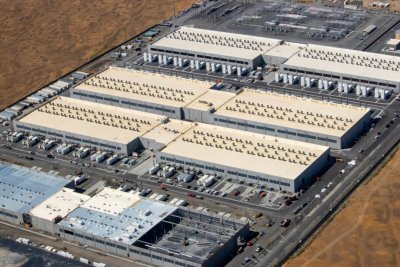
Oracle's AI narrative has increasingly become a funding story. The company's remaining performance obligations (RPO) surged 325% year-over-year to $553 billion in the third fiscal quarter, driven largely by AI deals. However, concerns about Oracle's balance sheet are growing. Morgan Stanley's credit team estimates Oracle will need $100 billion or more in additional cash for 2027 and early 2028, even after securing roughly $50 billion for 2026. Lenders, including JPMorgan Chase, have become cautious, struggling to offload risk from loans tied to Oracle's leased data centers in Texas and Wisconsin.
Oracle has taken steps to address these concerns, announcing plans to raise up to $50 billion through debt and equity. So far, $30 billion has been secured via investment-grade bonds and mandatory convertible preferred stock, with the company stating it does not plan to issue additional bonds in calendar 2026.
Industry-Wide Implications
The broader AI spending spree is also under scrutiny. Alphabet, Microsoft, Meta, and Amazon are collectively expected to spend some $600 billion on AI this year. Joe Maginot, large-cap portfolio manager at Madison Investments, questioned the return on this massive capital expenditure. "What's the return on all the capital expenditure?" he asked, highlighting the risk of pouring money into AI projects before the payback is clear.
In a related development, Microsoft and OpenAI relaxed their exclusive relationship, allowing OpenAI to work with other cloud providers, including Amazon. Microsoft remains the primary cloud partner and will continue to receive a 20% revenue share through 2030. Gil Luria of D.A. Davidson called the updated arrangement "essential for OpenAI to be successful in the enterprise market."
Market Reaction and Analyst Views
Despite the sharp drop, some analysts remain bullish. Dan Ives of Wedbush, who initiated coverage with an Outperform rating just last week, described Oracle as a "foundational infrastructure provider" for AI, insisting that the investment cycle is contract-driven rather than speculative. However, others warn that if OpenAI's revenue gap persists or lenders tighten financing, Oracle's data-center timelines, funding costs, and AI margin narrative could all come under pressure.
Before the sell-off, Oracle's recent rally had been characterized as a short squeeze by CNBC's Jim Cramer. He noted that Oracle's ability to push higher depended on cheaper borrowing, but doubts about those assumptions could cause the rally to unravel quickly.