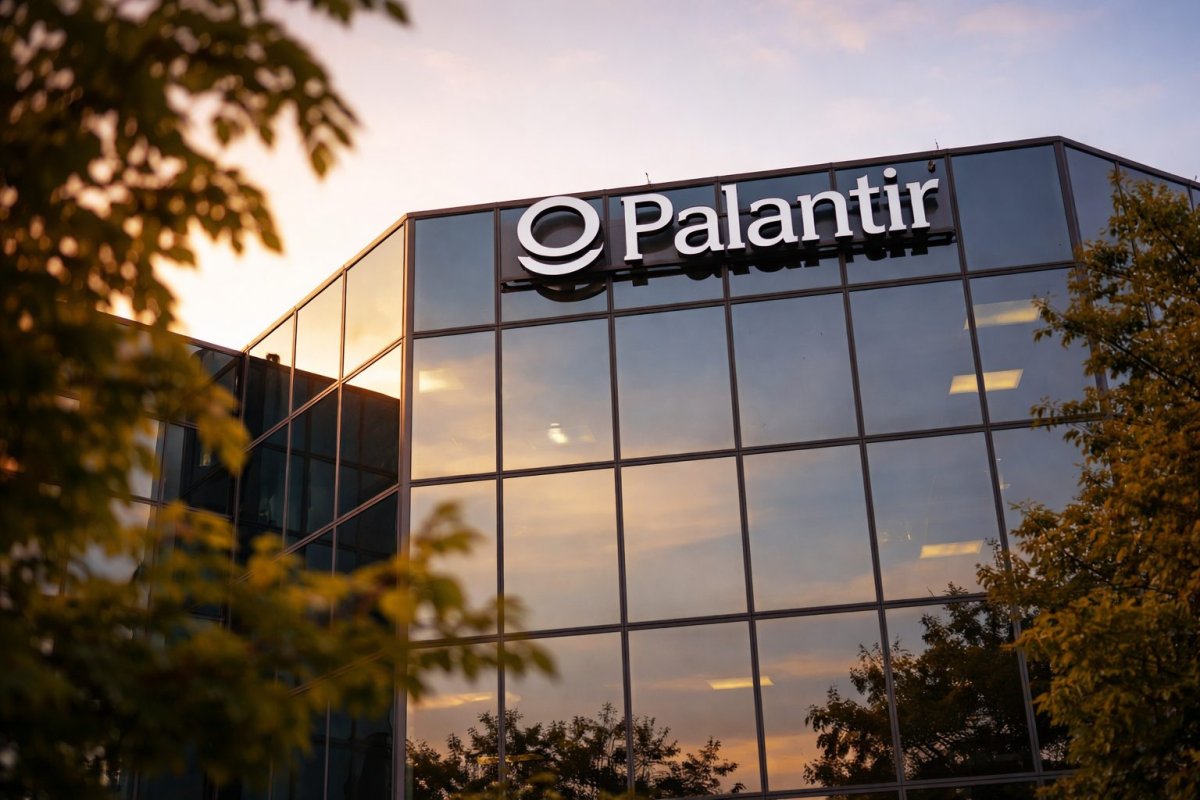
Shares of Palantir Technologies experienced a significant decline, falling approximately 7% in Thursday's trading session. The drop extended losses for a second consecutive day and was triggered by public remarks from prominent investor Michael Burry. Burry contended that Anthropic is now leading the competition in the enterprise artificial intelligence market, a core business area for Palantir.
Market Value and Valuation Concerns
With Palantir trading around $130.59 late Thursday morning, the company was positioned to lose roughly $34 billion in market capitalization if the downward trend continued. This pullback is notable given Palantir's steep valuation, which remains at about 395 times earnings even after the decline. This price-to-earnings multiple is substantially higher than that of other technology leaders, such as Nvidia, which trades around 46 times earnings, leaving little margin for error if commercial demand softens.
Anthropic's Rapid Ascent
The pressure on Palantir intensified this week following key announcements from rival Anthropic. On Monday, Anthropic disclosed that its annualized revenue run rate has skyrocketed to more than $30 billion, a dramatic increase from approximately $9 billion at the close of 2025. Subsequently, on April 8, the company launched Claude Managed Agents into public beta. This new offering is marketed as a streamlined solution for businesses to deploy autonomous AI tools, potentially bypassing the need for lengthy and complex infrastructure projects that can take months to complete.
Michael Burry, in comments shared on social media platform X and reported by Business Insider, stated that Anthropic is "eating Palantir's lunch." He pointed to what he described as an "easier, cheaper, intuitive solution for businesses" from Anthropic. Burry further noted that while Palantir maintains a strong position in government contracting, this advantage has not successfully translated into the private corporate sector.
Data Points to Shifting Adoption
Recent data from corporate spend platform Ramp supports the narrative of Anthropic's growing footprint. According to the company's March AI Index, nearly one in four businesses using Ramp's platform now pays for Anthropic's services. Economist Ara Kharazian, who authored the index, also highlighted that Anthropic wins about 70% of first-time, direct competitive evaluations against OpenAI, even though OpenAI remains the most widely used model provider on the Ramp platform overall.
Broader Competitive Landscape
Anthropic's surge is creating ripples across the technology landscape. Reports indicate the company has reached revenue parity with OpenAI, although direct comparisons are complicated by different accounting methods—Anthropic records revenue gross, while OpenAI's reported figures account for revenue sharing with cloud partners. In a significant infrastructure commitment, Broadcom has indicated that Anthropic is scheduled to utilize about 3.5 gigawatts of Google's Tensor Processing Unit (TPU) computing power, starting in 2027.
Palantir's Government Defense Anchor
Despite the commercial challenges, Palantir's defense business remains a formidable and growing segment. In February, the company reported a 66% year-over-year increase in U.S. government revenue for the fourth quarter, reaching $570 million and contributing to total sales of $1.41 billion. Furthermore, Reuters reported that the Pentagon plans to designate Palantir's Maven AI system as a formal "program of record," which secures a dedicated budget line and ensures multi-year operational support. CEO Alex Karp has emphasized Palantir's role in "supporting in a critical manner" some of the government's most intricate and sensitive operations.
Anthropic's own stance has inadvertently benefited Palantir in the defense arena. In March, it was reported that certain Maven Smart Systems workflows, originally developed on Anthropic's Claude platform, required re-engineering. This was due to the Pentagon flagging Anthropic as a supply-chain risk after the company resisted relaxing specific military-use restrictions. This week, a federal appeals court upheld that risk designation, at least temporarily.
The Strategic Question
The central issue for Palantir is whether it can leverage its entrenched dominance in defense contracting to accelerate commercial adoption, especially as competitors like Anthropic roll out more accessible, hosted AI solutions. If corporate customers migrate to offerings such as Claude Managed Agents for faster deployment, Palantir's traditionally resource-intensive implementation model and premium stock valuation could face sustained pressure. Conversely, if Pentagon spending continues to expand and the Maven system becomes deeply integrated into U.S. military infrastructure, bullish investors may argue the stock retains significant upside potential despite near-term doubts.