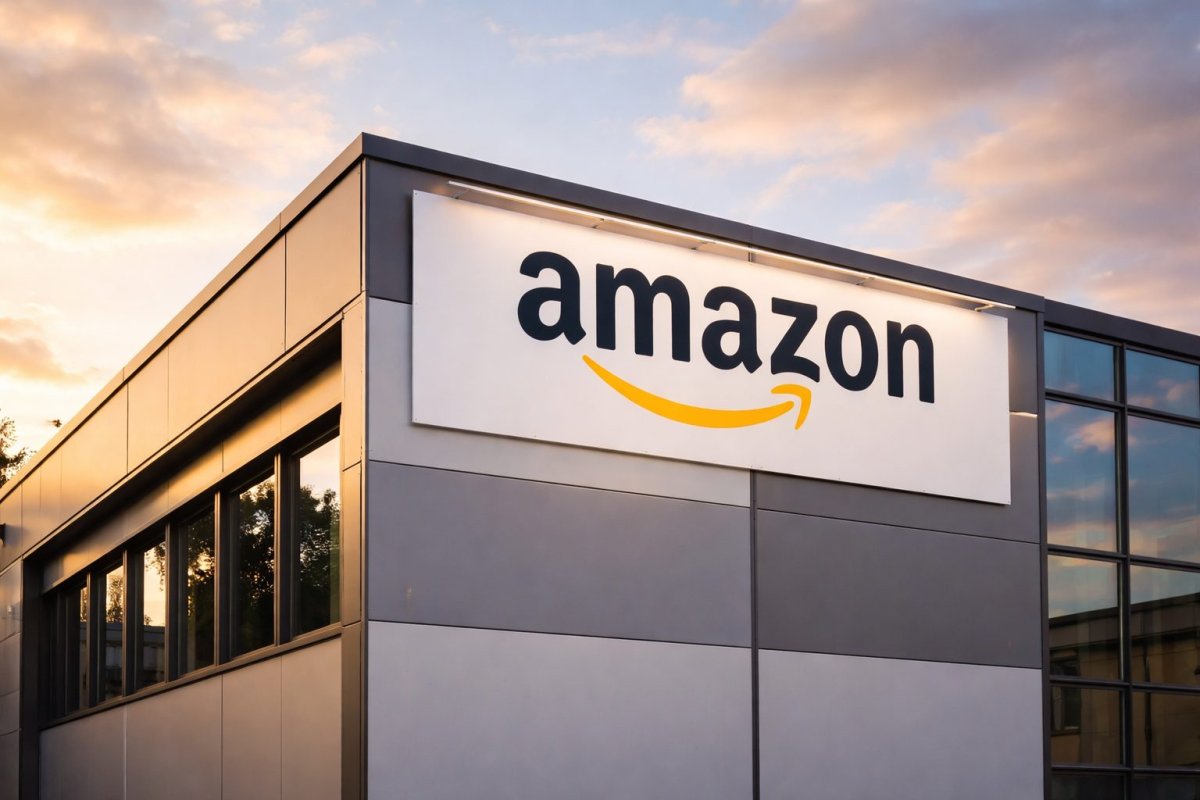
Amazon shares experienced a significant 5% increase during Thursday's trading session following the release of CEO Andy Jassy's annual shareholder letter, which provided unprecedented detail about the company's artificial intelligence financial performance. The communication arrived as investors have been scrutinizing massive technology investments across the sector, seeking evidence that expenditures are tied to concrete demand rather than speculative optimism.
AI Revenue Metrics Disclosed
Jassy revealed that Amazon Web Services' AI services are now generating more than $15 billion in annual revenue, based on extrapolations from first-quarter 2026 trends. Additionally, the company's semiconductor business has surpassed $20 billion in yearly revenue. These disclosures come at a critical moment for Amazon, which previously stunned Wall Street in February with a forecast of approximately $200 billion in capital expenditures for 2026—a substantial increase from the $131 billion planned for 2025.
The CEO directly addressed investor concerns about these expenditures, stating emphatically that the company is not investing based on speculation. "We're not investing on a hunch," Jassy wrote. He explained that a significant portion of AWS's planned 2026 outlay is already secured through customer commitments, including a notable agreement with OpenAI valued at over $100 billion. Jassy noted that AWS growth would be even stronger if not for industry-wide power and capacity constraints.
Chip Business Expansion
Amazon's push into custom silicon represents a central component of its AI strategy. Jassy reported that the company's latest AI chip, Trainium3, is almost completely reserved by customers, while Trainium4 is already attracting reservations despite not being widely available for approximately another eighteen months. The executive also suggested Amazon might eventually sell chip racks directly to external customers—a move that would position the company against industry leader Nvidia and align with Google's approach to custom silicon.
Beyond AI infrastructure, Jassy highlighted operational efficiencies achieved through organizational restructuring. He pointed to a specific example where a Bedrock team of just six engineers overhauled a critical software engine in only 76 days—a project he claimed might have previously required 40 people and a full year. This "tiny teams" approach comes amid broader workforce reductions, including approximately 30,000 corporate job cuts reported earlier this year across two waves.
Broader Business Updates
The shareholder letter contained updates across Amazon's diverse operations. The company has now deployed over one million robots across its fulfillment centers and has invested more than $4 billion into rural delivery infrastructure. Jassy projected that Prime Air drones will service areas containing 30 million customers by year-end. Additionally, Amazon's satellite broadband initiative, Project Leo, remains on schedule for a mid-2026 launch and has already secured revenue commitments from both enterprise and government clients.
Financial context underscores the stakes of Amazon's investment strategy. The company reported free cash flow declining to $11 billion in 2025 from $38 billion the previous year, largely due to property and equipment costs surging by over $50 billion. This substantial capital deployment places pressure on AWS to accelerate growth as new capacity comes online, with questions about investment returns likely to resurface if demand fails to materialize as projected.
Market Context and Analyst Perspective
Amazon's aggressive spending mirrors similar moves by competitors Microsoft and Alphabet, as all major technology firms compete for AI dominance. The company's in-house chip development represents a strategic effort to reduce dependence on Nvidia's hardware. D.A. Davidson analyst Gil Luria commented on the competitive landscape, noting that "Amazon has to invest at these levels just to stay in the race," referencing the company's February forecast.
Jassy's detailed letter serves as a direct response to market skepticism, providing specific revenue figures, outlining customer commitments, and making clear the company's willingness to invest ahead of fully materialized demand. The communication arrives as technology investors increasingly demand transparency about the returns on massive AI infrastructure investments that have characterized the sector's spending patterns throughout the mid-2020s.