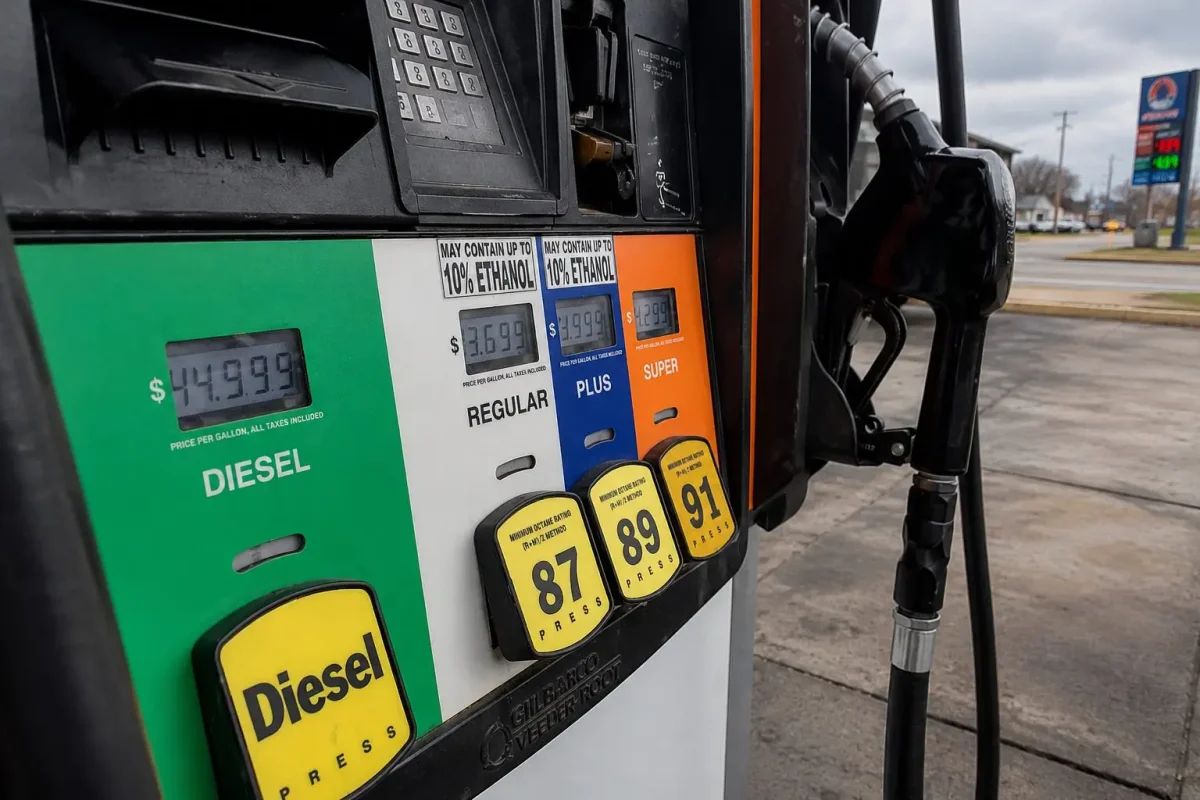
Pennsylvania drivers saw some relief at the pump this week as gasoline prices continued their downward trend, with the state average dropping 53.5 cents over the past month to $4.109 per gallon, according to AAA data released Saturday. The decline comes just ahead of the July Fourth holiday travel period, when millions of Americans are expected to hit the roads.
State Prices Still Above National Average
Despite the recent decline, Pennsylvania's average price remains approximately 16 cents higher than the national average and sits about 74 cents above the same period last year. The national average dipped below $4 per gallon this week for the first time since March 30, AAA reported, offering a measure of relief to consumers.
The price drop has been driven by easing crude oil costs following a U.S.-Iran agreement to reopen the Strait of Hormuz, a critical chokepoint for global oil shipments. However, analysts caution that the reprieve may be temporary, as supply risks and refinery constraints continue to loom over the market.
Regional Variations
Gas prices varied significantly across the state. Harrisburg saw an average of $3.911 per gallon, while Lancaster and Reading reported $3.901 and $3.886, respectively. Pittsburgh remained notably higher at $4.481, while Williamsport posted the lowest price at $3.659. In neighboring states, New Jersey averaged $3.990, Delaware $3.814, and New York $4.250, according to AAA data.
Holiday Travel Outlook
AAA projects that 72.2 million Americans will travel at least 50 miles from home during the July Fourth period, with 61.4 million expected to drive. “Travel over the holiday is still a tradition for many Americans, and we are still calling for record crowds,” said Stacey Barber, vice president at AAA Travel.
Supply and Refinery Constraints
While prices have eased, the market remains tight. U.S. refineries operated at 96.7% of capacity during the week ended June 12, according to the U.S. Energy Information Administration. Gasoline production averaged 10.1 million barrels per day, while total motor gasoline stocks fell by 0.9 million barrels and remain 6% below the five-year average.
Oil prices remain sensitive to geopolitical developments. U.S. crude stocks, including government reserves, recently hit their lowest level since March 1985, according to Reuters. Matt Smith of Kpler noted that Cushing, Oklahoma, is approaching “operationally low levels.”
Refinery Capacity a Key Bottleneck
Patrick Penfield, a supply chain professor at Syracuse University, told the Associated Press that insufficient U.S. refinery capacity “remains a significant bottleneck” for further fuel price reductions. This structural issue could limit how much prices can decline even if crude costs continue to fall.
For Pennsylvania drivers, filling a 15-gallon tank now costs about $61.64, saving roughly $8 compared to a month ago, but still about $11 more than last year. The state’s prices remain higher than most neighboring states, leaving motorists waiting to see how oil markets and refinery operations evolve in the coming weeks.