PG&E Corporation (NYSE: PCG) saw its shares plunge 15% in premarket trading on Monday after California lawmakers advanced Senate Bill 492, which notably omitted a measure that would have shielded utilities from wildfire-related claims. The stock dropped to $14.14, pushing its price-to-earnings ratio to 8.6 times the midpoint of its 2026 core earnings guidance.
The decline extends a sharp selloff that began on Friday, when shares fell 7.44%. Over two sessions, the stock has lost approximately 21% of its value, erasing billions in market capitalization. The current valuation reflects a significant policy discount, as investors worry about the company's exposure to future wildfire liabilities without a legislative backstop.
PG&E acknowledged that the legislation does not resolve the financing challenges stemming from California's wildfire-liability framework. The company has been seeking clearer rules to stabilize its balance sheet and reassure investors about its long-term viability.
Mizuho Downgrades PG&E
Mizuho analyst Anthony Crowdell downgraded PG&E to Neutral from Outperform, slashing the price target to $16 from $21. The downgrade reflects the lack of significant new safeguards for investors, as the legislation failed to provide the anticipated liability protections.
The analyst's new target implies a core P/E of 9.7x based on the current price, while the consensus mean target of $22.22 suggests a 57.1% upside. However, these figures may not yet fully account for Monday's downgrade, as consensus data covers 17 analysts.
Broader Sector Impact
The policy surprise also hit other California utilities. Edison International (NYSE: EIX) dropped 9.5% in premarket trading, while Sempra (NYSE: SRE) slipped 1.5%. The selloff underscores the sector's sensitivity to regulatory developments in the state's complex wildfire liability landscape.
Financial and Operational Highlights
Despite the market turmoil, PG&E reported improved financial results. Second-quarter core earnings per share rose 29% year-over-year to $0.40, while first-half core EPS increased 30% to $0.83. GAAP EPS for the second quarter came in at $0.33, up 37.5% from the prior year.
Management maintained its 2026 core EPS guidance of $1.64 to $1.66. The company also finalized $4.4 billion in utility debt financing by June, highlighting its need for predictable liability rules to secure cost-effective capital.
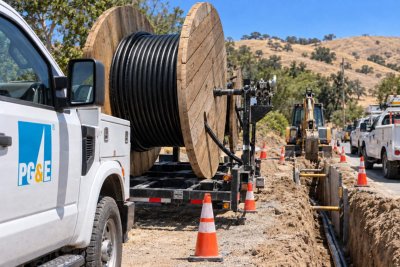
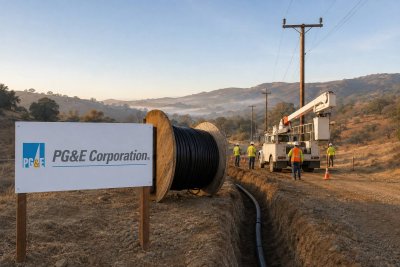
On the operational front, PG&E advanced its safety initiatives, constructing 37 miles of underground power lines and adding 100 miles of reinforced or covered lines during the quarter. These investments are part of broader efforts to mitigate wildfire risks and improve grid resilience.
Risks and Outlook
The current state wildfire fund provides some protection, with California utilities collectively pledging $10.5 billion and annual safety certification requirements governing access. However, if a utility-caused fire occurs, the company could face substantial claims, penalties, and increased financing stress.
Regulatory outcomes, insurance litigation, and elevated interest rates could also dampen earnings growth. The immediate question is whether Sacramento will reconsider insurer claims or maintain the existing framework. Absent lasting reform, PG&E's operational improvements may struggle to narrow the policy discount that currently weighs on its valuation.
Investors will be watching for any legislative developments in the coming days, as the stock's volatility reflects the high stakes of California's wildfire policy decisions.