Investors are bracing for a pivotal week as Microsoft, Alphabet, Amazon, and Meta prepare to report earnings on Wednesday. The focus is squarely on whether massive capital expenditures in artificial intelligence are translating into tangible revenue gains, particularly in cloud computing and digital advertising. This earnings season marks a critical test for the AI trade, with the Nasdaq Composite falling 0.90% on Tuesday amid renewed concerns about spending levels.
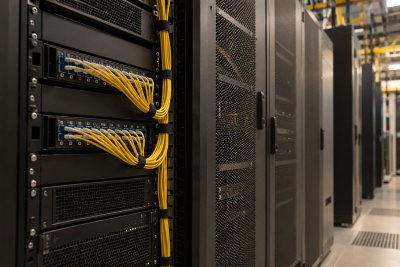
The four tech giants are expected to spend nearly $600 billion combined on AI-related chips and data centers this year, according to data from Reuters. Wall Street is now demanding evidence that these investments are boosting key metrics such as cloud revenue, ad sales, and cash flow. Analysts are projecting strong growth: Amazon Web Services (AWS) is forecast to grow 25%, Microsoft Azure 40%, and Google Cloud an eye-catching 50.1%. Meta Platforms could see sales climb 31%, per Visible Alpha and LSEG data cited by Reuters.
Joe Maginot of Madison Investments summed up the market's sentiment: the key question is 'what's the return' on all this AI spending. The stakes are high, as any signs of diminishing returns could trigger a sell-off not only in these megacaps but also in suppliers like NXP Semiconductors and Corning.
Visa, T-Mobile, and FICO Lead with Solid Results
Visa reported a 17% increase in net revenue to $11.2 billion for its fiscal second quarter, driven by a 9% rise in processed transactions and 12% growth in cross-border volume. The company also announced a new $20 billion share buyback program. CEO Ryan McInerney noted that consumer spending 'remained resilient,' underscoring robust household demand.
T-Mobile raised its 2026 guidance after posting a strong first quarter. Service revenue climbed 11% to $18.8 billion, and postpaid net account additions reached 217,000, up 6% year over year. The company now expects 950,000 to 1.05 million postpaid net additions for the full year, up from its prior forecast of 900,000 to 1.0 million. CEO Srini Gopalan hailed a 'strong start to the year.'
FICO delivered standout numbers, with fiscal second-quarter revenue surging 39% to $691.7 million. GAAP earnings per share jumped to $11.14 from $6.59 a year ago. The company raised its fiscal 2026 revenue outlook to $2.45 billion, up from $2.35 billion. CEO Will Lansing highlighted 'strong revenue and earnings growth.'
NXP, Corning, and Starbucks: Diverse Growth Stories
NXP Semiconductors reported first-quarter revenue of $3.18 billion, a 12% increase, and guided second-quarter revenue to a midpoint of $3.45 billion, implying 18% year-over-year growth. CEO Rafael Sotomayor cited strong demand from industrial and automotive sectors, particularly for software-defined vehicles and 'physical AI' embedded in machines and robots.
Corning, a key supplier of optical links for data centers, saw first-quarter core sales rise 18% and core EPS jump 30%. The company expects second-quarter core sales of around $4.6 billion, a 14% gain, with core EPS up about 25%. CEO Wendell Weeks revealed that Corning has secured two hyperscaler agreements similar to its recent multiyear deal with Meta.
Starbucks emerged as a turnaround play, posting a 6.2% increase in global comparable store sales for its fiscal second quarter. Net revenue rose 9% to $9.5 billion. The company raised its outlook for comparable sales growth and non-GAAP EPS for fiscal 2026. CFO Cathy Smith noted that rising sales are beginning to improve margins, though North American margins require continued attention.
Risks and Market Context
Despite the optimism, risks remain elevated. High capital expenditures, oil-fueled inflation, tariffs, and margin pressures could derail growth. If Big Tech fails to demonstrate adequate returns on AI investments, the fallout could hit suppliers like NXP and Corning as well. Additionally, rising oil prices and a cautious Federal Reserve could keep financial conditions tight. Starbucks faces ongoing labor, tariff, and coffee-cost headwinds, while T-Mobile continues to integrate UScellular operations.
The Q2 growth watchlist includes Microsoft (MSFT), Alphabet (GOOGL), Amazon (AMZN), Meta (META), Visa (V), T-Mobile (TMUS), FICO (FICO), NXP Semiconductors (NXPI), Corning (GLW), and Starbucks (SBUX). What unites these names is not low valuations but the expectation that top-line growth will outpace the costs of achieving it. The next few days will reveal whether that bet pays off.