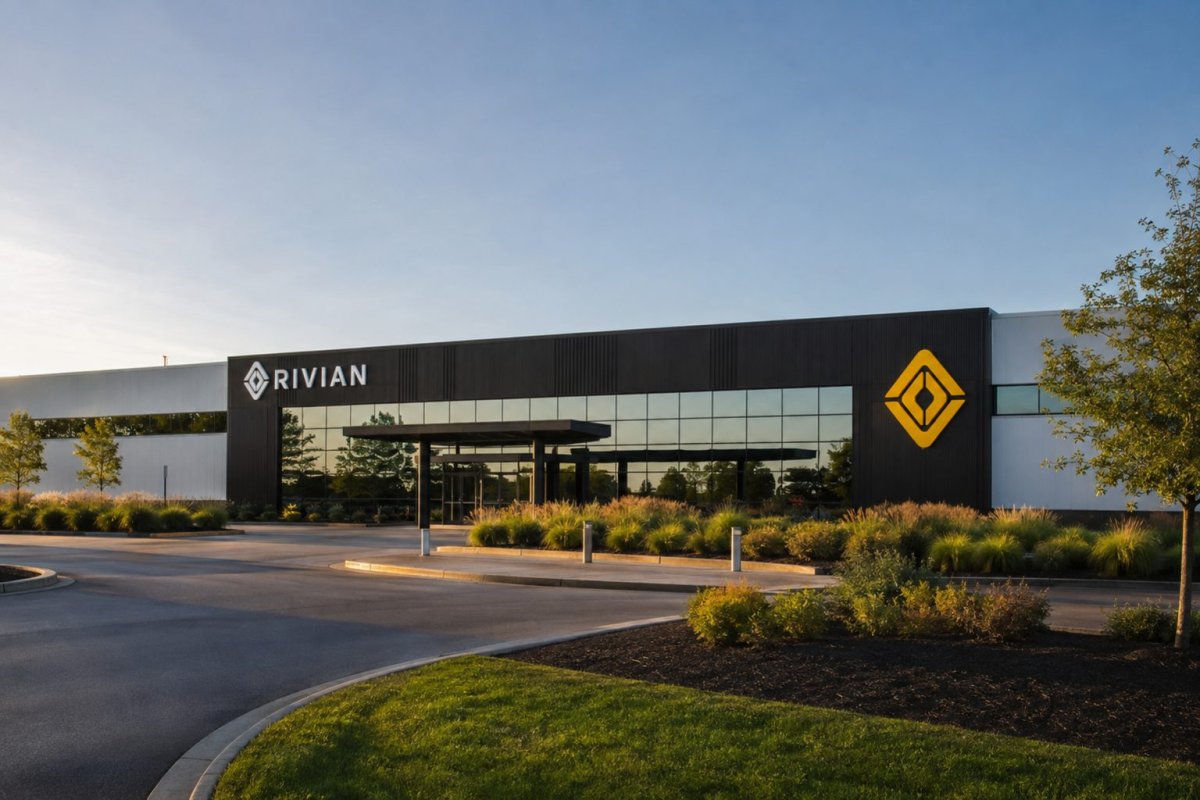
Rivian Automotive (NASDAQ: RIVN) shares closed Friday at $16.96, up 5.97%, bringing the stock within four cents of the average 12-month price target set by Wall Street analysts. The rally added approximately $1.38 billion to the company's market capitalization, nearly matching the $1.317 billion in net proceeds from its July equity offering. Trading volume was notably elevated, supported by increased call-option activity, according to GuruFocus.
The stock's surge erases the discount it had been trading at relative to the $15.50 per share price from the July follow-on offering, in which the company issued 86.25 million shares, increasing its share count by roughly 6% on a pro-forma basis. The move brings Rivian's valuation in line with the consensus view, shifting the focus to operational execution rather than analyst estimate adjustments.
Incentives Aim to Boost Q3 Deliveries
On Friday, Rivian introduced a new incentive offering three months of free Adventure Network charging for eligible 2026 R1 models. To qualify, customers must place orders by September 11 and complete deliveries by September 30, according to EV. This charging perk can be combined with existing promotions, including a $3,000 lease bonus and reduced financing rates for select models. These incentives are designed to accelerate deliveries into the third quarter, but they also introduce uncertainty around the financial impact of clearing older inventory.
Investors are closely watching whether these promotional efforts will translate into higher delivery volumes without significantly eroding profit margins. The company's R2 model remains the primary volume driver, with external deliveries beginning in June and the 2026 delivery outlook raised to 65,000–70,000 vehicles. CEO RJ Scaringe has described the R2 as "a driver of Rivian's long-term growth and profitability."
Q2 Financials Show Progress, But Cash Burn Persists
Rivian's second-quarter results, released earlier this month, showed revenue of $1.658 billion, up 27% year-over-year. Consolidated gross profit turned positive at $179 million, a significant improvement from a $206 million loss in the same period last year. However, the automotive segment still reported a gross loss of $36 million, and free cash flow outflow more than doubled to $849 million.
Deliveries in Q2 totaled 12,194 vehicles, up 14% from the prior year. Adjusted EBITDA loss narrowed to $379 million from $667 million. Despite the progress, the company's cash burn remains a concern. Rivian ended the quarter with $5.846 billion in total liquidity; including the July offering, pro-forma liquidity stands at $7.163 billion, which covers approximately 8.4 quarters of Q2's free cash outflow.
Analyst Views Diverge Widely
The analyst community remains sharply divided on Rivian's prospects. Deutsche Bank's Edison Yu has a Buy rating with a $24 target, implying a potential 41% upside. In contrast, Cantor Fitzgerald's Andres Sheppard holds a Hold rating with an $8 target, suggesting a possible 53% decline. J.P. Morgan's Rajat Gupta has a Sell rating with a $15 target, while Needham's Chris Pierce rates the stock a Buy with a $23 target.
According to Google Finance, the consensus among 15 analysts is a Hold rating with an average target of $17. The wide dispersion in targets reflects the uncertainty surrounding Rivian's path to profitability, particularly as it scales the R2 and manages its cash position.
Risks and Outlook
Options-driven rallies can reverse quickly, and the layered incentives could pressure R1 pricing and margins. Delays in R2 production, weaker demand, or higher cash burn could necessitate additional financing. Conversely, accelerating production could improve cost absorption and boost cash flow.
Investors are looking for evidence that the September incentive window will drive deliveries without further margin sacrifices. With the stock now trading at the average analyst target, the focus shifts to execution. The company projects 2026 capital expenditures between $1.70 billion and $1.80 billion and anticipates an adjusted EBITDA loss of $1.80 billion to $2.00 billion.
Rivian's ability to manage its cash runway, scale the R2, and deliver on its guidance will be critical in determining whether the stock can sustain its current valuation or if further downside awaits.