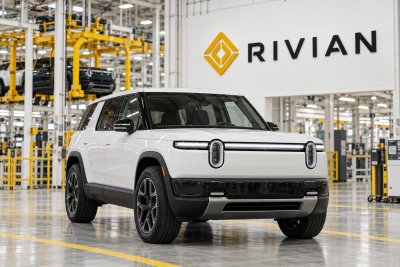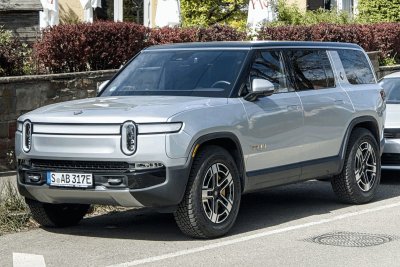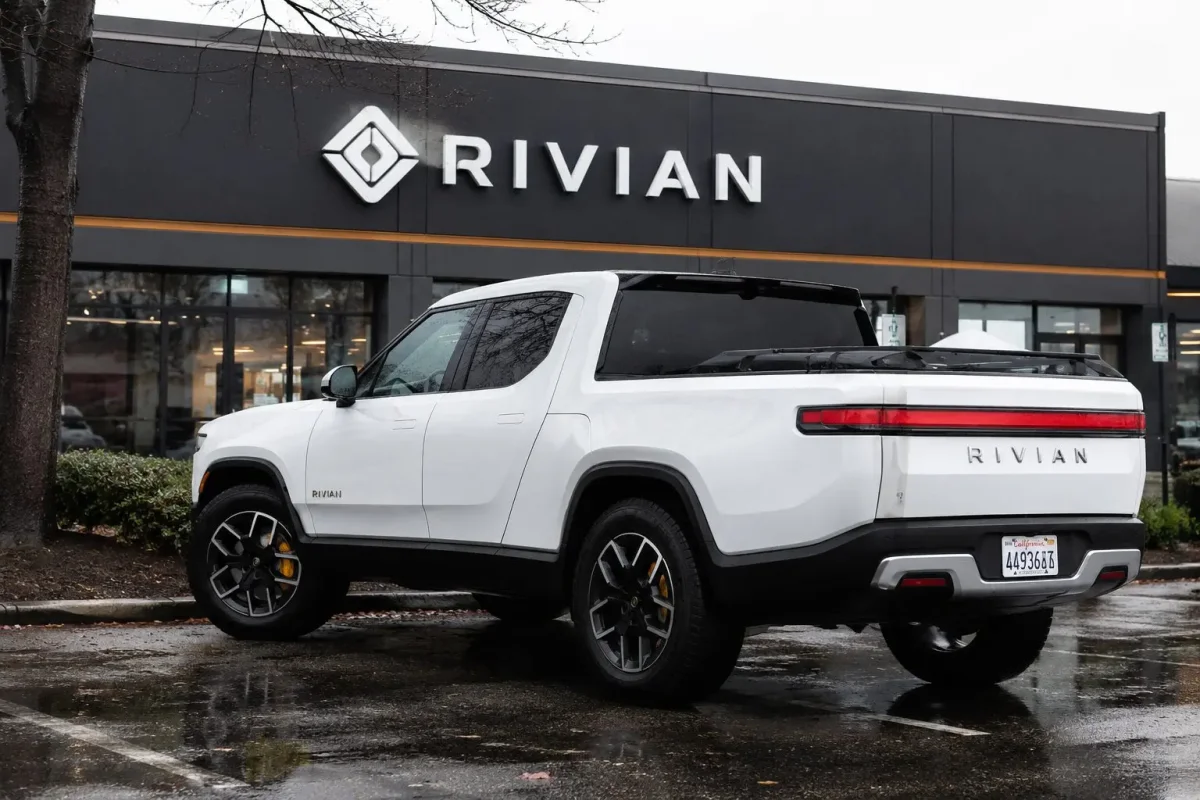
Shares of Rivian Automotive (RIVN) advanced in Thursday's trading session after the company reported second-quarter earnings that surpassed analyst forecasts. The stock closed at $16.83, up 2.9%, and added nearly 2% in after-hours trading. The positive market reaction came despite a mixed financial picture that highlighted the company's continued reliance on software revenue to offset losses in its automotive segment.
Revenue for the quarter reached $1.658 billion, exceeding the $1.51 billion consensus estimate by approximately 10%. The adjusted loss per share came in at $0.46, which was $0.17 better than the $0.63 loss anticipated by analysts. While the headline numbers were encouraging, a deeper dive into the company's segment performance reveals ongoing challenges.
Software Drives Gross Profit
Rivian's gross profit for the quarter totaled $179 million, but this was entirely attributable to its software and services segment, which generated $215 million in gross profit. In contrast, the automotive segment reported a gross loss of $36 million. Software accounted for 31% of total revenue but contributed 120% of the consolidated gross profit, underscoring the company's heavy dependence on non-vehicle revenue streams.
The automotive segment's gross loss narrowed significantly from $299 million a year earlier, aided by regulatory credits, increased production volumes, and a tariff refund. However, the R2 vehicle ramp incurred approximately $100 million in additional expenses, weighing on overall profitability.
R2 Deliveries Begin
Rivian began customer deliveries of its R2 model on June 9, a key milestone for the company. During the quarter, the company provided 57,000 demo drives. CEO RJ Scaringe noted that Launch Edition conversions were "meaningfully above our own internal projections" and expressed optimism about achieving positive R2 gross margins in the second half of the year. The company built 12,613 vehicles and delivered 12,194 to customers, a 14% increase year-over-year. However, average selling prices declined due to a higher mix of R2 units and commercial vans.
Volkswagen Group (VOW3) contributed $308 million in software revenue, representing 60% of the software segment and 19% of overall sales. This partnership continues to be a significant revenue driver for Rivian's software business.
Cash Burn and Dilution Concerns
Despite the earnings beat, cash burn remains a critical concern. Free cash flow in the second quarter was negative $849 million, improving sequentially from negative $1.075 billion in the first quarter but worsening from negative $398 million a year earlier. Cash and short-term investments stood at $5.310 billion at quarter-end, down from $4.830 billion in Q1. Rivian completed a 86.25 million-share offering in July, raising net proceeds of $1.317 billion on a pro forma basis, boosting available liquidity to $7.163 billion.
Management maintained its delivery guidance of 65,000 to 70,000 vehicles for 2026, up from the prior range of 62,000 to 67,000. The adjusted EBITDA loss forecast was improved to a range of $1.80 billion to $2.00 billion, while capital expenditure guidance was lowered to $1.70 billion to $1.80 billion, reflecting greater project efficiency and timing changes.
Market Context and Risks
Rivian shares rose approximately 6% between last Friday and Thursday's close but remain down about 15% for 2026 prior to the late advance. Key risks include execution on the R2 launch, weak demand for electric vehicles, and volatility in regulatory credits. The recent stock offering adds dilution pressure. Investors are closely watching for R2 to achieve positive automotive gross profit and reduce reliance on software revenue, which currently provides an inflated view of vehicle economics.
Lucid Group (LCID) is scheduled to report quarterly earnings on August 4, which could provide additional insight into demand and cash flow trends in the EV sector.