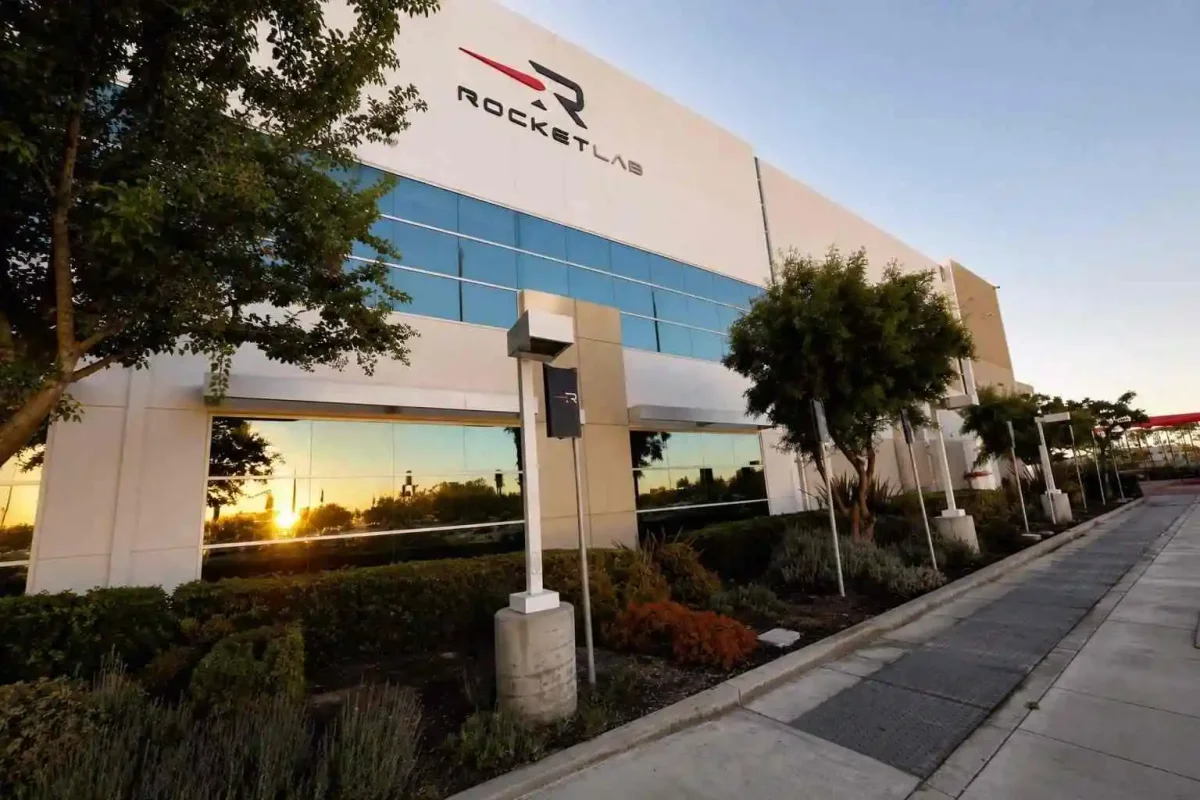
Rocket Lab (RKLB) shares retreated 3.1% on Friday, closing at $143.48 on the Nasdaq, as a Blue Origin rocket test explosion rattled investor sentiment across the space sector. Despite the session's decline, the stock remained up from its $135.76 close a week earlier, reflecting a volatile but largely positive week.
The selloff came after Blue Origin's New Glenn rocket exploded during a test firing in Florida, raising fresh concerns about launch reliability and supply chain risks. Although Rocket Lab was not directly involved, the incident triggered a risk-off move among space equities, with AST SpaceMobile (ASTS) dropping about 15% on fears of potential launch delays. Rocket Lab's losses were more modest, suggesting the market still views it as a resilient space-infrastructure play.
Rocket Lab's week was marked by significant corporate developments. On May 26, the company announced the completion of its acquisition of Motiv Space Systems, which has been rebranded as Rocket Lab Robotics. The deal adds space robotics and motion-control technology, including equipment used in NASA's Mars Perseverance rover. CEO Sir Peter Beck said the acquisition provides "everything needed" to pursue leadership in Mars exploration and space infrastructure. Motiv CEO Chris Thayer added that Rocket Lab would accelerate the commercialization of its robotics and motion-control business.
Additionally, Rocket Lab secured a $90 million contract with the U.S. Space Force to build two geostationary-orbit satellites, which remain fixed over a specific point on Earth by matching the planet's rotation. The company also completed its ninth Electron mission for Japan's Synspective, underscoring its steady launch cadence.
Rocket Lab's first-quarter results, reported earlier, showed revenue of $200.3 million, a 63.5% year-over-year increase. The company's backlog—a key metric for future revenue—stood at $2.2 billion. For the second quarter, Rocket Lab guided revenue between $225 million and $240 million, signaling continued growth.
However, risks remain. Rocket Lab has a $3 billion at-the-market equity program, which allows it to sell shares over time to raise cash but could dilute existing shareholders. Delays in the development of its Neutron medium-lift rocket or a broader selloff in high-valuation space stocks could also pressure the stock.
Broader market conditions were supportive, with the S&P 500 closing its seventh consecutive daily gain on Friday and posting its ninth weekly advance. The Nasdaq Composite rose 2.4% for the week, according to AP market data.
Looking ahead, investors will watch Monday's trading closely to determine whether Friday's decline was merely profit-taking after recent gains or the start of a more cautious view on launch risks and potential dilution. With new contracts, fresh capital options, and increased market attention, Rocket Lab faces a pivotal test in the coming sessions.