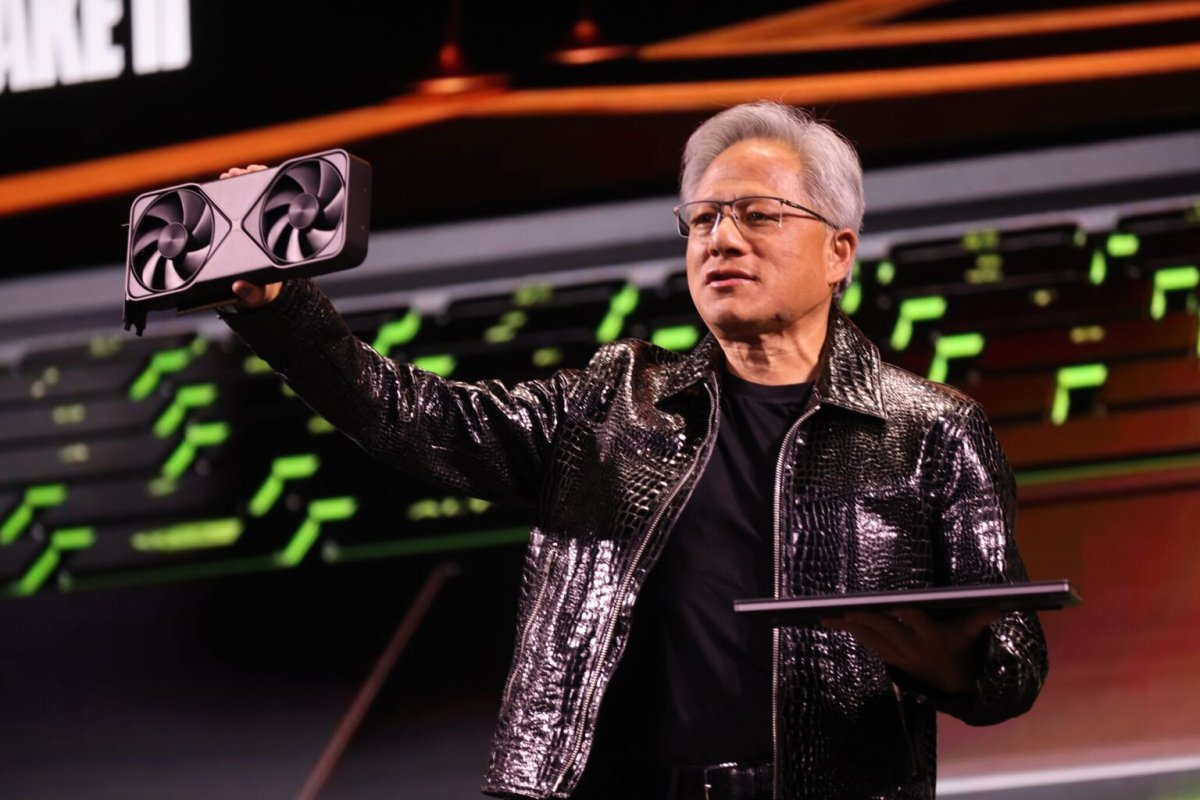
In a recent check of U.S. online retailers on September 14, the cheapest GeForce RTX 5090 available was a $6,395 listing on Amazon's marketplace, while Newegg search results reached $8,699 and other asking prices climbed as high as $9,500, according to Tom's Hardware. These figures are eye-catching, but they represent reseller premiums, not Nvidia's official pricing, and they do not translate directly into Nvidia's revenue.
For Nvidia shareholders, the absence of first-party inventory online is a sign of strong demand for its fastest consumer GPU. However, it's a poor indicator of earnings, since the marketplace premium goes to resellers after the card has passed through Nvidia and its board-partner channel. Moreover, Nvidia's latest quarter was overwhelmingly driven by data-center products, not a few scarce gaming cards.
Nvidia's stock (NVDA) closed Monday at $210.96, down 3.36%, on a regular-session quote timestamped 4 p.m. Eastern. The product shortage emerged against a broader selloff in the shares, rather than producing an obvious stock-price response.
What the listings establish
Tom's Hardware found that first-party RTX 5090 inventory was nearly gone from major U.S. online retailers. A local Micro Center check still found a card at $4,299, while the Amazon and Newegg offers came from marketplace sellers, some with weak ratings. The quoted upper prices are offers, not proof that large numbers of buyers completed purchases at those levels.
Nvidia launched the RTX 5090 at $1,999 in January 2025. A $6,395 offer is 3.2 times that starting price; $9,500 is 4.75 times it. The official specification lists 32 GB of GDDR7 memory, 21,760 CUDA cores, and 3,352 AI TOPS, making the card useful beyond gaming.
Hardware publications have attributed part of the demand to builders using consumer GPUs for AI servers. That explanation is plausible because a 5090 combines substantial memory and compute at a lower list price than professional alternatives. Neither Nvidia nor the retailers cited in the inventory check disclosed buyer identities or unit volumes. Bulk buying by AI firms should therefore be treated as an explanation offered by industry reporting, not an established sales fact.
The part that can move the NVDA thesis
Nvidia reported $7.92 billion of Graphics-segment revenue in the quarter ended July 26, up 46% from a year earlier. That was 8.2% of the company's $96.22 billion total. Compute & Networking produced $88.30 billion, or 91.8%. Those figures put even an extreme consumer-card premium in perspective.
The useful signal is not the $9,500 sticker. It is whether scarcity reflects durable end demand or simply a thin channel, allocation toward higher-value products, and speculative reselling. Nvidia's filing said Edge Computing growth was partly offset by slower consumer-PC sales as elevated memory and system prices weighed on demand. Gamers may also defer an upgrade, buy a prebuilt system, or switch to another GPU rather than pay several times the launch price.
The next measurable tests are authorized-channel restocks and Nvidia's fiscal third-quarter results. The company has guided to $108 billion of revenue, plus or minus 2%, and a 74% gross margin, plus or minus half a percentage point. If Graphics revenue and margin accelerate while normal channel supply remains scarce, the demand signal will carry more weight. If official supply returns and marketplace offers fall, the episode will look more like reseller economics than a change in Nvidia's earnings power.