In a striking divergence, SK hynix Inc. (NASDAQ: SKHY) American depositary shares climbed 8.1% to $177 on Friday, September 4, 2026, leaving the U.S.-listed securities trading at a hefty 46% premium over the company's common stock on the Korea Exchange (KRX: 000660). This gap, which widened to $55.49 per ADS before fees and taxes, underscores the complexities of cross-listed securities and the challenges of arbitrage in a market where new ADS creation is restricted.
One ADS represents one-tenth of a Korean common share. Based on Friday's Seoul close of 1,647,000 won and the dollar-won exchange rate of 1,355.41, the Seoul-traded equivalent of one ADS was valued at $121.51. The premium, calculated as (177 - 121.51) / 121.51, stands at 45.7%. However, this is not a simultaneous arbitrage quote, as the U.S. and Korean markets operate in different time zones and currencies, and additional costs such as fees, taxes, and settlement delays apply.
The valuation gap translates into a hypothetical $405 billion difference in implied equity value. Using the 730.49 million issued common shares, the Seoul price implies an equity value of approximately $888 billion, while the ADS price suggests a staggering $1.29 trillion. This discrepancy is largely theoretical, as only a fraction of the company's shares are traded as ADSs on Nasdaq.
The price action broke SKHY out of its late-August trading range, where it had hovered between $160 and $165 for five sessions. The 20.7 million shares traded on Friday represented a 64% increase over the prior nine-session average. The ADS has gained 9.5% since its August 27 close of $161.61. In contrast, Seoul-listed SK hynix shares rose a more modest 3.2%, while the broader KOSPI index gained 1.6%.
The persistent premium is largely attributed to the mechanics of ADS creation. According to the SEC prospectus, new ADSs can be created by depositing Korean shares, but the depositary may require SK hynix's consent above specified limits. This condition can blunt the usual arbitrage trade, as investors cannot assume that cheap Seoul shares will immediately become sellable SKHY receipts. The company has warned about such price variations before listing, and Friday's trading provided a vivid example.
Adding another layer of complexity, SK hynix disclosed to the SEC on Friday that its subsidiary Solidigm, which houses the NAND business acquired from Intel Corp. (NASDAQ: INTC), is reviewing competitiveness options. The company stated that nothing has been decided regarding reported pre-IPO fundraising. A capital raise could reveal value or fund expansion, but it could also dilute SK hynix's economic interest depending on the terms, which do not yet exist.
Despite these uncertainties, SK hynix's balance sheet remains robust. As of the second quarter, cash reached 88 trillion won, while debt fell to 18.6 trillion won, resulting in net cash of 69.4 trillion won. The company is also executing a buyback program of up to 40.004 trillion won (approximately $29.5 billion), targeting about 24.07 million common shares, or roughly 3.3% of issued stock. The purchases run through November 19, with cancellation planned afterward. While the buyback targets Korean shares, it can benefit ADS holders through a reduced share count, though it cannot guarantee the premium remains intact.
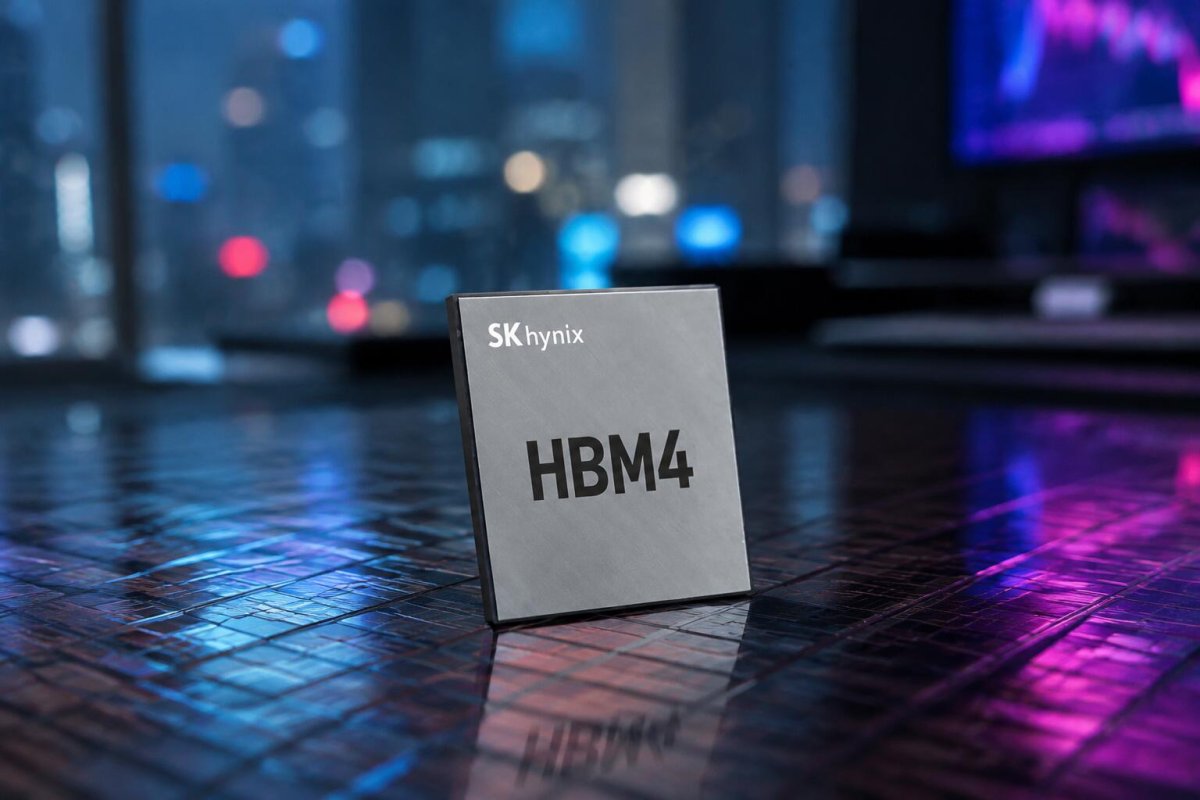
Operating momentum remains exceptional. Preliminary second-quarter revenue rose 257% to 79.32 trillion won, with operating profit reaching 60.54 trillion won, a 76% margin. The company began mass shipments of HBM4 memory during the quarter and plans a second-half ramp. Micron Technology (NASDAQ: MU) and Samsung Electronics (KRX: 005930) remain the key competitors in the memory space.
Analysts are bullish, with 14 out of 14 rating SKHY a Strong Buy, according to S&P Global data. The average price target of $247.31 stands 40% above Friday's close, while Needham's Quinn Bolton raised his target to $220 on August 24. However, the low consensus target of $152 sits 14% below the current price, reflecting the uncertainty surrounding the premium.
Risks include potential downturns in HBM demand or memory prices, possible dilution from Solidigm financing, and currency swings that could widen or compress the apparent gap. Fresh ADS issuance could also sharply reduce the premium. For investors, the decision is unusually specific: owning SK hynix is one question, but paying $177 for a claim worth $121.51 in Seoul is another.