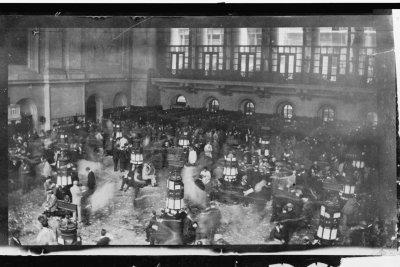
NEW YORK, July 19, 2026 — Last week saw small-cap stocks outperform their technology-heavy counterparts, yet both segments ended in negative territory. The Russell 2000 index edged ahead of the Nasdaq by 2.4 percentage points, but the overall market tone remained cautious. The S&P 500 closed Friday at 7,457.69, down 1.55% for the week, while the Nasdaq Composite shed 2.9% and the Dow Jones Industrial Average fell 0.93%.
Market Breadth Raises Concerns
Friday's trading session highlighted a troubling sign for bulls: decliners on the New York Stock Exchange outpaced advancers by a ratio of 1.94-to-1. Energy was the only S&P 500 sector to close in the green, buoyed by a 4.6% jump in crude prices. This narrow leadership suggests the recent rotation may be more about reducing concentrated risk than broadening exposure.
“A lasting broad rally typically results in more stocks rising overall,” noted market analysts. “On Friday, however, there were close to two stocks falling for each one advancing.”
Earnings Season Heats Up
More than 80 S&P 500 companies are scheduled to report earnings this week, with artificial intelligence spending plans under intense scrutiny. Among the most anticipated reports are Alphabet (GOOGL) on Wednesday, along with Intel (INTC) and Tesla (TSLA). The earnings season has so far been strong: of the 49 S&P 500 firms that have reported, 90% have beaten forecasts. Second-quarter earnings growth projections from LSEG have risen to 26.0%, up from 19.2% at the start of April.
Michael Arone of State Street Global Advisors (STT) commented, “Fundamentals have been resilient, and the earnings continue to be outstanding. The challenge is for these results to extend further than financial companies.”
Semiconductor Selloff Intensifies
The semiconductor sector has been hit particularly hard. The Philadelphia Semiconductor Index closed 20.2% below its record high set on June 22, marking a sharp correction after a stunning rally. The index dropped over 18% in July, yet remains up nearly 65% for 2026. Ryan Detrick, chief market strategist at Carson Group, described the trend as “chip fatigue,” noting that shares surged sharply before pulling back.
Bond Market Signals Caution
Investors sought safety in government bonds, pushing the 10-year Treasury yield down to 4.554% on Friday. Utility stocks, traditionally defensive, outperformed growth industries in limiting losses. This flight to safety underscores a reversal in heavy technology holdings, with no clear evidence yet of a shift toward broad cyclical exposure.
Geopolitical Risks Loom
Escalating tensions between the U.S. and Iran over the weekend added another layer of uncertainty. Gulf markets declined on Sunday, and Brent and U.S. crude prices had already climbed around 4.6% on Friday. A prolonged oil shock could reignite inflation concerns and complicate the Federal Reserve's interest rate path.
Outlook: Bull Market or Bull Trap?
The current rotation does not clearly support a bull-market expansion, nor does it confirm a bull trap. For a bullish signal to emerge, both small caps and average stocks would need to advance in tandem, with advancing stocks outnumbering decliners. Until then, the market remains in a defensive posture, awaiting stronger breadth to validate the rally.