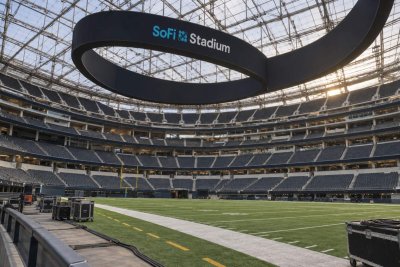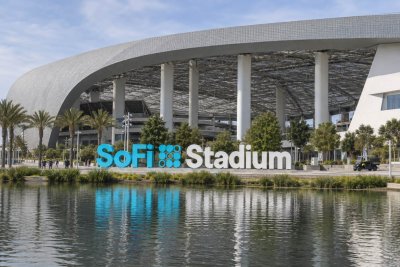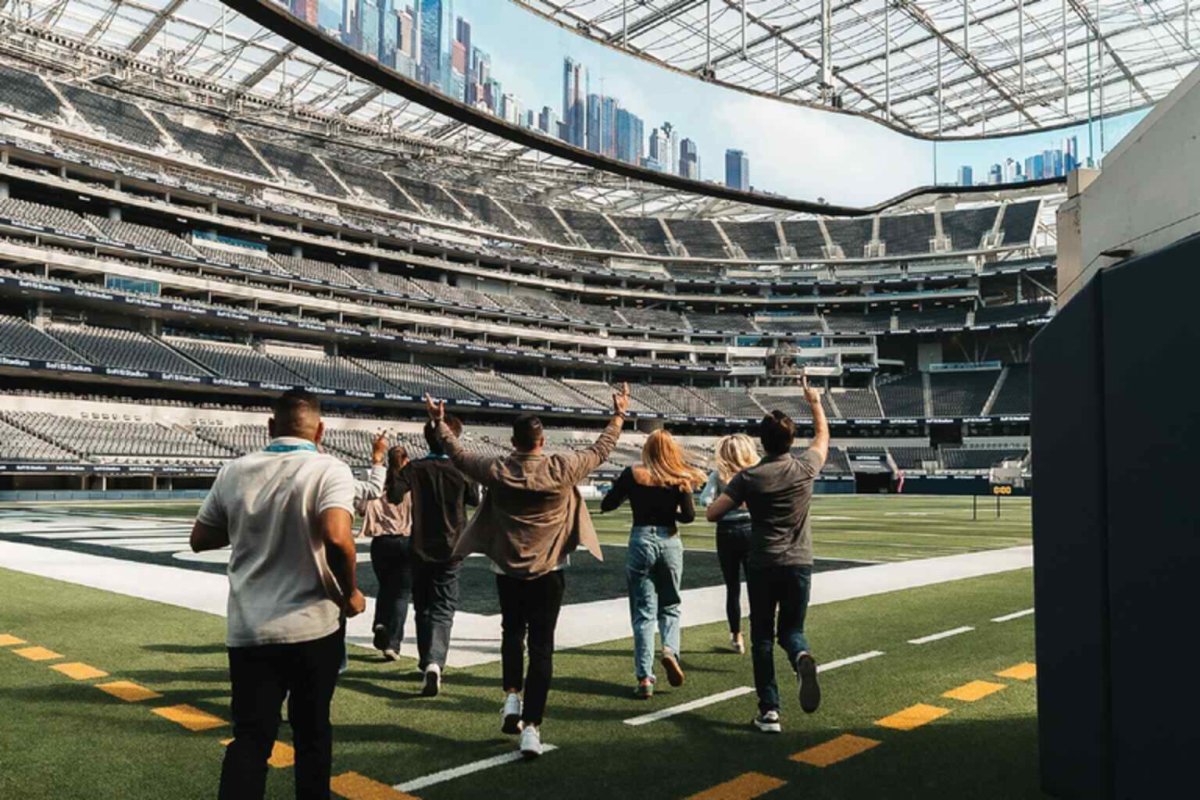
SoFi Stadium kicked off its 2026 NFL season on Sunday as the Los Angeles Chargers hosted the Arizona Cardinals, placing the SoFi Technologies name before a national audience once again. For investors, however, the venue represents marketing inventory rather than a tangible real-estate asset, a distinction that becomes crucial around game-day spikes in online interest.
The sprawling Hollywood Park complex, spanning nearly 300 acres, is owned, developed, and operated by Los Angeles Rams owner E. Stanley Kroenke. SoFi only holds the naming and sponsorship rights; it does not own the building or receive revenue from tickets, parking, concessions, or merchandise. The company's economic benefit comes from repeated brand exposure across two NFL teams, concerts, and upcoming global events like Super Bowl LXI in 2027 and the 2028 Olympic and Paralympic opening ceremonies.
Season Opener Highlights Exposure, Not Revenue
The immediate catalyst is straightforward: SoFi Stadium announced its NFL schedule would start on Sept. 13 with the Chargers hosting the Cardinals. Ahead of the game, the venue and privately held Legends Global added new food concepts, dessert locations, and two portable merchandise outlets for the 2026 season. The Rams' first home game is scheduled for Sept. 21.
These enhancements may boost spending per attendee for the stadium and its hospitality operator, but they do not represent a newly disclosed SoFi revenue stream. The fintech's return on this investment is purely in brand impressions, which must eventually translate into cheaper member acquisition, higher product adoption, or improved customer retention.
The Cost of the Name
SoFi entered a 20-year agreement with StadCo LA in 2019, granting exclusive stadium naming rights along with official partnerships with the Chargers, Rams, the adjacent performance venue, and the broader entertainment district. An SEC filing covering 2022 revealed contractual payments totaling $616.5 million from 2020 through 2040. This figure includes lease obligations and sponsorship opportunities, but it is not a purchase price or an indication of unpaid balance.
Dividing the total by the 20-year term yields a rough average of $30.8 million per contract year, though the actual payment schedule is uneven. That amounts to about 0.6% of SoFi's midpoint adjusted-net-revenue guidance for 2026, which stands at $4.75 billion to $4.85 billion. Financially, the commitment is manageable, but its productivity remains unproven.
Can the Brand Bet Pay Off?
SoFi does not disclose a stadium-specific return on advertising, leaving investors to assess the contract through company-wide metrics. Recent results are encouraging but cannot isolate the stadium's contribution. In the second quarter, SoFi reported record adjusted net revenue of $1.2 billion, up 40% year over year, while membership grew 35% to 15.8 million. Existing members opened 51% of new products, up from 43% in the first quarter and 35% a year earlier. This cross-buy rate is more valuable than mere name recognition because it shows customers engaging with additional services after joining.
SOFI shares closed Friday, Sept. 11, at $17.32, up about 0.6% on volume of roughly 24.5 million shares, according to Nasdaq historical data. There was no basis to attribute that move to Sunday's game.
The Long-Term Risk
The counterargument centers on the contract's duration. A sponsorship locked in through 2040 carries opportunity cost, and a prominent building name offers little protection if credit losses, funding costs, or product execution weaken. The next useful checkpoint is not attendance at one opener but whether SoFi can sustain member growth near its current pace while cross-buy rises and marketing efficiency holds. If those measures stall, the stadium remains a visible fixed commitment rather than evidence of a stronger financial franchise.