The much-anticipated initial public offering of SpaceX has finally arrived, and its impact on the broader space and satellite sector has been immediate and dramatic. The company's shares, priced at $135, surged 19% on their first day of trading to close at $160.95, establishing a new valuation benchmark for the space industry. However, this landmark event triggered a sharp sector-wide selloff as investors engaged in what market analysts describe as capital recycling, moving funds from smaller space stocks into the newly public giant.
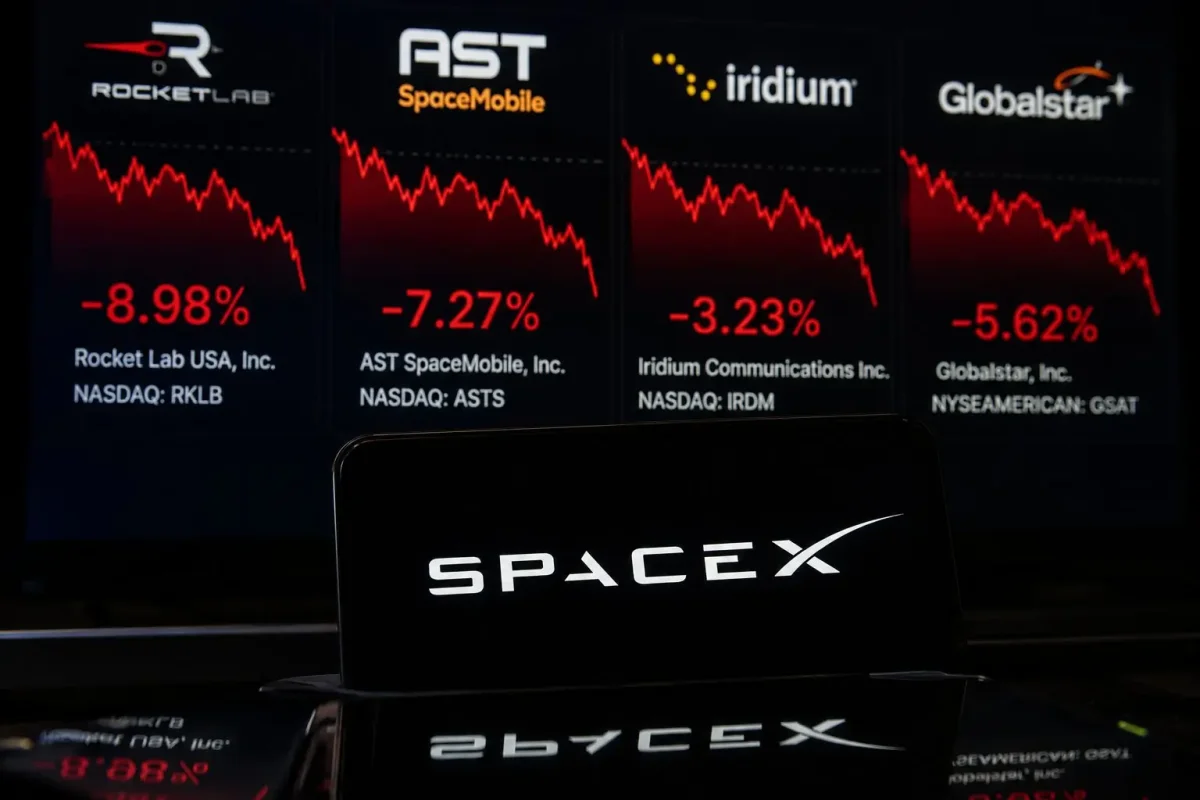
The rotation was pronounced across the board. Rocket Lab (RKLB) saw its shares decline 10.8%, despite the recent announcement that it will be added to the Nasdaq-100 index before trading begins on June 22. AST SpaceMobile (ASTS) fell 15.5%, even as it prepares for a key satellite launch on June 17. Other notable decliners included Intuitive Machines (LUNR), down 13.1%, Planet Labs (PL), off 8.8%, and Redwire (RDW), losing 11.6%. Sector ETFs also reflected the broad move, with the Procure Space ETF (UFO) dropping 6.9% and the ARK Space & Defense Innovation ETF (ARKQ) falling 1.9%.
According to reports from Reuters, the declines were driven primarily by a shift in investor positioning rather than any fundamental deterioration in the companies' outlooks. Chris Beauchamp, chief market analyst at IG Group, suggested that some investors may be concerned that "the hype can't quite live up to expectations." Talley Léger, managing director at The Wealth Consulting Group, described the move as "capital recycling," where institutions sell off smaller holdings to make room for a major new listing like SpaceX.
Rocket Lab's upcoming inclusion in the Nasdaq-100 is a significant catalyst, as index-tracking funds managing over $800 billion in assets may be required to purchase the stock. CEO Sir Peter Beck hailed the move as "a landmark moment for Rocket Lab." Nonetheless, the broader sector rotation overwhelmed this positive news, highlighting the gravitational pull of SpaceX's market debut.
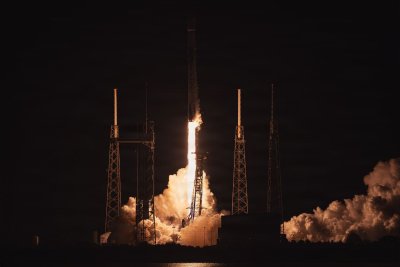
AST SpaceMobile remains a focal point for traders, with the launch of its BlueBird satellites 8, 9, and 10 scheduled for June 17 aboard a SpaceX Falcon 9 rocket from Cape Canaveral. The launch window opens at 2:39 a.m. EDT, with backup windows until 4:15 a.m. EDT. These satellites are designed to expand the company's direct-to-device satellite network, which aims to provide broadband connectivity directly to standard smartphones. The three new satellites are expected to nearly double peak data speeds over the earlier Block 1 BlueBirds. However, the schedule remains subject to change due to weather or technical issues, adding an element of risk to the event.
Planet Labs reported its best quarter ever earlier this month, with revenue rising 42% year-over-year to $94.2 million and total backlog increasing 72% to over $906 million. Backlog, which represents contracted work not yet recognized as revenue, provides investors with a view of future sales. Despite these strong fundamentals, Planet shares fell on Friday, demonstrating that even solid earnings visibility can be swept aside when the entire high-growth space segment is being sold off.
Looking ahead, the space sector appears more volatile and selective than it did just a week ago. Bulls point to SpaceX's successful IPO as proof of strong investor appetite for space infrastructure. Rocket Lab benefits from an upcoming index inclusion, AST has a scheduled launch, and Planet shows robust revenue and backlog growth. Bears, however, focus on elevated valuations and execution risks. Most publicly traded space companies still report negative P/E ratios, meaning investors are betting on future profitability rather than current earnings. With the facts available today, the space group looks risky overall, with capital continuing to rotate toward SpaceX, potential launch delays, and the possibility of further valuation compression.