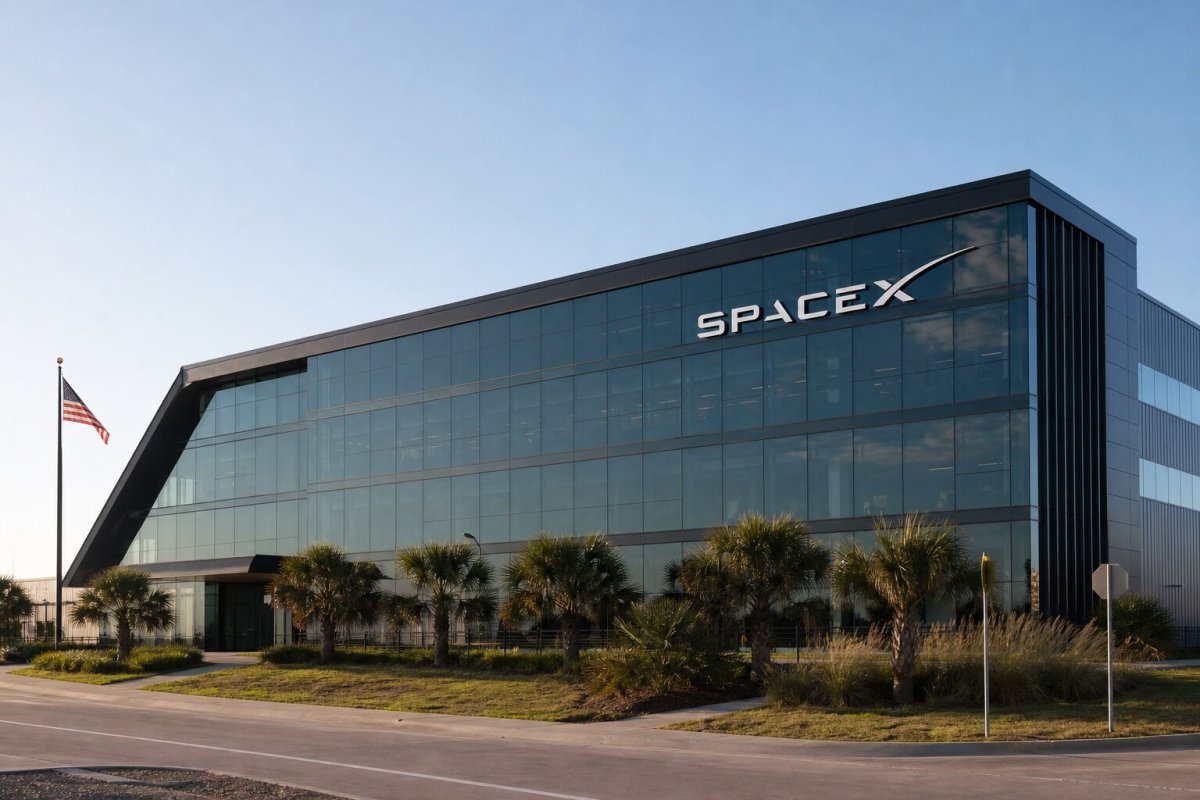
Space Exploration Technologies Corp. (NASDAQ: SPCX) experienced a 1.9% decline in its stock price on Wednesday, as market participants digested the implications of the company's substantial investments in artificial intelligence infrastructure against its lofty $1.84 trillion market capitalization. At 09:55:08 EDT, shares were trading at $139.53, down from the previous close of $142.23, though still 3.36% above the initial public offering price of $135.
The pullback comes even as the company reported robust second-quarter financial results, with revenue climbing 91.9% year-over-year to $7.814 billion. The net loss narrowed by 46.3% to $541 million, according to the latest SEC Form 10-Q filing. However, the market's focus appears to be on the company's capital expenditure trajectory, which totaled $28.476 billion in the first half of the year—a figure that represents 2.28 times the revenue generated during that same period.
AI Investment Dominates Capital Spending
Artificial intelligence accounted for the lion's share of capital outlays, with $23.551 billion directed toward AI initiatives—representing 82.7% of total capital expenditures. This aggressive spending underscores the company's strategic pivot toward AI, but it also raises questions about near-term returns. The AI segment contributed just 27.0% of first-half revenue and posted an operating loss of $3.726 billion, highlighting the gap between investment and profitability.
In contrast, the connectivity division, anchored by Starlink, continued to demonstrate strong financial performance. It generated operating income of $1.656 billion on revenue of $4.291 billion, up 65.8% from the prior year. The space division, however, recorded an operating loss of $542 million on revenue of $962 million, reflecting the ongoing costs associated with Starship development and launch operations.
Segment Performance and Valuation Concerns
The divergent financial profiles of SpaceX's three main segments—space, connectivity, and AI—create a complex valuation picture. The stock is currently trading at approximately 59 times annualized second-quarter revenue, a multiple that implies significant growth expectations. While connectivity provides immediate cash flow, AI represents the bulk of investment and a substantial portion of anticipated future growth.
Analyst sentiment remains largely bullish, with 24 of 33 covering analysts rating the stock a Buy (72.7%), six a Hold, and three a Sell. The average price target stands at $228.59, implying a 63.8% upside from current levels. Notably, Oppenheimer recently raised its price target to $280 from $250 while maintaining an Outperform rating, citing the company's vertically integrated AI platform as a key differentiator.
Cash Flow and Balance Sheet Strength
Despite the heavy investment phase, SpaceX maintains a strong balance sheet. The company generated $3.466 billion in operating cash flow during the first half, though this fell short of capital expenditures by $25.010 billion. However, the company holds $100.009 billion in cash and marketable securities, providing ample liquidity to fund its ambitious growth plans. Total debt stands at $38.433 billion, leaving a net cash position of approximately $61.6 billion.
The Starlink subscriber base has doubled, but average revenue per user (ARPU) declined 22.4% due to growth in lower-priced international plans. This trend, while expanding the user base, could pressure future revenue growth and profitability.
Market Context and Risks
The stock's intraday movement saw it open near $140.98 and briefly trade above $141 before sliding to the session's low, with volume reaching 9.59 million shares. The decline occurred despite the positive analyst action, suggesting that investors are focused on the near-term financial strain from AI investments.
Key risks identified by analysts include potential Starship launch setbacks, Starlink price reductions, escalating AI infrastructure costs, regulatory hurdles, and the possibility of additional share issuances. Conversely, accelerated AI revenue growth or stronger-than-expected launch demand could help close the gap between investment and returns more quickly.
As SpaceX continues to navigate its dual identity as both a cash-generative connectivity provider and a capital-intensive AI pioneer, investors will be closely monitoring quarterly results for signs that the AI bet is beginning to pay off. The company's ability to translate its massive AI investments into sustainable revenue growth will be critical to justifying its premium valuation.