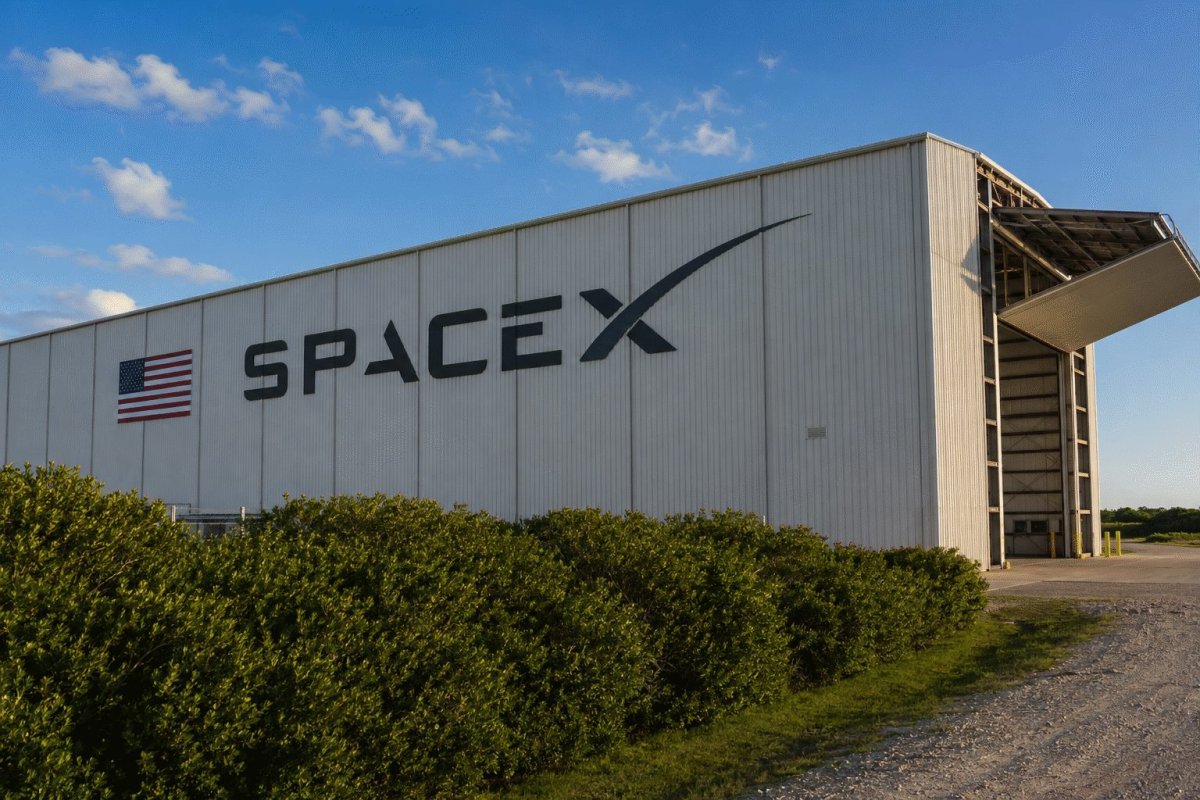
Space Exploration Technologies Corp. (NASDAQ:SPCX) saw its shares climb 4.2% during Wednesday's trading session, reaching $138.93 by 11:08 EDT. The move added approximately $74 billion to the company's market capitalization, which now stands at roughly $1.83 trillion. The intraday high touched $141.67, while the previous close was $133.29.
This rally comes amid intense investor focus on SpaceX's AI ambitions. The current valuation is about 24% higher than the $60 billion price paid by Cursor, a key AI partner. Analysts see this as evidence of rapidly shifting sentiment toward SpaceX's AI potential.
Q2 Results Show Strong Growth, Mixed Segment Performance
SpaceX's second-quarter revenue nearly doubled year-over-year, reaching $7.814 billion compared to $4.071 billion in the prior year. The operating loss narrowed significantly from $970 million to $143 million, while adjusted EBITDA surged to $3.538 billion from $1.214 billion, a 191% increase.
Connectivity, driven by Starlink, remains the cash engine, contributing 55% of revenue and 73% of adjusted EBITDA. The segment posted $1.656 billion in operating income and $2.597 billion in adjusted EBITDA. In contrast, the AI segment generated $2.563 billion in revenue but recorded an operating loss of $1.257 billion, highlighting the heavy investment required.
Analyst Views and Price Targets
Morgan Stanley (NYSE:MS) analysts, led by Adam Jonas, argue the market is undervaluing SpaceX's AI business, which they peg at just $12 per share. They set a price target of $300, implying over 115% upside. Jonas projects Cursor's annual revenue run rate could reach $8 billion by year-end, $17 billion in 2027, and $33 billion by 2030.
Wall Street sentiment remains bullish, with 24 Buy ratings, six Holds, and two Sells among tracked analysts. Price targets range from $75 to $800, reflecting wide divergence in expectations. Deutsche Bank (NYSE:DB) analysts call the $100 billion annualized revenue run rate target by December 'reachable,' citing contracted neocloud projects, though they caution the trajectory remains unproven.
Upcoming Share Unlock Adds Risk
A significant overhang looms as roughly 319 million restricted shares become eligible for trading on August 20, with over four billion shares potentially unlocked by year-end. This could pressure the stock, especially if holders decide to sell. A drop below the $135 IPO price would erase recent gains.
SpaceX reported a GAAP net loss of $541 million last quarter, and AI-related capital expenditures remain substantial. The company's ability to scale AI agreements without diluting Starlink's cash flow will be crucial. For now, the stock trades as a high-growth option, with investors betting on execution.