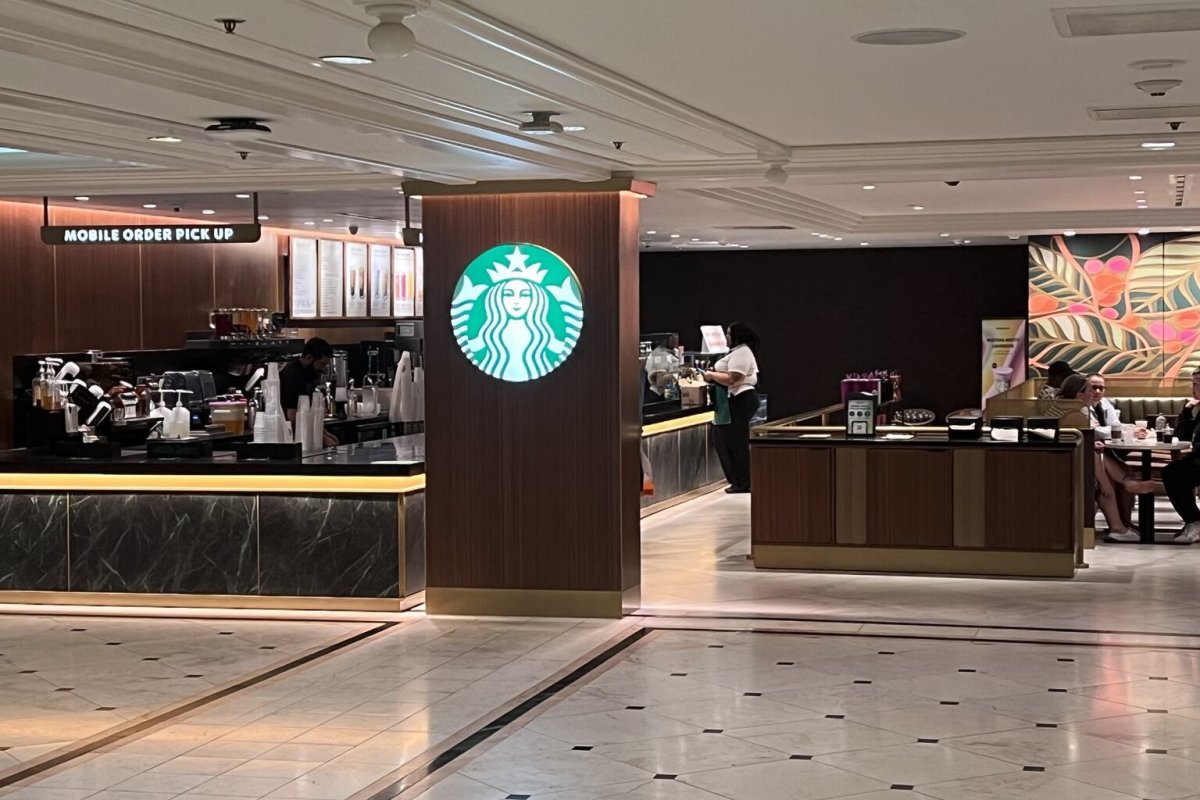
Starbucks Corporation (NASDAQ:SBUX) has revealed plans to shutter approximately 250 coffeehouse locations across North America, a move that will result in an estimated $300 million in restructuring charges. The decision, announced late Thursday, follows a comprehensive portfolio review and signals a more conservative growth trajectory for the coffee giant.
The company expects to incur roughly $200 million in cash-related costs tied to lease terminations and employee separation benefits, with the remaining $100 million attributed to asset disposals and impairments. This translates to an average cost of about $1.2 million per closed store, though actual expenses may vary significantly based on individual lease agreements and local labor regulations.
Investors reacted with measured caution. Shares of Starbucks closed Thursday at $93.65, down $0.49 or 0.52%, and traded near $93.63 in premarket activity Friday. Trading volume was notably elevated, running 11% above the stock's 20-session average, suggesting heightened investor interest in the news.
Revised Fiscal 2026 Outlook
More significant than the store closures themselves is the revision to the company's global expansion plans. Starbucks now expects approximately 440 net new store openings worldwide in fiscal 2026, a substantial reduction from its previous guidance of 600 to 650 openings. The new figure sits 29.6% below the midpoint of the prior range, underscoring a more cautious approach to growth.
The closures come on the heels of a strong North American sales recovery. In fiscal Q3, comparable store sales rose 8.1% year-over-year, with transactions up 4.5% and average ticket increasing 3.5%. Net revenue climbed 7% to $7.4 billion, and operating income grew 10% to $1.0 billion. Despite these gains, the company's North American operating margin expanded only modestly, by 30 basis points to 13.6%, as restructuring costs and labor investments offset some of the sales leverage.
Chief Executive Brian Niccol acknowledged the ongoing challenges, stating, "We have more work to do." The closures are expected to be completed by the end of the fiscal year on September 27.
Market Context and Analyst Views
The strategic shift reflects a broader industry trend where companies are prioritizing portfolio quality over sheer store count. By closing underperforming locations, Starbucks aims to improve overall store productivity and returns, while still maintaining a net increase in its global footprint through international expansion.
Wall Street's reaction has been mixed, with price targets ranging from $92 to $125, implying potential moves of -1.8% to +33.5% from Thursday's close. Analysts at firms like TD Cowen, BTIG, and Wells Fargo maintain bullish stances, while BNP Paribas remains cautious. The wide dispersion in targets highlights the uncertainty surrounding the execution of this plan.
"Closing weak stores can enhance portfolio returns without halting growth," noted one analyst. "But the real test will be how quickly the benefits materialize and whether the $300 million charge stays within budget."
Financial Impact and Risks
The restructuring charge will weigh on near-term earnings, but management expects the closures to boost long-term profitability. Key risks include the possibility of higher-than-expected cash outlays for lease exits and the potential for customer traffic disruptions in affected regions.
Starbucks' next earnings report will be closely watched to see if the company can reconcile the final store count with its $300 million estimate and the revised 440-opening target. For now, investors appear to be taking a wait-and-see approach, with the stock trading relatively flat in early Friday trading.