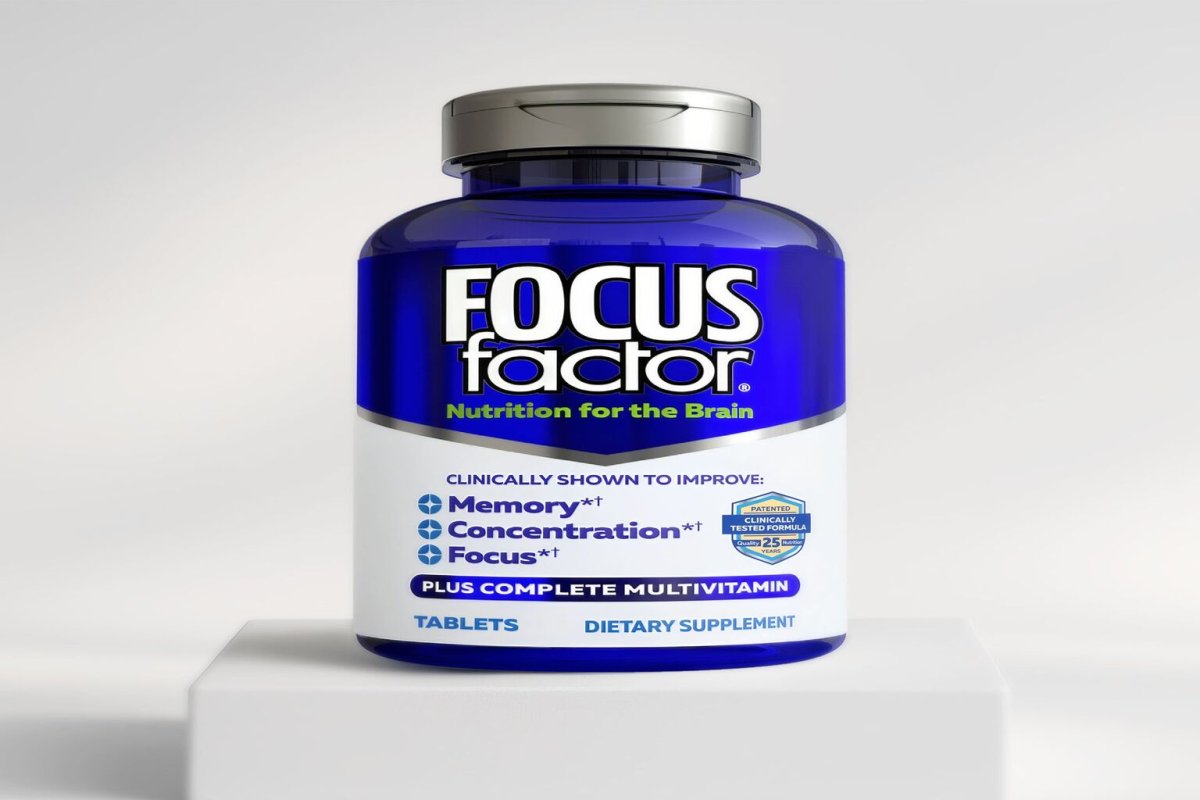
Synergy CHC Corp. (SNYR), the maker of Focus Factor supplements, saw its stock surge 67.7% to $0.1387 in premarket trading on Thursday, a move that has caught the attention of traders but does little to alter the grim financial reality facing the company and its shareholders.
The company filed for Chapter 11 bankruptcy protection on September 4, with liabilities far exceeding its last reported assets and a secured lender demanding immediate repayment. The premarket jump, which follows a close of $0.0827 on Wednesday, is largely a function of the stock's low price, where even small dollar trades can produce outsized percentage moves. This is a trading event, not a signal of improved recovery prospects for common shareholders.
What the Bankruptcy Filing Reveals
Synergy's bankruptcy disclosure indicates that it filed voluntarily in the U.S. Bankruptcy Court for the District of Columbia and is operating as a debtor-in-possession. The company stated it anticipates formulating and confirming a plan of liquidation or reorganization within 120 days of the case's start. That timeframe leaves both outcomes open, and it is not a promise that the existing business or current shares will survive the process.
The filing also brought significant governance changes. Lauren Berret was appointed as chief restructuring officer, four directors resigned, and Jack Ross became the sole board member. President Alfred Baumeler also resigned. These moves are consistent with a process now focused on preserving and allocating estate value rather than the usual quarterly cadence that public-market investors expect.
Balance Sheet: A High Bar for Equity
Synergy's last reported financials, from its first-quarter 10-Q, showed total assets of $6.46 million against liabilities of $31.87 million, leaving a stockholders' deficit of $25.41 million. Cash stood at just $292,115, and current assets of $6.35 million were already below current liabilities of $6.85 million.
The debt situation worsened after that quarter. On August 25, secured lender ACP notified Synergy that its commitments were terminated and obligations accelerated. The company said approximately $18.9 million was immediately due as of August 21, excluding additional interest, fees, and costs. An earlier disclosure revealed that Synergy had missed an August 3 interest payment and agreed to a $404,173 forbearance fee.
In a bankruptcy, common shareholders sit at the bottom of the priority ladder, behind bankruptcy expenses, secured claims, and other creditor claims. For SNYR equity to receive any distribution, the eventual value available after satisfying those higher-ranking claims would need to reach the common-stock layer. Given the March balance sheet and the accelerated lender claim, that is a demanding hurdle. A reorganization can preserve a company while canceling its old equity; the survival of the Focus Factor brand would not by itself mean survival for today's shares.
Operating Weakness Before the Filing
The company's operating business was already deteriorating before the bankruptcy. First-quarter revenue fell 32.8% to $5.49 million from $8.17 million a year earlier. Product sales declined 17.7%, and Synergy swung to a $2.57 million net loss from an $876,000 profit. The comparison also included $1.5 million of prior-year licensing revenue that did not repeat.
Then came a much larger commercial shock. In July, Costco told Synergy it would discontinue Focus Factor, a brain-health supplement the retailer had carried for more than 16 years. Costco represented approximately 58% of Synergy's 2025 net revenue, and the company warned that the loss would have a material adverse effect.
Visibility is also unusually poor. Nasdaq notified Synergy in August that it was not compliant with the exchange's periodic-reporting rule because the second-quarter 10-Q had not been filed. The notice had no immediate listing effect, but Synergy said it could not assure investors when—or whether—it would file and regain compliance.
What Could Change the SNYR Thesis?
For investors, four documents matter more than Thursday's price action: the bankruptcy schedules, any debtor-in-possession financing order, an asset-sale valuation, and the proposed plan's distribution table. Together, they will reveal the estate's assets, financing burden, creditor recoveries, and whether existing equity is retained, diluted, or canceled.
There is a conceivable upside case. Focus Factor remains a recognizable brand, and a competitive sale or a funded reorganization could produce value above the historical balance-sheet carrying amounts. The product is still offered through the brand's direct store. But shareholders need proceeds well above senior claims, not merely continued sales or an operating business after restructuring.
Until court filings put numbers around that outcome, SNYR is best viewed as a bankruptcy security with extreme price volatility. The 68% premarket gain answers what the stock is doing. It does not yet answer what the stock will own.
