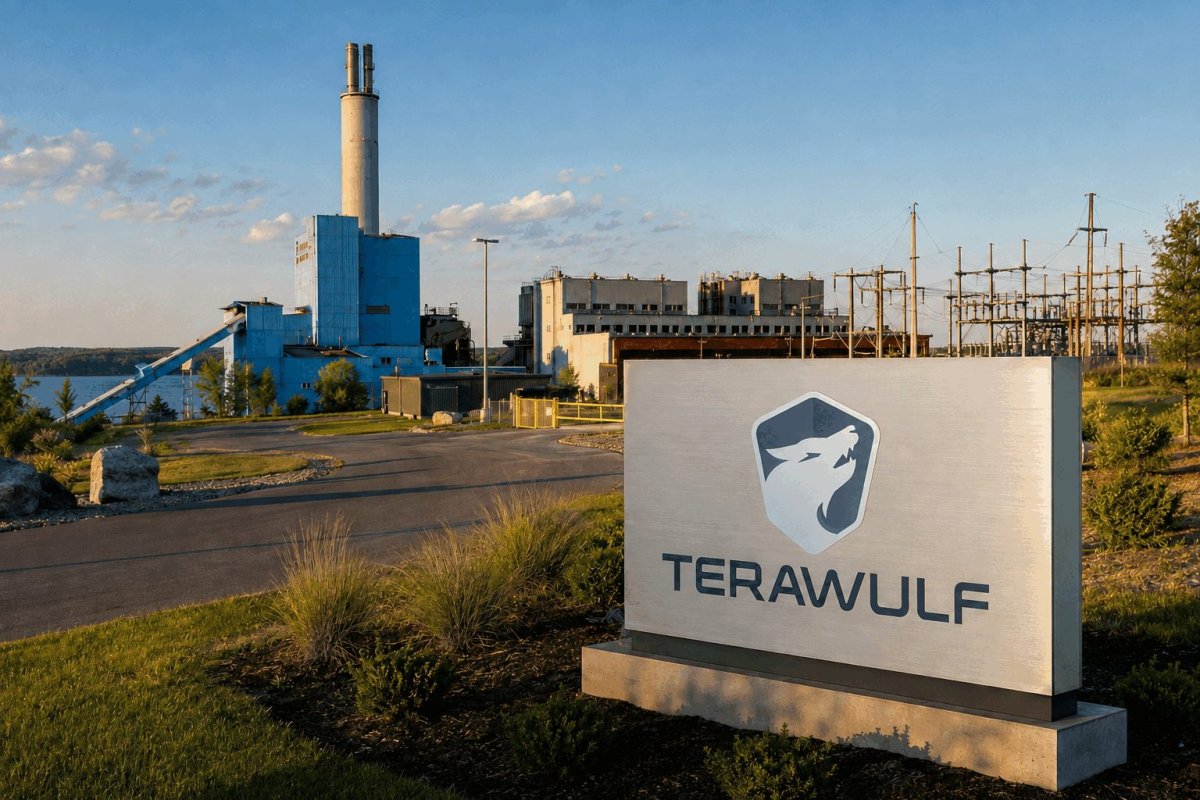
TeraWulf Inc. (NASDAQ: WULF) saw its shares decline 5.7% to $15.52 during Friday's trading session, as investors weighed the company's ambitious AI infrastructure expansion against its substantial capital requirements. The drop comes after the company reported cash and restricted cash holdings of approximately $3.0 billion as of June 30, which closely matches the projected cost range for its 336-megawatt Lake Mariner facility.
The Lake Mariner expansion, currently under construction, is 3.3 times larger than the company's existing revenue-generating capacity of 102 MW. Management has guided costs between $8 million and $10 million per essential IT megawatt, translating to a total buildout cost of $2.69 billion to $3.36 billion. The midpoint of $3.025 billion aligns almost exactly with the company's cash reserves, leaving little room for cost overruns or delays.
This funding tightness is a key reason for the stock's sensitivity to scheduling. Even minor shifts in construction timelines can affect when revenue begins flowing and alter the company's funding requirements. The company may seek project-specific financing to reduce its upfront cash outlay, but such arrangements remain uncertain.
Revenue Mix Shift
TeraWulf's second-quarter results highlighted a significant strategic pivot. The company generated $31.9 million from high-performance computing (HPC) leases, which now account for 71% of total revenue, up from zero a year ago. In contrast, digital-asset revenue (bitcoin mining) plummeted 73% year-over-year to $12.8 million. Total revenue came in at $44.8 million, down 6% from the prior year's $47.6 million.
Chief Financial Officer Patrick Fleury described the quarter as a milestone in reshaping the company's financial profile, citing strong liquidity and the potential to secure project-level financing. The company has locked in a landmark 20-year lease with Anthropic for approximately 401 MW in Kentucky, expected to generate around $19 billion in contracted revenue, with deliveries beginning in late 2027.
Dilution Concerns
Despite the promising long-term contracts, near-term dilution is a growing concern. The company's outstanding share count rose 18.8% to 498.9 million as of June 30, from 420.1 million at the end of December. Morgan Stanley's model projects 624.8 million fully diluted shares, representing a 25.2% increase over the current basic count. At Friday's price, this implies a fully diluted market value of approximately $9.70 billion, compared to $7.74 billion on a basic basis.
Analyst sentiment remains largely positive, with 18 of 19 analysts rating the stock a buy or strong buy. The consensus price target stands at $36.64, implying roughly 136% upside from Friday's midday price. However, Morgan Stanley's Stephen Byrd lowered his price target to $62.50 from $72, attributing the change solely to the increased share count, not operational performance.
Execution Risks
The main point of contention among analysts is execution. TeraWulf must convert its contracted power into operational data centers while ensuring that lease value isn't eroded by cost overruns or further dilution. Risks include construction delays, rising equipment costs, and reliance on a limited customer base. Potential equity or warrant dilution could also weigh on per-share gains.
Friday's decline underscores the market's cautious stance. While the AI contracts are substantial, the gap between contracted megawatts and realized revenue remains wide. As the company pushes forward with its expansion, investors will be watching closely for signs of timely delivery and financial discipline.