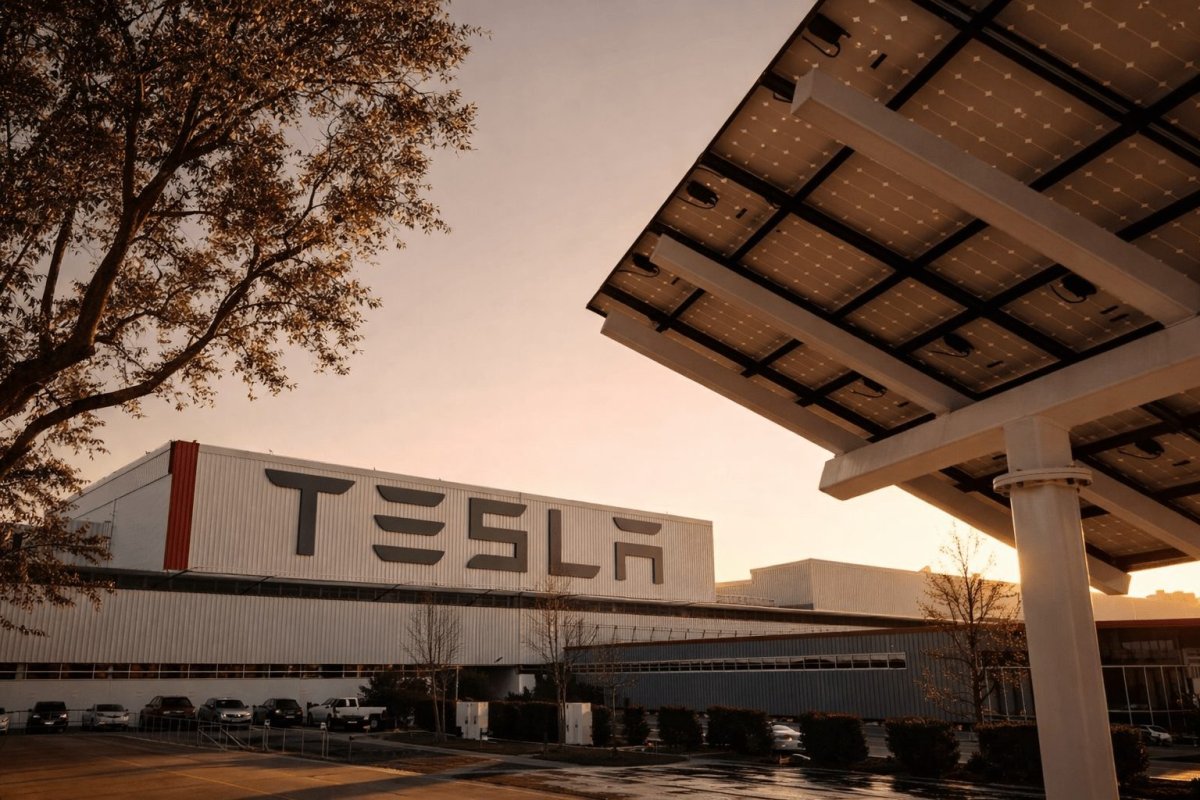
Tesla shares advanced approximately 4.6% during Tuesday's trading, buoyed by a broad-based recovery across U.S. equity markets. However, the electric vehicle manufacturer concluded the first quarter of 2026 with a decline exceeding 20%, redirecting investor attention toward imminent quarterly delivery figures that will serve as a critical near-term barometer for consumer demand.
Delivery Estimates Signal Slowing Momentum
The consensus among analysts, as compiled on Tesla's investor relations site, anticipates the company will report around 365,645 vehicle deliveries for the first quarter. While this would represent an increase from the 336,681 units delivered in the year-earlier period—which was hampered by Model Y production line changeovers—it marks a sequential drop from the 418,227 vehicles delivered in the fourth quarter of 2025. This projected decline underscores the challenge of rebuilding momentum after Tesla's full-year 2025 deliveries fell to 1.64 million vehicles, ceding the global all-electric sales lead to China's BYD.
Growth Forecasts Dim Amid Heavy Investment
Market expectations for Tesla's growth trajectory have softened considerably. A recent Reuters analysis indicated that analysts have reduced their 2026 delivery growth forecast to approximately 3.8%, down from an estimate of 8.2% in January. Some observers now anticipate a potential third consecutive annual decline in deliveries. This cautious outlook persists even as Tesla plans to spend more than $20 billion this year on ambitious projects including its Cybercab robotaxi, Optimus humanoid robot, and battery technology initiatives.
Tuesday's stock appreciation coincided with a significant relief rally in major indices; the S&P 500 jumped 2.91% and the Nasdaq Composite climbed 3.83% on hopes for a de-escalation in Middle East tensions. Despite this single-day gain, Tesla's stock performance for the quarter remained deeply negative.
Intensifying Competition in Key Markets
The competitive landscape, particularly in Europe, is becoming increasingly difficult. While February vehicle registrations in the region rose 11.8% year-over-year—the first annual increase since December 2024—BYD's registrations more than doubled. The Chinese automaker nearly matched Tesla's market share, which stood at 1.8% for the month. Traditional automakers like Volkswagen and Stellantis also posted gains, squeezing Tesla's position.
Analyst commentary reflects these headwinds. Morningstar's Seth Goldstein told Reuters he is observing a decline in Tesla's biggest markets and forecasts another yearly drop in deliveries. Sam Fiorani, Vice President at AutoForecast Solutions, noted that recent updates to the Model 3 and Model Y may not be sufficiently radical to win back market share against rivals offering cheaper and fresher products.
Strategic Pivot and Financial Pressures
Tesla has actively sought to shift investor focus beyond automotive unit volumes. In January, the company affirmed that Cybercab production remains on track for this year and disclosed a $2 billion investment in Elon Musk's xAI venture. Furthermore, revenue from its energy generation and storage segment rose 25.5% year-over-year in the fourth quarter to a record $3.84 billion. Thomas Monteiro of Investing.com suggested Tesla is entering a transition phase where metrics related to new technology rollouts may become more significant than delivery counts.
Nevertheless, a significant shortfall in delivery numbers or another round of price discounts could swiftly refocus attention on Tesla's cash burn. Reuters reported that Morgan Stanley analyst Adam Jonas expects Tesla to burn more than $8 billion in 2026, despite the company ending 2025 with $44.06 billion in cash, cash equivalents, and investments.
Execution Risks in Autonomous Driving
The path to commercializing robotaxis carries substantial execution risk. A Reuters review in February found that Tesla logged zero autonomous test miles in California during 2025 and has not applied for the permits required to operate a commercial driverless ride-hailing service in the state. In contrast, Waymo, Alphabet's self-driving unit, logged over 13 million test miles before receiving approval to charge passengers for fully driverless rides.
For the time being, investors appear willing to maintain a patient stance, provided the deterioration in the core automotive business does not accelerate. Gene Munster of Deepwater Asset Management remarked that achieving zero growth in deliveries would currently be considered a win for Tesla. He cautioned, however, that if deliveries begin to fall at a faster rate, that would signal a more serious problem for the company's narrative and financial health.