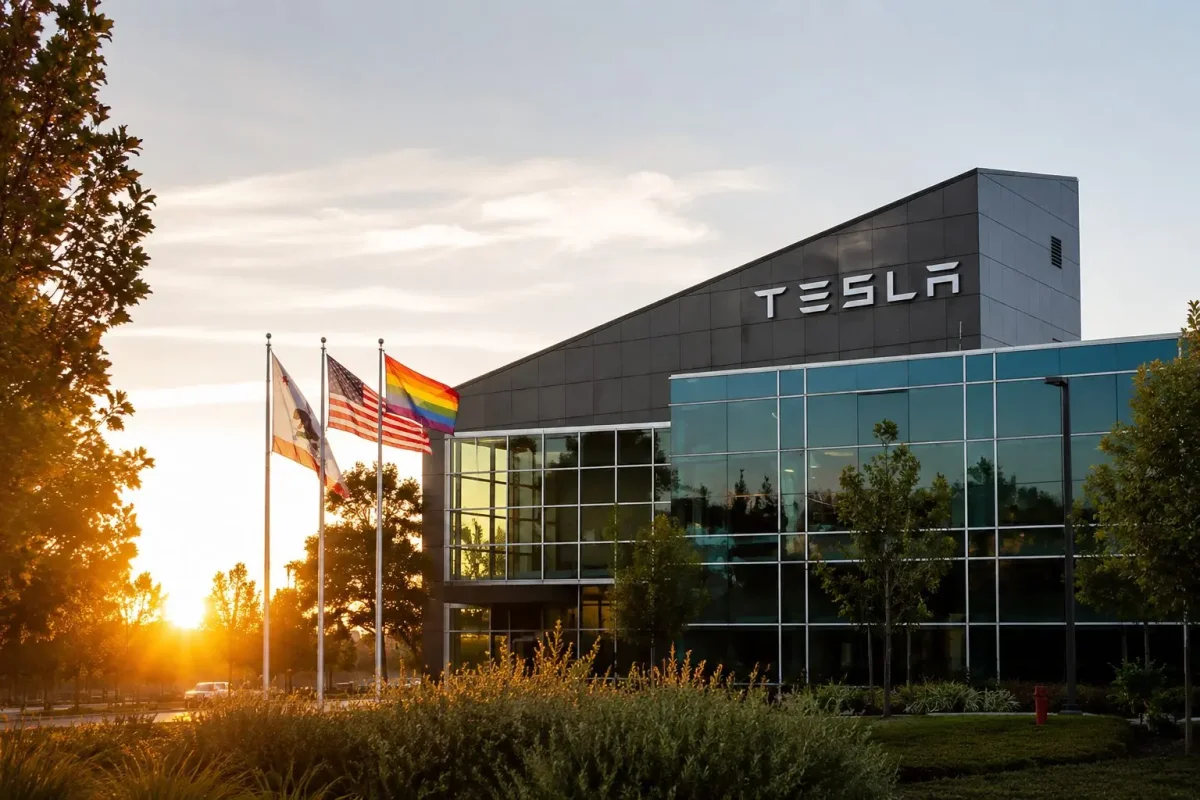
Tesla Inc. shares experienced a notable uptick on Wednesday, climbing roughly 2.5% to $414.10, following news that Lithuania has given the green light for the rollout of its Full Self-Driving (FSD) software. This approval makes Lithuania the second European nation, after the Netherlands, to authorize the technology, signaling incremental progress in Tesla's autonomous driving ambitions.
The stock, which trades on the Nasdaq, touched an intraday high of $415.10 before settling back slightly. The move comes amid a broader market rebound, with the Dow Jones Industrial Average, S&P 500, and Nasdaq all posting gains. Lower oil prices, declining Treasury yields, and a rally in semiconductor stocks ahead of Nvidia's earnings provided additional support to the market, according to market participants.
Investors increasingly view Tesla not merely as an automaker but as a software and artificial intelligence play. The FSD system, a supervised driver-assistance feature, handles certain driving tasks but still requires the driver to remain vigilant. The approval in Lithuania, which recognized Dutch certification, is seen as a small but positive step in expanding the technology's European footprint.
European Progress and Regulatory Hurdles
Lithuania's transport safety agency confirmed that it accepted the Dutch certification for FSD. Tesla announced the launch via its X social media platform, noting that the software is now available in Lithuania following the Netherlands' approval last month. Belgium has also begun the authorization process in the Flanders region, while Greece's transport ministry is preparing legislation to enable similar approvals.
Despite these advances, regulatory challenges remain. Reuters reported earlier this month that authorities in several European countries have raised concerns about FSD, including issues related to speeding, performance on icy roads, and potential workarounds to driver attention features. These concerns could slow the broader European rollout and impact investor sentiment.
Musk's Vision and Market Sentiment
Elon Musk continues to champion the autonomous driving narrative. During a video address at a Tel Aviv mobility conference on Monday, he stated that self-driving cars are already operating without human safety drivers in Texas and predicted that such vehicles could be deployed across the U.S. this year. He further projected that within five to ten years, artificial intelligence would handle approximately 90% of all distance driven.
Wall Street's focus on Tesla has shifted away from near-term delivery figures. Matt Britzman, senior equity analyst at Hargreaves Lansdown, noted that a few thousand cars either way are unlikely to materially affect valuation. Instead, the investment case hinges on future developments, particularly in autonomy and AI.
Capital Expenditure and Competitive Landscape
Tesla is investing heavily in its future. In April, the company raised its 2026 capital spending target to over $25 billion. CEO Elon Musk described the expenditure as well justified by anticipated future revenue, while CFO Vaibhav Taneja indicated that Tesla is entering a very large capital-investment phase, with funds directed toward factories, chips, and computing hardware.
However, the core automotive business faces headwinds. Tesla delivered 358,023 vehicles in the first quarter, falling short of Wall Street expectations. The company produced 50,363 more cars than it delivered, leading to an inventory buildup. Seth Goldstein of Morningstar suggested that ongoing issues with EU FSD approval and the loss of U.S. tax credits will likely continue to pressure deliveries.
Competition is intensifying in both the electric vehicle and robotaxi segments. China's Xpeng announced on Monday that it has begun mass production of its first robotaxi and plans to launch pilot operations in the second half of 2026. Waymo, a subsidiary of Alphabet, remains a leader among U.S. robotaxi operators. Furthermore, Tesla lost its position as the top global EV seller to China's BYD last year.
Valuation and Risks
Tesla's stock valuation leaves little room for error. With a market capitalization near $1.47 trillion and shares trading at approximately 380 times earnings, the price reflects a significant bet on future growth. Any setbacks in safety, regulatory approvals, or robotaxi demand could erode the premium currently assigned to Tesla's autonomy story.
Risks are evident. Reuters reported that Tesla's Texas robotaxi service has experienced long wait times, booking difficulties, and drop-off challenges. If safety issues persist or if European approvals remain slow, the current optimism could turn into a valuation concern. For now, the incremental progress in Lithuania has been enough to attract buyers, even if it does not represent a breakthrough in China or a full U.S. robotaxi rollout.