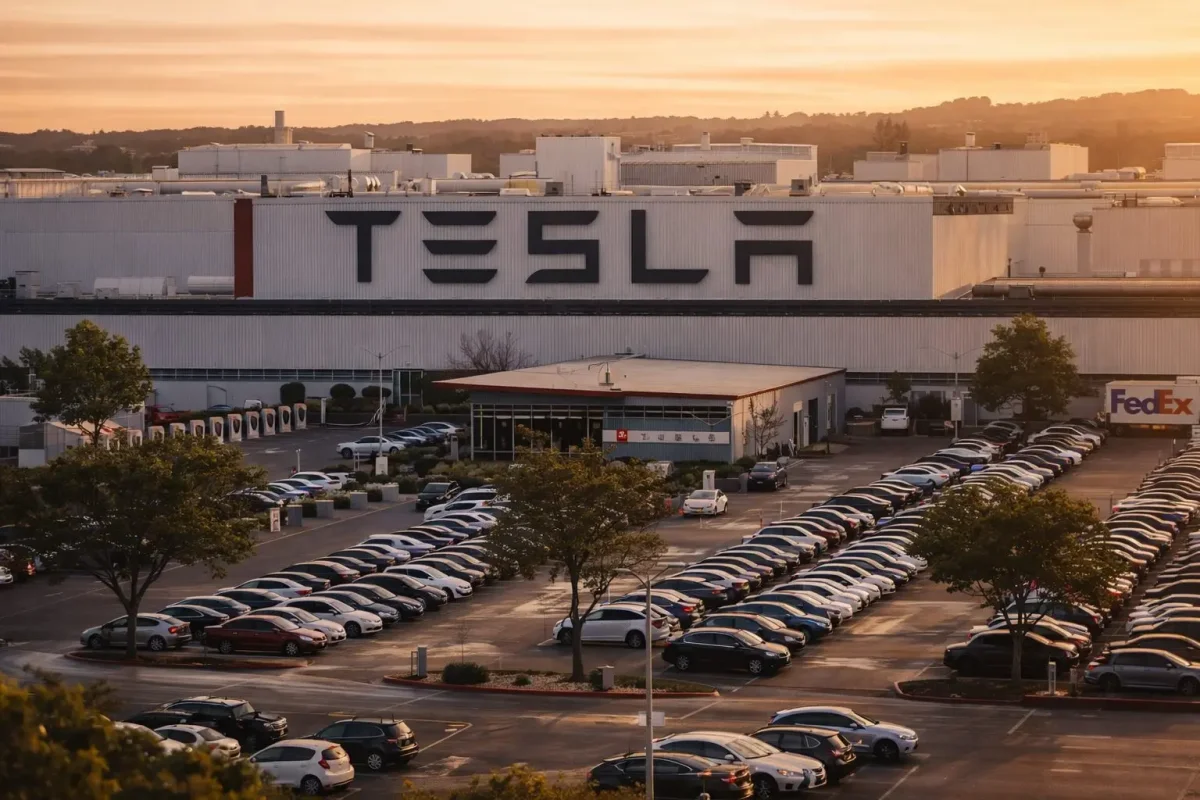
In a strategic pivot to address mounting competitive pressures and shifting demand, Tesla is actively developing a new, more affordable electric sport utility vehicle. According to sources familiar with the matter, the compact SUV will be positioned below the Model 3 in terms of price and will be physically smaller than the Model Y. Initial production is targeted for Tesla's manufacturing facility in Shanghai, with the company already engaging suppliers regarding components and assembly processes. Tesla declined to comment on the reported project.
Delivery Disconnect Highlights Market Strain
The timing of this development is critical. Tesla's first-quarter operational metrics revealed a significant divergence between production and deliveries. The company manufactured 408,386 vehicles during the period but delivered only 358,023 to customers, resulting in an inventory build of over 50,000 units. This gap underscores challenges in Tesla's core automotive business, which remains its primary revenue driver. The strain is attributed to weakening demand in key markets like the United States, where the expiration of the full $7,500 federal EV tax credit for some models has dampened buyer incentives, and intensified competition from both legacy automakers and new rivals globally.
Market Reaction and Future Focus
Investor reaction to the quarterly delivery figures was measured. Tesla shares declined approximately 0.8% during Thursday's trading session in the U.S. Analysts interpreted the modest drop as an indication that the market remains more focused on Tesla's future product pipeline and long-term growth strategy than on short-term delivery volatility. "The narrative for Tesla continues to be dominated by what is coming next, which heavily influences its current valuation," noted Matt Britzman, an analyst at Hargreaves Lansdown.
China: A Critical Battleground
China represents a vital proving ground for Tesla's strategy. Sales of Shanghai-built Model 3 and Model Y vehicles, including exports, surged 23.5% year-over-year in the first quarter. However, Tesla's overall market share within China's fiercely competitive EV sector has experienced a slight erosion. Domestic champion BYD continues to apply relentless pressure not only in China but also in expanding international markets like Europe.
Mixed Signals from Europe
The European market presents a complex picture. Contrary to some broader trends, Tesla registrations in Germany skyrocketed by 315% in March, according to data from the KBA federal motor transport authority. BYD also posted substantial gains in the region, highlighting that the market expansion is benefiting multiple players, including lower-priced Chinese brands that are accelerating their overseas push.
Autonomous Ambitions and Regulatory Hurdles
Concurrently, Tesla continues to pursue its autonomous vehicle ambitions. The company's robotaxi initiative, dubbed Cybercab, remains on track with production still scheduled to begin this month. A significant hurdle remains, however, as Tesla has not yet secured the necessary regulatory exemption from U.S. authorities to sell vehicles without traditional steering wheels or pedals. In Europe, Dutch regulators are still evaluating approval for Tesla's Full Self-Driving (FSD) Supervised, its most advanced driver-assistance system. On the ground, Tesla's robotaxi testing presence in Austin, Texas, is reported to be less extensive than the network established by Alphabet's Waymo.
Persistent Risks and Analyst Caution
Several risks continue to cloud Tesla's outlook. U.S. safety regulators at the National Highway Traffic Safety Administration (NHTSA) recently closed an investigation into Tesla's Actually Smart Summon feature following software updates. However, a separate, broader engineering analysis by NHTSA into the Full Self-Driving system, encompassing roughly 3.2 million vehicles, remains active. Sources describe the new compact SUV project as being in its early stages.
Analyst perspectives on the quarter are divided. Seth Goldstein of Morningstar highlighted the dual headwinds of the reduced U.S. tax credit and delayed regulatory approvals in the EU, suggesting these factors will continue to pressure delivery volumes. JPMorgan's Ryan Brinkman advised investors to exercise caution, pointing to rising inventory levels and a business plan whose payoff may take years to materialize, potentially challenging current valuations.
Growth Initiatives Beyond New Models
Tesla is also working to demonstrate growth in its traditional automotive sales channels. In Japan last week, country manager Richi Hashimoto stated the company's ambition to become the "number one imported car brand" through an expansion of retail stores and service centers. Despite these efforts and the new SUV development, people briefed on the compact vehicle project indicate that production is unlikely to commence within the current calendar year.