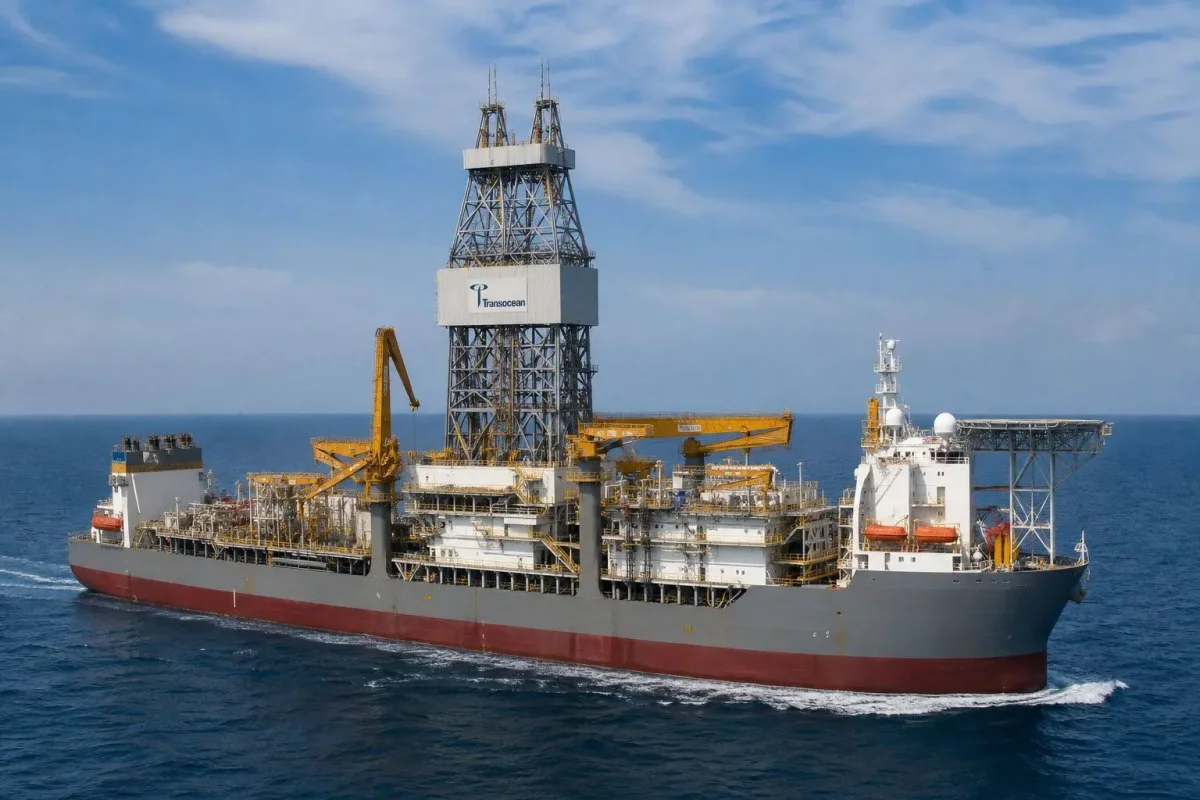
Transocean Ltd. (NYSE: RIG) saw its shares climb 4.4% on Wednesday, reaching $6.18 by 13:59 EDT, as crude oil prices strengthened toward the $91 per barrel mark. The uptick in the offshore drilling contractor's stock comes amid renewed investor attention on its ongoing efforts to reduce a substantial debt load.
West Texas Intermediate crude rose 0.9% to $90.99 per barrel, providing a tailwind for the entire offshore drilling sector. Peer companies also advanced, with Valaris Ltd. (NYSE: VAL) up 4.2%, Noble Corp. plc (NYSE: NE) gaining 3.0%, and Seadrill Ltd. (NYSE: SDRL) rising 3.2%. This broad sector rally reflects improving sentiment toward energy services as oil prices remain supported.
Backlog and Debt Dynamics
Transocean's firm backlog stood at $6.7 billion as of August 5, representing a roughly 31% increase compared to its principal debt of $5.11 billion, based on second-quarter results. The backlog figure was further bolstered by a recent $300 million contract award from ONGC for the Dhirubhai Deepwater KG2 rig, a two-year commitment with operations expected to begin in early 2027 and optional extensions through 2031.
Despite this healthy backlog, the company's debt burden remains a key challenge. As of June 30, Transocean held $509 million in cash, while principal debt stood at $5.11 billion—more than ten times the cash position. The company's free cash flow in the second quarter totaled $212 million, covering just 4.2% of its principal debt, underscoring the scale of the deleveraging task ahead.
Operational Improvements
Operationally, Transocean has shown progress. Fleet utilization rose to 78.2% in the second quarter, up from 67.3% a year earlier, while average dayrate increased 3% to $472,500. Revenue efficiency improved slightly to 97.0% from 96.6%. These gains reflect stronger demand for high-specification rigs and better pricing power.
Chief Executive Keelan Adamson described the quarter's cash flow as "excellent" and indicated that utilization of high-specification rigs could rise well into the 90% range in 2027. However, drilling revenue for the quarter declined 2% to $966 million, as a reduction in operating days partially offset higher dayrates. Adjusted EBITDA reached $312 million, representing a margin of 32.2%.
Market Context and Risks
The recent contract win and operational improvements provide some optimism, but risks remain. A significant drop in oil prices could postpone offshore developments and pressure dayrates. Contractual options might go unused, and cash inflows could be delayed by repairs, mobilization issues, or client approval timelines.
Investors will be watching closely as Transocean approaches its third-quarter guidance. The company projects drilling revenue in the range of $920 million to $960 million, with fleet-wide revenue efficiency at 96.5%. The central challenge remains debt reduction, and the market will assess whether the current rally can be sustained in light of these financial obligations.