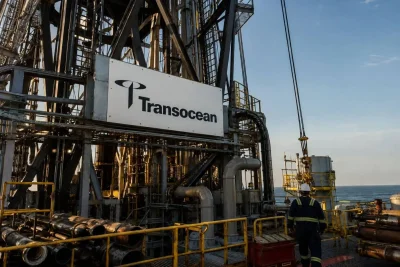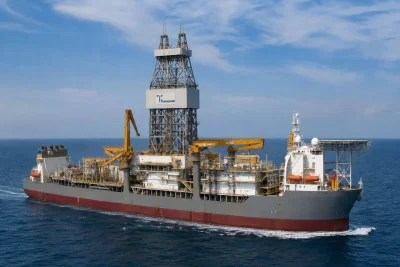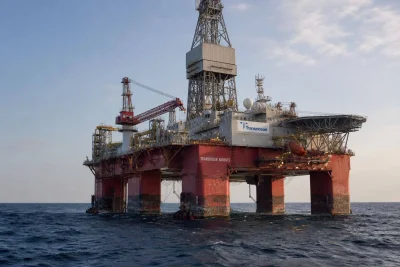
Shares of Transocean Ltd. (NYSE: RIG) advanced 1.05% on Friday, closing at $5.80 and lifting the offshore drilling contractor's market capitalization to approximately $7.0 billion. The modest gain reflects investor optimism over improved cash generation, even as the company continues to grapple with a substantial debt load.
Q2 Financial Highlights
In the second quarter, Transocean reported free cash flow of $212 million, a significant improvement from the $136 million generated in the prior quarter. This 56% sequential increase underscores the company's ability to convert operational performance into cash, despite a challenging revenue environment.
Contract drilling revenue declined 10.6% to $966 million from $1.081 billion in Q1, primarily due to lower rig utilization. Adjusted EBITDA also fell to $312 million from $440 million, with the adjusted EBITDA margin contracting to 32.2% from 40.7%. However, operational execution remained solid, with revenue efficiency hitting 97% and operating cash flow climbing to $236 million.
Debt and Backlog
Total debt remained steady at $5.11 billion, a slight reduction of $30 million from the previous quarter. The company's contract backlog stands at approximately $6.7 billion, providing revenue visibility. An additional $1.0 billion contract with Equinor is pending approval from license partners, which could further bolster future cash flows.
Recent fixtures have averaged a dayrate of around $461,000, and management anticipates stronger demand for premium rigs through 2027. This positive outlook is tempered by the need to service debt and fund ongoing capital expenditures.
Valaris Merger and Synergies
Transocean's proposed $5.8 billion acquisition of Valaris is a key strategic move aimed at boosting scale and fleet diversity. The combined entity would manage 73 rigs, creating a more competitive offshore drilling powerhouse. Management projects merger synergies to exceed $200 million, alongside more than $250 million in current cost savings.
However, the merger introduces execution risks, including integration challenges and potential delays. The company also faces a projected $475 million in interest expense for 2026, which could pressure cash flow if synergies are not realized as planned.
Analyst Views and Market Sentiment
The consensus analyst price target for Transocean stands at $6.55, approximately 13% above Friday's closing price. Estimates range from $4.50 to $10.00, reflecting significant uncertainty regarding the company's ability to execute its deleveraging strategy and integrate Valaris successfully.
On Friday, 34.9 million shares were traded, with the stock ranging between $5.68 and $5.86 during the session. The stock's performance has been closely tied to oil price movements and the broader offshore drilling cycle.
Risks and Outlook
Key risks include potential delays in offshore awards if oil prices weaken, which could impact backlog growth. The deleveraging process may also be slowed by merger approvals, integration costs, and operational downtime. Despite these challenges, the company's improved cash flow and strategic initiatives provide a foundation for future value creation.
For investors, the next phase hinges on consistent cash generation and debt reduction at a pace that outpaces shifts in the offshore cycle. With a substantial backlog and a planned merger, Transocean is positioning itself for long-term stability, but the road ahead remains fraught with execution hurdles.