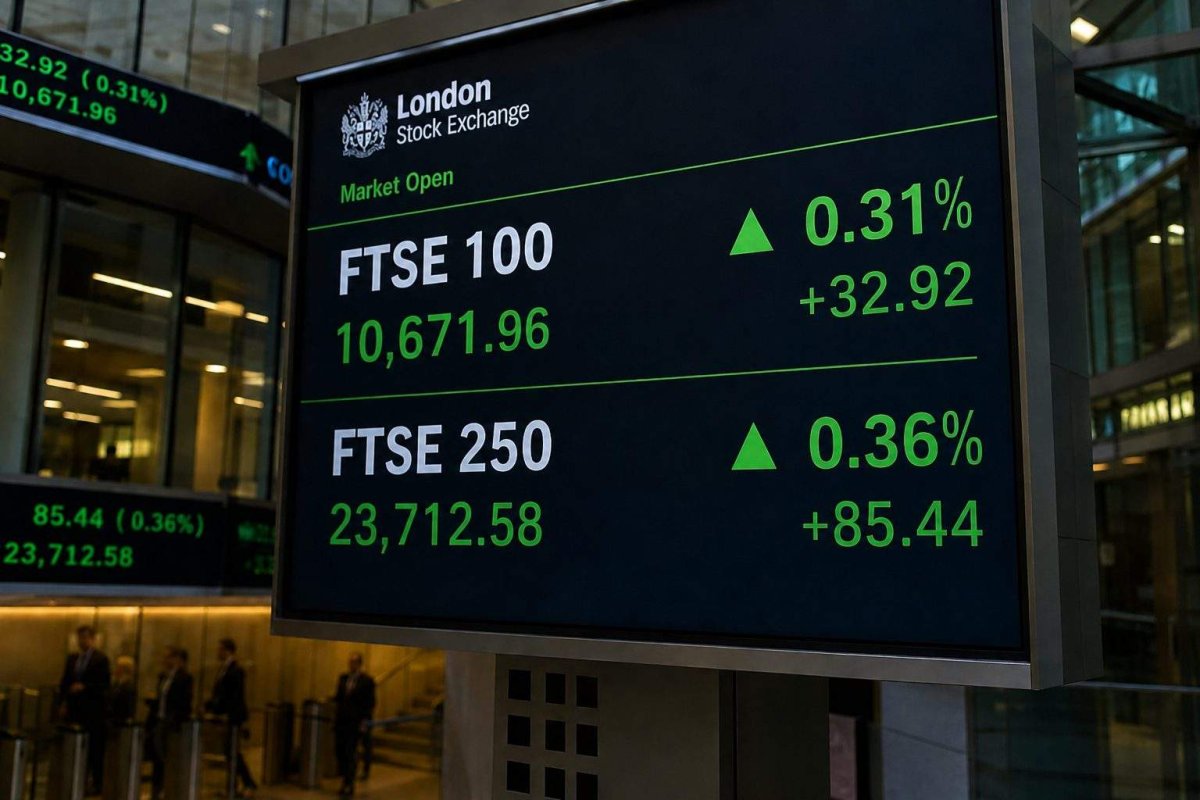
London's FTSE 100 index edged higher on Friday, buoyed by a strong performance from banking stocks, as an unexpected uptick in UK retail sales reshaped investor expectations. The blue-chip index closed up 0.31%, while the mid-cap FTSE 250 gained 0.36%, according to data from HL.
Official figures from the Office for National Statistics showed that retail sales volumes increased by 1.0% in June compared to May, a stark contrast to the 0.3% decline forecast by economists in a Reuters poll. For the second quarter as a whole, sales volumes rose 0.6%.
The data sparked a divergence in sector performance. An equal-weight basket of major banks—including HSBC, Lloyds Banking Group, NatWest Group, and Barclays—rose 0.88%, as investors interpreted the strong consumer spending as a signal that interest rates may need to remain higher for longer, benefiting lenders' net interest margins. In contrast, a basket of four major retailers—Tesco, J Sainsbury, Next, and Marks & Spencer Group—slipped 0.15%, as the market viewed the sales beat more as a rates-related signal than a boon for retail profits.
The gap between the two baskets reached 1.03 percentage points, underscoring the shift in market sentiment. Among individual stocks, JD Sports Fashion stood out, surging 3.03%, as its focus on clothing and sports goods aligned with the broader uptick in those categories.
The rise in retail sales was driven by a surge in online activity. Online purchases accounted for 29.4% of total spending, the highest share since April 2021. Non-store sales jumped 4.4% month-on-month, highlighting a continued shift toward e-commerce.
HSBC shares climbed an additional 1.23%, also supported by company-specific news. Allianz reached a deal to acquire HSBC Life Singapore for €2 billion, pending regulatory approval, lifting sentiment around the lender.
However, not all sectors shared in the gains. Energy stocks weighed on the index, with BP falling 1.64% and Shell down 1.00%, as Brent crude prices slipped below $100 a barrel after a rally on Thursday. Escalating conflict in the Middle East remains a key risk, with the potential to push up inflation, pressure household budgets, and prompt faster monetary tightening.
Ruth Gregory, deputy chief UK economist at Capital Economics, cautioned that the resilience in spending may not last. "We don't expect this resilience to last," she told Reuters, pointing to headwinds from elevated inflation and the lagged impact of previous rate hikes.
The Bank of England is widely expected to keep the Bank Rate unchanged at 3.75% at its upcoming meeting. Markets have priced in roughly two 25-basis-point rate increases by the end of the year, reflecting the view that the central bank may need to act to curb persistent inflation.
The FTSE 100 had dropped 0.7% on Thursday but maintained a 0.75% gain over the past five sessions. For the year to date, the index has risen 7.54%. The key question for investors remains whether continued strong consumer spending can support bank earnings without causing undue harm to households and the broader economy.