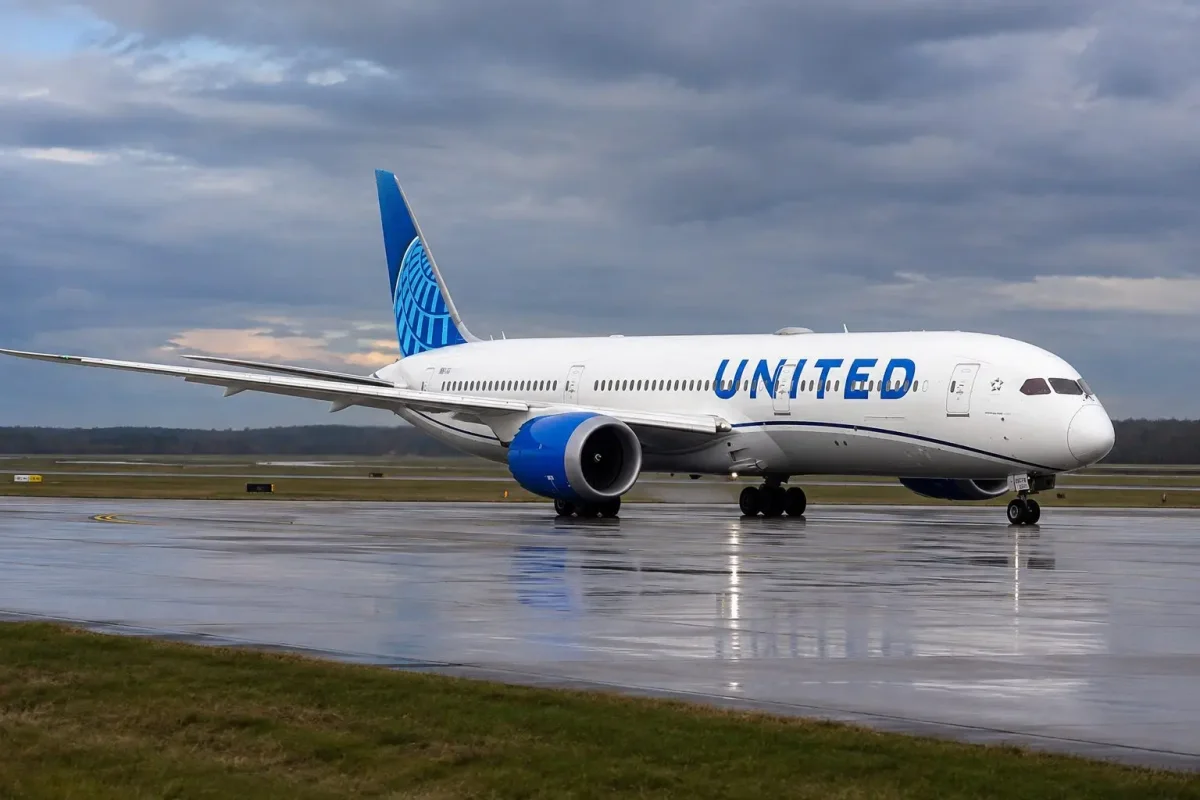
United Airlines (NASDAQ: UAL) is intensifying its focus on high-margin travelers by expanding premium seating on its Boeing 787-9 fleet. The new "Elevated" configuration, which offers 99 premium seats out of 222 total, will be deployed across eight long-haul routes, a strategic move designed to test the airline's ability to generate higher revenue per flight.
The shift represents a significant reallocation of cabin space. Compared to United's standard 787-9 layout, the Elevated configuration increases premium seats by 43.5%, while reducing economy seating by 34.6%. Overall, total seats drop by 13.6%, from 257 to 222. This trade-off underscores United's bet that higher-yielding passengers will more than compensate for the reduced capacity.
Yield-Focused Strategy
United's decision comes as the airline reports strong premium demand. In the second quarter, premium revenue climbed 16% year-over-year, while contracted business revenue surged 27%. Passenger yields rose 12%, providing a solid foundation for the new configuration. The airline is now prioritizing yield per departure over raw passenger numbers, a metric increasingly favored by investors.
The Elevated 787-9 features 64 Polaris business-class seats, including eight expanded "Studio" suites with sliding privacy doors and 27-inch screens, plus 35 Premium Plus seats. Chief Commercial Officer Andrew Nocella highlighted the enhanced premium experience, noting that the Studio product offers roughly 25% more personal space than traditional Polaris.
Route Deployment
The new configuration is already operating on flights from San Francisco to Singapore and London Heathrow. Additional San Francisco services to Zurich and Seoul Incheon will launch in September, followed by Houston routes to São Paulo, Sydney, and Tokyo Narita starting October 24. Houston's London Heathrow service will see the Elevated 787 in January 2027.
These routes were selected based on expected demand for premium travel. The aircraft are primarily based in San Francisco and Houston, with frequencies varying seasonally.
Financial Performance and Outlook
United's stock has responded positively to the strategy, rising 6.8% over the past week to close Friday at $129.56. This outperformed Delta Air Lines (NYSE: DAL) and American Airlines (NASDAQ: AAL), which gained 4.5% and 4.4% respectively. Analysts remain bullish, with price targets ranging from $155 to $203, implying potential upside of 19.6% to 56.7%.
CEO Scott Kirby attributed the strong results to investments in customer experience across all cabins. The company raised its full-year adjusted earnings guidance to $9-$11 per share.
Challenges Ahead
Despite the optimism, United faces headwinds. Fuel costs remain the biggest short-term uncertainty, with the airline projecting nearly $6 billion in additional fuel expenses by 2026 compared to original estimates. Boeing (NYSE: BA) delivery delays could also disrupt the planned rollout of 20 Elevated 787s this year; as of August 2, only eight were in service.
Softer corporate demand could also undermine the premium strategy. However, United's strong second-quarter yield growth provides a benchmark for the new configuration's success. Investors will be watching closely to see if the higher premium mix can offset the reduced seat count on these key routes.