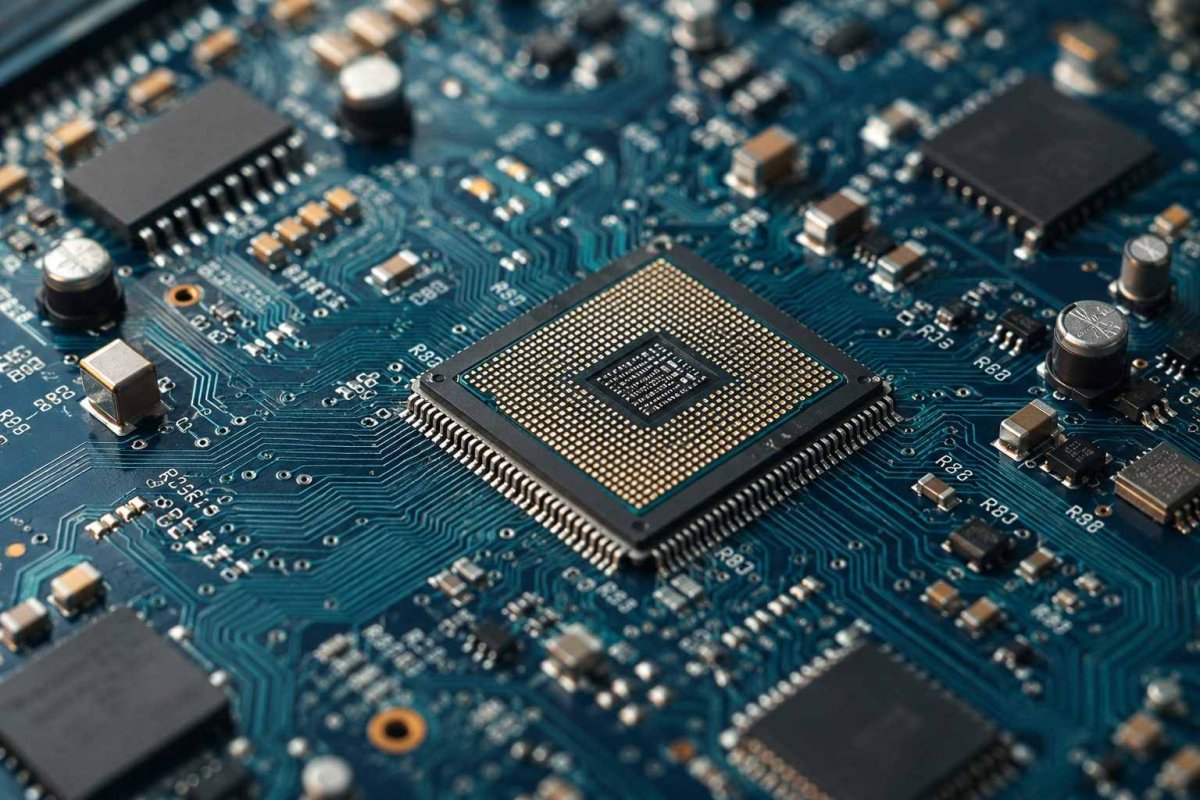
NEW YORK, July 19, 2026 — A pronounced shift in investor sentiment emerged last week as the semiconductor selloff prompted a $3 billion inflow into value-oriented funds, while growth-oriented strategies shed $7.18 billion. The rotation signals a reassessment of risk appetite across U.S. equity markets.
Fund Flow Data Highlights Sector Rotation
According to data compiled by Reuters, value funds recorded their third consecutive week of net inflows, attracting $3 billion in the period ending July 15. In contrast, growth funds reversed course from net purchases the prior week to post $7.18 billion in outflows. The divergence underscores a market moving away from high-valuation growth names toward cheaper, cyclical sectors.
Susquehanna strategist Chris Murphy noted, “Investors have generally been rotating rather than broadly reducing risk.” The commentary aligns with broader equity flows: global equity funds drew $12.46 billion, marking eight straight weeks of inflows. Technology funds, however, saw their smallest weekly intake in three weeks at $1.57 billion, suggesting investors are trimming rather than exiting the sector entirely.
Market Performance and Sector Leaders
The S&P 500 fell 1.01% to close at 7,457.69 on Friday, while the Nasdaq slipped 1.40% and the Dow ended 0.77% lower. For the week, the three indexes lost 1.55%, 2.9%, and 0.93%, respectively. Energy was the sole advancing sector in the S&P 500, buoyed by a 4.48% rise in U.S. crude to $82.49 and a 4.59% gain in Brent to $88.10.
Despite the energy sector’s outperformance, global energy funds recorded $145 million in outflows through July 15. Investors placed $567 million into financials and $558 million into healthcare, indicating a barbell approach: overweight value and financials while using healthcare and bonds for defense. U.S. bond funds attracted $9.89 billion, their 13th consecutive week of inflows.
Earnings Season and Key Reports Ahead
The upcoming week features earnings from Alphabet (NASDAQ:GOOGL), Intel (NASDAQ:INTC), and Tesla (NASDAQ:TSLA). According to FactSet, 86 S&P 500 companies are slated to report. Alphabet’s capital expenditure outlook and Intel’s demand guidance are seen as pivotal for the semiconductor sector. “It’s like the market has chip fatigue,” said Ryan Detrick, strategist at Carson Group. Semiconductor stocks have declined in three of the past four weeks.
The PHLX Semiconductor Index closed 20.2% below its June 22 record high. The iShares Semiconductor ETF (NASDAQ:SOXX) ended Friday at $521.81, with a price-earnings ratio of 67.7 and a three-year beta of 2.0, leaving it vulnerable to weaker-than-expected spending.
Financials and Healthcare: Divergent Drivers
Financials have a stronger near-term earnings base. FactSet reported that 88% of early-reporting S&P 500 companies exceeded profit forecasts, with upside surprises from financials driving the most recent earnings upgrades. Healthcare inflows, however, appear defensive rather than supported by earnings, as estimate reductions have partially offset financial sector gains since June 30.
The flow data suggests a tactical shift rather than a wholesale retreat from risk. If consistent spending forecasts emerge from tech earnings, investors may resume buying chip stocks on dips. Conversely, a slowdown could further benefit value and defensive sectors.
Outlook and Risks
Risks remain balanced. A recovery in chip stocks could reverse relative outperformance of value, while any escalation in U.S.-Iran tensions may push oil prices and inflation expectations higher, pressuring bonds and interest-rate-sensitive equities. Confirmation of the rotation will depend on sustained flows into value and healthcare, while new energy inflows would signal an expanding oil trade.