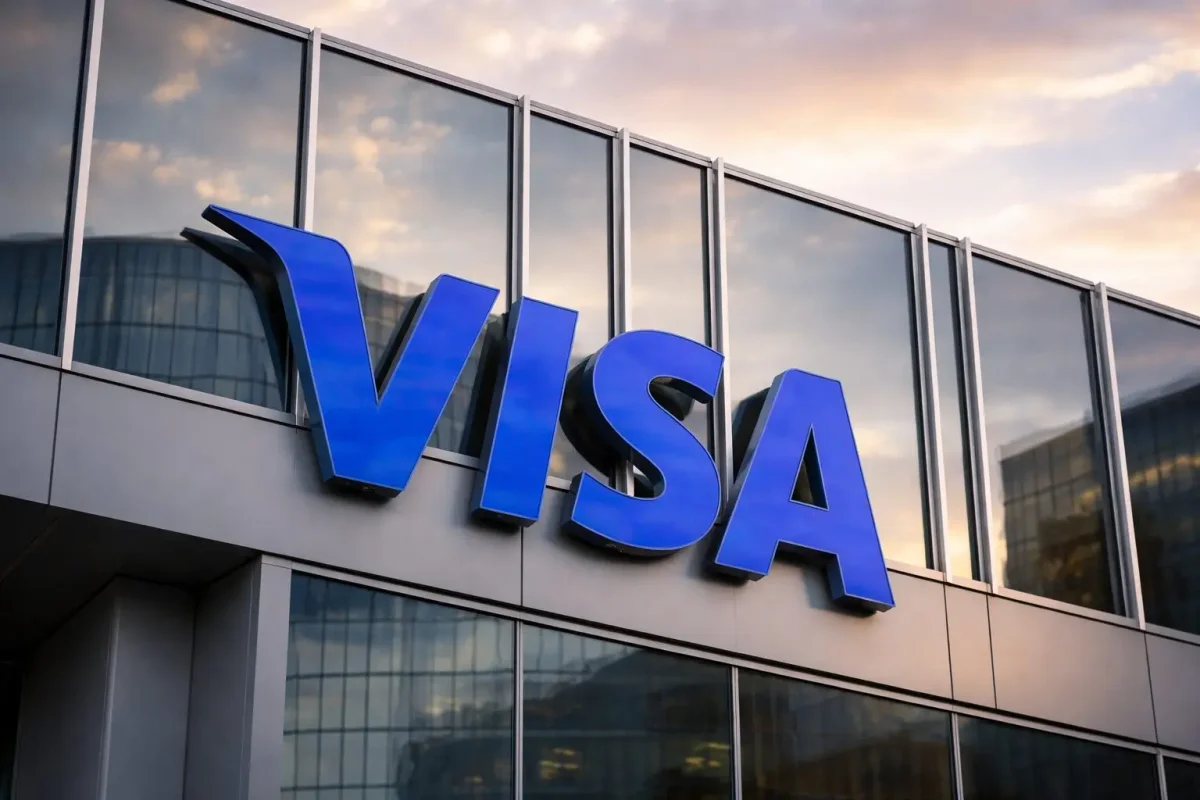
Visa Inc. shares demonstrated remarkable stability during Monday's afternoon session, posting a modest gain of 0.1% to reach $320.37. This muted performance unfolded against a backdrop of significant market developments, including the postponement of a high-profile initial public offering and escalating geopolitical concerns that injected volatility into financial markets.
PayPay IPO Roadshow Paused
SoftBank's digital payments subsidiary PayPay has temporarily halted its Nasdaq IPO marketing campaign, a decision that followed military strikes against Iran over the weekend. Visa had been positioned as a potential anchor investor in this offering, committing substantial capital upfront to generate demand for the stock sale. The roadshow, which involves company executives presenting to institutional investors ahead of pricing, represents a critical phase in the IPO process. Market observers noted that such delays can effectively close the window for new equity issuance during periods of heightened uncertainty.
Payment Sector Performance
While Visa maintained its ground, other major payment processors displayed divergent trajectories. Mastercard shares advanced approximately 0.8%, demonstrating relative strength. Conversely, American Express experienced a decline of about 0.4%. Visa's trading activity remained contained within a narrow range between $319.99 and $322.58, with approximately 4.3 million shares changing hands during the session, according to LSEG data.
The broader market exhibited a recovery pattern, with technology stocks providing support to major indexes despite pressure from rising oil prices and weakness in airline and cruise sectors. "When people get scared, they go back to what is comfortable," observed Bill Smead, founder and chairman of Smead Capital Management, highlighting the defensive rotation occurring within equity markets.
Inflation Concerns Resurface
Market participants redirected their attention toward inflation indicators as energy prices climbed. U.S. retail gasoline prices surpassed $3 per gallon for the first time since November, a psychologically significant threshold that carries both economic and political implications. "Gasoline prices are psychologically powerful," remarked Mark Malek, chief investment officer at Siebert Financial. Analysts expressed concern that a sustained surge in oil prices could accelerate consumer price increases, potentially dampening consumer spending—a development that would disproportionately affect sectors tied to everyday consumption, including payment networks.
The PayPay delay underscores broader challenges facing the financial technology and payments landscape. During periods of elevated volatility, corporate dealmaking and equity issuance frequently lose momentum, potentially altering how established industry participants approach growth initiatives and strategic investments.
Key Economic Data Ahead
Market focus now shifts to forthcoming economic releases that could shape monetary policy expectations. The U.S. Employment Situation report for February, scheduled for release on March 6 at 8:30 a.m. Eastern Time, represents the next significant catalyst for traders. This data will be scrutinized for insights into labor market strength and wage pressures. Additionally, investors are monitoring the Federal Reserve's upcoming policy decision later this month, with inflation metrics playing a crucial role in shaping the central bank's approach to interest rates.
Payment stocks like Visa often experience amplified volatility during periods of macroeconomic uncertainty, even when company-specific news remains limited. The current environment—characterized by fluctuating oil prices, inflation concerns, and shifting interest rate expectations—creates a complex backdrop for financial sector investments. As markets navigate these crosscurrents, investor attention remains divided between geopolitical developments, corporate activity, and fundamental economic indicators that will determine the trajectory of monetary policy and economic growth.