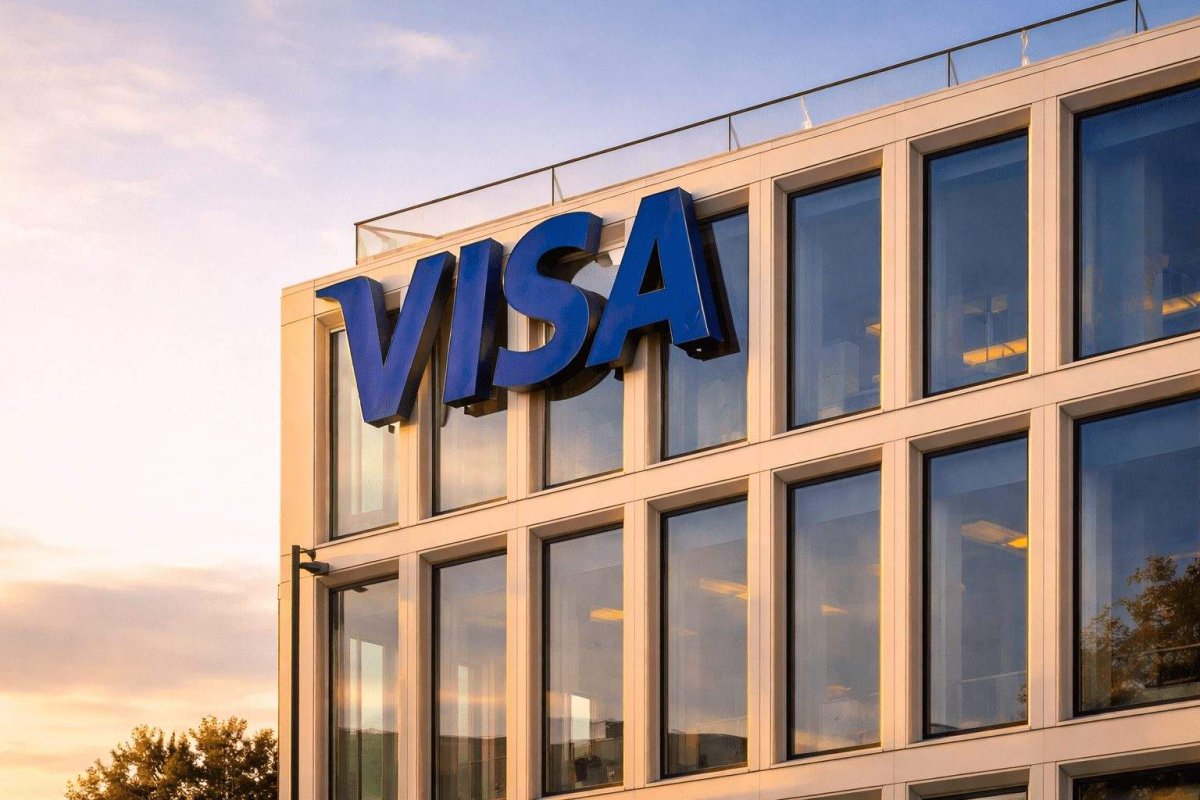
Shares of Visa Inc. posted a notable gain during Thursday's trading session, closing higher even as major equity indices retreated. The financial services giant saw its stock price increase by 1.1%, reaching $316.53 by the late afternoon. The stock traded within a daily range of $313.94 to $319.42. Over the past year, Visa has traded between $299.00 and $375.51.
Market Context and Broader Declines
The advance for Visa occurred against a backdrop of broader market weakness. The Dow Jones Industrial Average fell 0.41%, the S&P 500 index declined 1%, and the technology-heavy Nasdaq Composite slid 1.7%. Investor sentiment was dampened by concerns over elevated valuations within the artificial intelligence sector. Notably, even robust financial results from chipmaker Nvidia failed to alleviate the prevailing market anxiety.
This positive performance for Visa follows a recent period of pressure. Earlier in the week, the company's stock had dropped approximately 4.5% after a cautious research note raised concerns that AI-driven workforce reductions could lead to higher unemployment. Such a scenario is viewed as potentially negative for consumer spending, which is a critical driver of payment network transaction volumes.
AI Leadership Recognition
The primary catalyst for Thursday's share price movement was a new industry ranking. Visa secured the top position in the Evident AI Index, which assesses artificial intelligence maturity among a dozen major global payments companies. Mastercard and PayPal followed closely behind in the rankings.
According to Evident co-founder Alexandra Mousavizadeh, maintaining a leadership position in AI development is critical. "Leaders cannot afford to drop off the pace," she stated. Visa's commitment to the technology is substantial. The company's chief data officer, Andres Vives, highlighted that Visa has invested more than $3.5 billion in AI and data initiatives over the last decade. Currently, the company has over 300 AI models operating in production environments.
Strategic Implementation and Scale
Analysts noted that Visa distinguished itself in the index by moving beyond isolated pilot projects to deeply integrating AI across its entire operational framework. Mousavizadeh pointed to Visa's "impact at scale over multiple years" as evidence of how AI is becoming foundational to both its internal business processes and its vast global network.
PayPal, which placed third in the index, emphasized the industry's shift toward what it terms the "era of agentic commerce." This concept refers to AI systems that autonomously execute transactions and tasks for users. PayPal's Chief Technology Officer, Srini Venkatesan, explained that as commerce evolves toward more intelligent and autonomous systems, the company is focused on building the necessary infrastructure to enable trusted AI-driven experiences.
Valuation and Economic Considerations
Despite the positive news, analysts caution that Thursday's share price increase does not eliminate underlying risks. Visa currently trades at a high earnings multiple, which could leave it vulnerable if broader economic growth slows. Furthermore, the significant industry-wide investment in AI carries inherent risk; if these expenditures do not translate into tangible improvements in operational efficiency or loss prevention, investor sentiment could sour.
Upcoming Catalysts and Data
Market participants are now looking ahead to several key events. On Friday, the U.S. Bureau of Labor Statistics will release the Producer Price Index (PPI) for January. This wholesale inflation gauge is a critical data point that can influence expectations for future Federal Reserve interest rate policy. Current estimates, as compiled by Investing.com, anticipate both the headline and core PPI readings to show a 0.3% month-over-month increase.
The next major event for Visa itself will be its quarterly earnings report. According to Public.com, the company is scheduled to release its financial results and host its corresponding conference call on April 28. This report will provide investors with a fresh look at the company's financial health and potentially offer more detail on its AI strategy and its impact on the business.