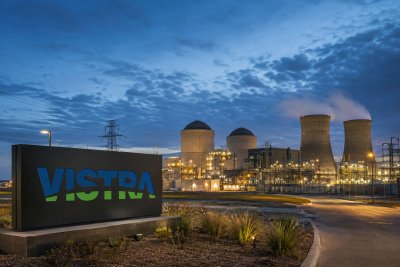
Vistra Corp. (NYSE: VST) experienced a 1.95% decline on Friday, closing at $137.09, as the market weighed a robust operational performance against a significant accounting loss from hedging activities. The drop erased approximately $935 million in market capitalization, marking the stock's second consecutive session of losses. Trading volume was notably lighter than usual, with 3.0 million shares changing hands compared to the 50-day average of 4.4 million.
The primary concern among investors centers on the quality of earnings. While Vistra's core business demonstrated strong growth, the company reported a $472 million unrealized loss on hedging instruments, which dragged down GAAP net income by 6.7% to $305 million. This overshadowed an otherwise impressive 31% increase in adjusted EBITDA from ongoing operations, which reached $1.77 billion for the second quarter.
Regionally, the performance was mixed but generally positive. The Texas segment saw a remarkable 119% surge in adjusted EBITDA to $311 million, while the East segment grew 54% to $642 million. The retail segment posted a more modest 2% gain to $773 million. This growth was attributed to higher realized energy and capacity prices, as well as the inclusion of three months of earnings from the recently acquired Lotus plants.
Management maintained its full-year 2026 adjusted EBITDA guidance at $6.8 billion to $7.6 billion, along with an adjusted free cash flow before growth outlook of $3.93 billion to $4.73 billion. The midpoint of this range represents approximately 9.2% of Vistra's $47 billion market capitalization, though this non-GAAP metric excludes growth expenditures and does not reflect standard free cash flow.
The company's hedging strategy provides near-term visibility, with nearly all of its projected 2026 output already secured, along with 94% for 2027 and 72% for 2028. This approach offers some protection against price volatility but also introduces mark-to-market fluctuations that can impact reported earnings.
Vistra has been actively returning capital to shareholders, having repurchased approximately $6.5 billion in shares since November 2021, reducing outstanding shares by about 30%. The company still has $1.2 billion remaining under its buyback authorization.
Analyst sentiment remains largely positive, with 20 analysts maintaining a Buy consensus and an average price target of $217.42, implying a potential upside of 58.6% from current levels. However, the range of projections is wide, from $106 to $305, reflecting uncertainty about future power prices and hedging outcomes. Recent adjustments include President Capital lowering its target to $167 from $222, while Morgan Stanley increased its target to $227.
Looking ahead, Vistra has committed up to $1 billion to Helix Digital Infrastructure, with an additional $500 million possible if the AI venture meets certain milestones. This investment underscores the company's strategic pivot toward digital infrastructure, though it also adds to capital requirements.
Key risks include the potential for hedge settlements to offset reported accounting profits or losses, higher interest costs, fluctuations in power prices, and integration challenges from the Cogentrix acquisition. Additionally, funding commitments to Helix could limit cash available for share repurchases.
Investors will be closely watching whether Vistra can translate its adjusted growth into sustainable GAAP earnings and distributable cash, rather than facing another mark-to-market headwind. The company's ability to balance growth initiatives with shareholder returns will be critical in the coming quarters.