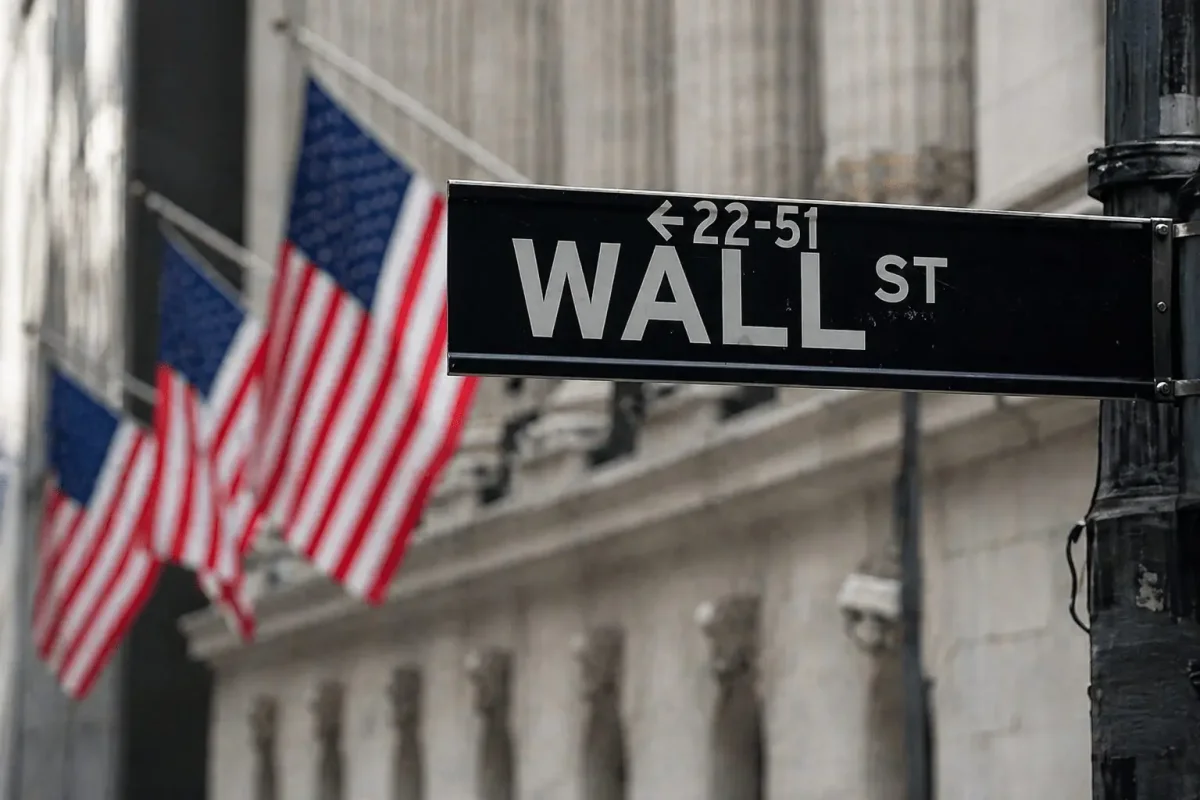
Wall Street's April rally hit a speed bump Wednesday, as a divided Federal Reserve held rates steady and a spike in oil prices rattled markets. The Dow Jones Industrial Average fell 0.56% to 48,865.25, while the S&P 500 edged down 0.04% to 7,136.17. The Nasdaq Composite managed a slight gain of 0.05% to 24,676.75, as investors braced for after-hours earnings from the tech giants that have powered this year's AI-driven rally.
Fed Split Deepens Uncertainty
The Federal Reserve's decision to keep its benchmark overnight rate in the 3.50%–3.75% range was its most contentious since 1992. Eight policymakers supported the hold, three dissented against the dovish tilt, and one voted for an immediate rate cut. The internal discord, as reported by Reuters, signals growing unease about the economic outlook amid persistent inflation and rising energy costs.
Fed Chair Jerome Powell described the U.S. economy as growing at a solid clip but acknowledged that inflation remains "elevated," partly due to higher global energy prices. The Fed's statement pushed the S&P 500 toward session lows, with FactSet data showing the index hovering near 7,116. Fed-funds futures now suggest a higher probability of no rate cuts in 2026, according to MarketWatch.
Oil Surge Adds Pressure
Oil prices stole the spotlight, with Brent crude surging 7.34% and U.S. crude jumping 6.95% to settle at $106.88 per barrel. The spike came as investors fretted over potential supply disruptions tied to Iran and the Strait of Hormuz, a critical chokepoint for global oil shipments. "Oil prices were pretty much leading," said Sam Stovall, chief investment strategist at CFRA Research, noting the lack of a quick fix in sight.
The rise in energy costs complicates the Fed's path, as higher oil prices could push inflation higher even as economic growth slows. Jeffrey Roach, chief economist at LPL Financial, warned that investors should brace for more rate market whiplash and a rise in policy dissent.
Big Tech's AI Test
Attention now shifts to the so-called "hyperscalers" — Microsoft, Alphabet, Amazon, and Meta Platforms — which together account for roughly $10 trillion in market cap, or about 17% of the S&P 500. These companies are set to report earnings after the bell, and the big question is whether their massive investments in AI infrastructure are finally paying off.
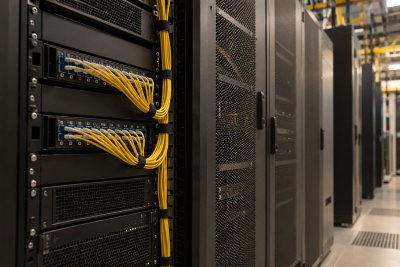
According to Reuters, their combined spending on data centers and AI-focused infrastructure could top $600 billion this year. Barclays analysts project that Microsoft, Amazon, Meta, Alphabet, and Oracle will boost capital spending from 50% of operating cash flow this year to nearly 90% by 2027. Apple, another heavyweight, reports on Thursday.
"They're still the straw that stirs the drinks for index funds," said Chuck Carlson, chief executive at Horizon Investment Services. But Noah Weisberger, chief U.S. equity strategist at BCA Research, noted that investors are likely to wait just a few quarters for proof that all that capital spending translates to actual sales.
Earnings Volatility Hits the Tape
Beyond the megacaps, several companies saw sharp moves. NXP Semiconductors surged 26.6%, Seagate rallied 10.1%, Visa tacked on 9%, and Starbucks gained 9.1% following stronger-than-expected results or guidance. On the downside, Robinhood dropped 14.5% after falling short of first-quarter profit estimates.
Outlook
The dual headwinds of a divided Fed and surging oil prices are testing the market's resilience. If the megacaps hint at flagging cloud uptake or pull back on AI outlays, the rally that has powered chipmakers and data-center names could unravel quickly. With oil above $100, rate-cut bets fading, and AI still a hefty chunk of the index, the stakes are high for the earnings season ahead.