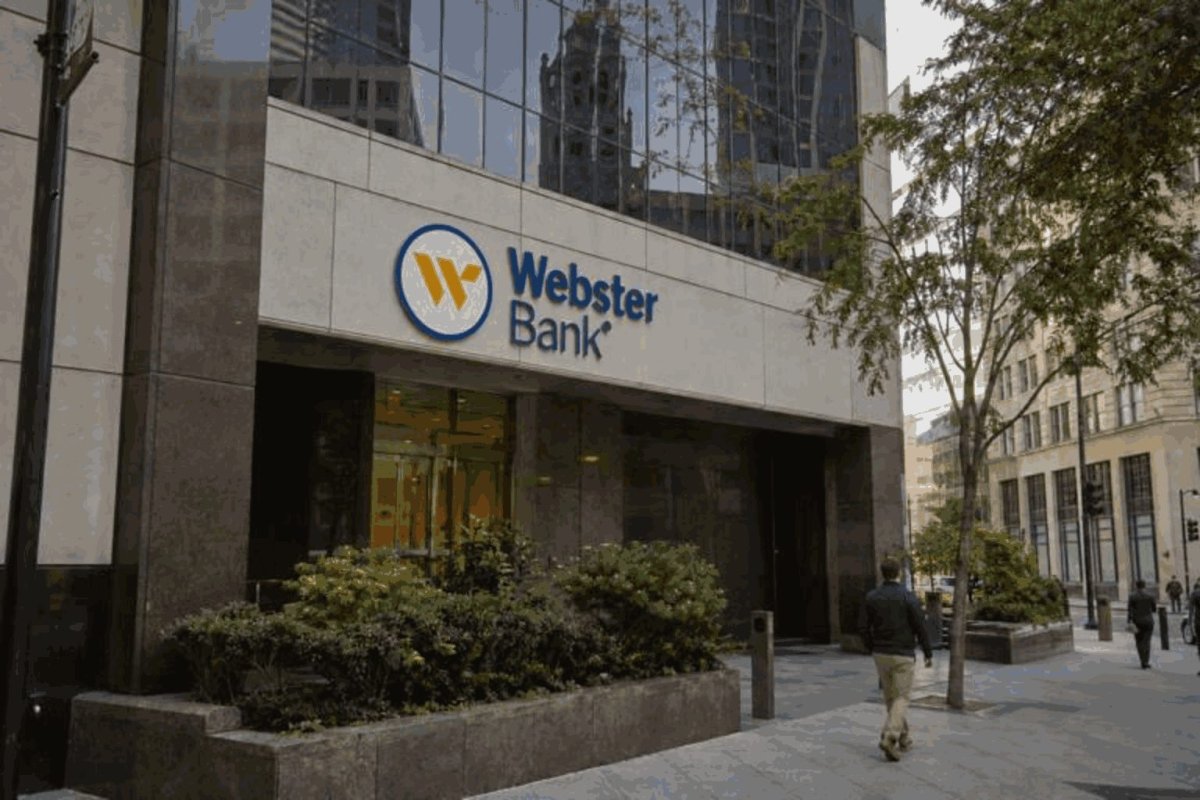
In a peculiar twist of market data, the now-defunct ticker symbol for Webster Financial (WBS) continues to dominate Yahoo Finance's Most Active list, even though the bank's shares ceased trading on August 19. This anomaly, while seemingly a data glitch, carries significant implications for investors monitoring the aftermath of Santander's acquisition of the Connecticut-based lender.
Santander (SAN) completed its acquisition of Webster on August 20, and the WBS ticker was delisted before the market opened that day. However, the stale activity ranking persists, potentially misleading investors into thinking there is fresh trading momentum in a stock that no longer exists. The economic exposure for former Webster shareholders has shifted entirely to Santander's American depositary shares (ADSs) and the cash component of the deal.
Deal Valuation and Shareholder Value
Under the terms of the acquisition, each Webster share was exchanged for $48.75 in cash plus 2.0548 Santander ADSs. With Santander's ADS closing at $14.67 on Friday, August 28, the total consideration is valued at $78.89 per former Webster share. This represents a 1.7% premium over Webster's final closing price of $77.57 on August 19, and a 4.4% increase over the $75.59 value at the time the deal was announced.
The increase in value is largely attributable to a rally in Santander's share price since the announcement. For former Webster shareholders, this means the total value of their consideration has grown, providing a modest gain over the final trading price of WBS.
Strategic Rationale and Financial Targets
Santander's acquisition of Webster is strategically motivated by the latter's robust deposit base. Webster ended June with $70.3 billion in deposits and $57.9 billion in loans, resulting in a loan-to-deposit ratio of 82.3%. This provides Santander with a cheaper funding source compared to its current U.S. operations, which have a higher loan-to-deposit ratio of 109%.
Santander has set ambitious targets for the combined U.S. business, including $800 million in annual cost savings, which represents 6.6% of the $12.2 billion purchase price and approximately 19% of the combined cost base. The bank also aims to achieve an 18% return on tangible equity by 2028, a goal that will require significant operational efficiencies.
Financial Performance of Webster
Webster's recent financial performance provides a baseline for these expectations. In the second quarter, the bank reported $249.4 million in common net income, revenue of $740.0 million, and a net interest margin of 3.26%. Its preliminary common-equity tier-one ratio stood at 11.69%, indicating a solid capital position.
However, achieving the targeted cost savings and efficiency ratio of below 40% will be challenging. Webster's adjusted efficiency ratio was 47.74% in the second quarter, meaning Santander will need to extract significant cost synergies through branch consolidation, technology integration, and streamlined support functions, all while maintaining deposit retention.
Market Implications and Risks
For investors, the Yahoo activity ranking is a data-cleanliness warning rather than a trading signal. The relevant market indicators are now Santander's share price and its integration progress. Former Webster shareholders are now Santander ADS holders and should focus on the bank's U.S. operations and overall performance.
Risks remain, including the possibility that cost savings may be delayed, higher interest rates could increase funding costs and credit losses, and customer attrition or technology disruptions could dilute the expected earnings accretion of 7% to 8%. The success of this acquisition hinges on Santander's ability to execute its integration plan and realize the projected synergies.
As the dust settles, the financial community will be watching closely to see if Santander can transform Webster's deposit base into the targeted 18% return on tangible equity by 2028. The ghost of WBS on Yahoo's activity list serves as a reminder of the transition, but the real story lies in Santander's execution.