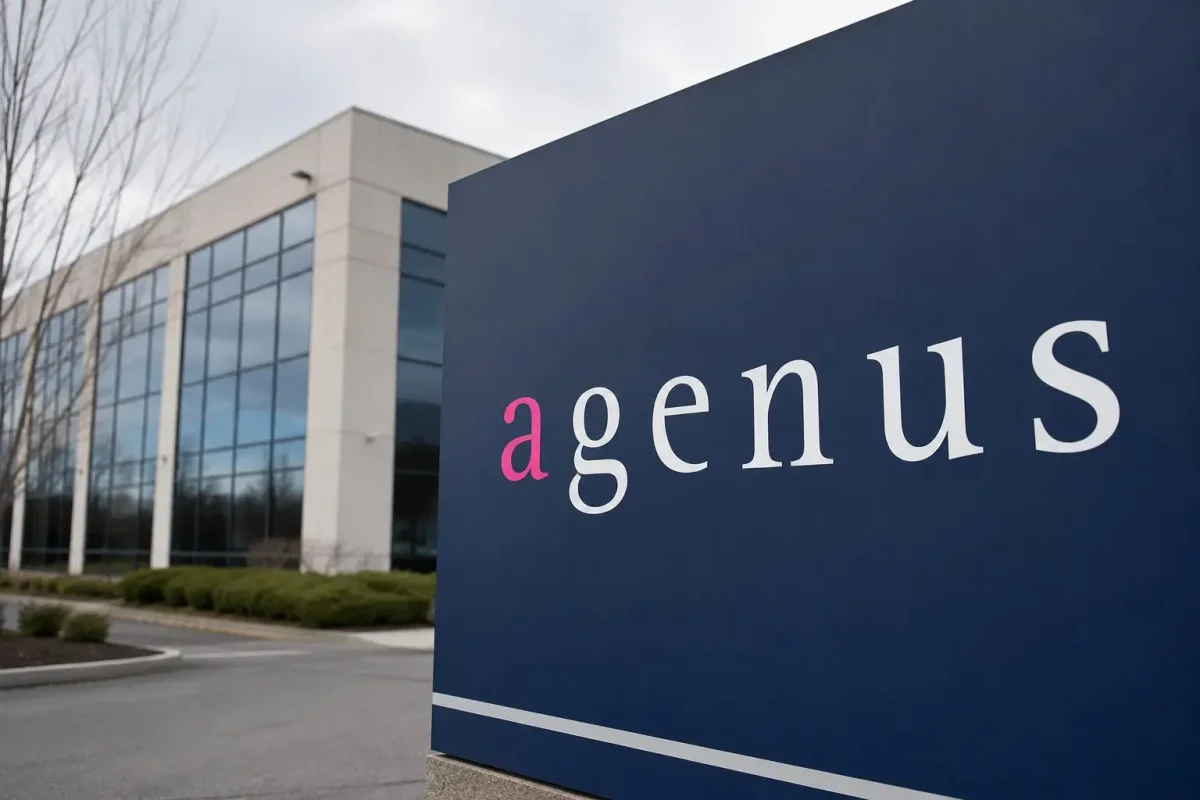
Agenus Inc. (NASDAQ: AGEN) experienced a dramatic 59.4% surge in premarket trading on Monday, reaching $5.34, following the announcement of a structured financing agreement that could ultimately provide up to $340 million in gross proceeds. The initial phase involves an $85 million private placement with selected investors, accompanied by warrants that, if fully exercised, would add another $255 million. While the market reacted positively, the deal carries significant potential dilution for existing shareholders.
Financial Details and Dilution Impact
As of March 31, Agenus reported only $35 million in cash, with an additional $11.7 million raised post-quarter. The committed $85 million represents approximately 61% of the company's market value as of last Friday, while the full $340 million package would be about 2.4 times that valuation. However, even with the initial proceeds, management estimates that current cash will only fund operations into the third quarter of 2027. The extended runway through 2031 is contingent upon the full exercise of all warrants.
The transaction is structured in three tranches. The initial placement of $85 million will add 23.04 million new shares at $3.69 each. Series A warrants could bring in another $85 million by issuing 21.14 million shares at $4.02, contingent on dosing at least 60 patients in the ROBBIN trial. Series B warrants could raise $170 million through 33.80 million shares at $5.03, tied to pathologic response data from at least 50 treated patients. In total, if all warrants are exercised, Agenus would issue 77.98 million new shares, bringing the total outstanding count to 120.66 million—nearly three times the pre-deal total of 42.68 million shares. Existing investors would then own roughly 35.4% of the enlarged company.
Strategic Pipeline Pivot
The capital injection supports a significant strategic shift. Agenus is discontinuing funding for the BATTMAN Phase 3 trial in metastatic colorectal cancer and redirecting resources to ROBBIN, an 850-patient study in previously untreated, high-risk Stage II and III microsatellite-stable (MSS) colon cancer. This neoadjuvant trial will test the BOT+BAL combination before surgery, with event-free survival as the primary endpoint. The decision is based on promising Phase 2 data from the NEST and UNICORN studies, which showed pathologic responses in 60-70% of patients, major responses in 35-40%, and complete responses in about 30%. Median follow-up ranging from nine to 18 months indicated patients remained disease-free.
Chief Medical Officer Steven O'Day noted that MSS colon cancer has resisted standard checkpoint inhibitors, while CEO Garo Armen emphasized the strength of emerging clinical evidence. The target population differs from the approved therapies by Bristol Myers Squibb (NYSE: BMY) and Merck (NYSE: MRK), which are indicated for MSI-H/dMMR colorectal cancers—a smaller subset with DNA repair defects that respond better to checkpoint inhibition.
Risks and Market Implications
Despite the initial surge, most of the financing is contingent on future events. The additional $255 million depends on warrant exercise, ROBBIN has not yet dosed its first patient (expected in Q1 2027), and early pathologic responses may not translate into longer event-free survival. Slower enrollment, unexpected toxicity, or a share price drop below warrant strike prices could leave Agenus with a runway ending in 2027. Full exercise would reduce existing holders' percentage ownership by approximately 65%.
Trading volume was exceptionally high, with 38.66 million shares exchanged by 9 a.m., exceeding the public float of 37.78 million. Short interest stood at 5.99 million shares (15.87% of float) as of June 30, suggesting short covering may have amplified the move. The stock is currently trading above both warrant exercise prices, though holders are not required to exercise.
The first interim pathologic response data from ROBBIN is expected in the second half of 2027, with the event-free survival analysis not due until the second half of 2029. Monday's rally reflects a dual bet: that the clinical pivot succeeds and that the share price remains high enough for the contingent financing to materialize.