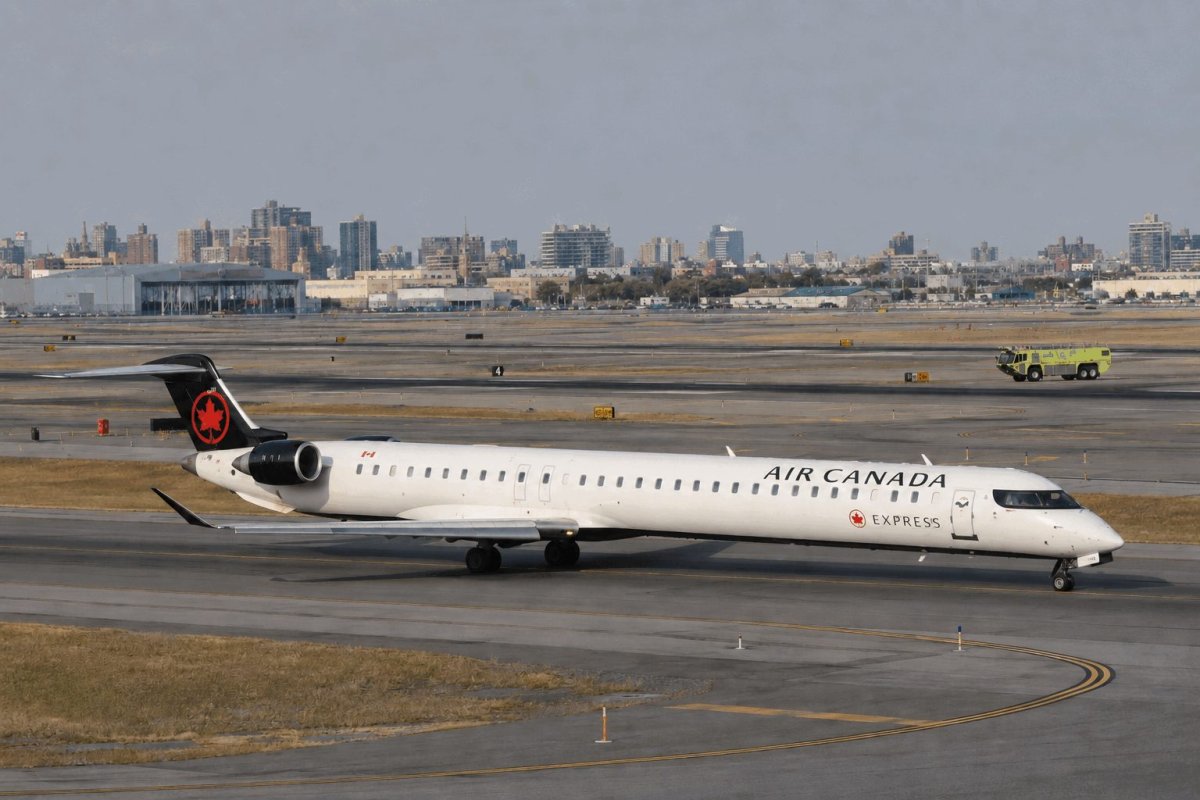
Air Canada's stock retreated on Friday, closing down 1.46% at C$27.64 on the Toronto Stock Exchange, as renewed regulatory scrutiny over a deadly runway collision at New York's LaGuardia Airport weighed on investor sentiment. The decline erased approximately C$115 million from the carrier's equity value, underscoring how safety-related headlines can quickly move the market for a major North American airline.
The U.S. Federal Aviation Administration (FAA) announced it is moving to dismiss two air traffic controllers who allegedly left their posts early on the night of March 22, just before an Air Canada Express regional jet struck an airport fire truck while landing. The aircraft, operated by Jazz Aviation, was carrying passengers and crew when the collision occurred, resulting in the deaths of two pilots and serious injuries to six others. Thirty-nine people were taken to hospitals.
According to Reuters, the FAA's enforcement action does not attribute fault to Air Canada itself. However, the decision has reignited public and investor focus on operational safety and resilience for a carrier with substantial U.S. exposure. Air Canada serves 50 U.S. airports and operates up to 382 daily transborder flights, making any disruption to its cross-border network a material concern.
Investigation Details Emerge
Preliminary findings from the investigation, as reported by the Associated Press, revealed that the fire truck involved in the collision was not equipped with a functioning transponder and had been mistakenly cleared to cross the runway. The National Transportation Safety Board (NTSB) is expected to release its final report next year, but the early details have already sparked questions about ground-handling protocols and air traffic control procedures.
Traffic at LaGuardia that night was unusually heavy. Controllers handled 70 flights between 10:00 p.m. and 11:37 p.m., compared with just 31 scheduled flights, according to Reuters. This surge in activity may have contributed to the conditions that led to the tragedy, though investigators have not yet determined a definitive cause.
Financial Context and Market Reaction
While the immediate share price reaction reflects investor unease, the airline's financial fundamentals paint a more complex picture. In the second quarter, Air Canada reported revenue of C$6.266 billion, but also recorded an operating loss of C$215 million, translating to a negative operating margin of 3.4%. This highlights persistent profitability challenges despite a robust revenue base.
Management has reaffirmed its full-year 2026 adjusted EBITDA forecast at C$2.9 billion to C$3.2 billion, a downward revision from the previous range of C$3.35 billion to C$3.75 billion. Projected free cash flow stands at C$200 million to C$500 million, suggesting a tighter-than-expected cash cushion for the remainder of the year.
Analyst Sentiment Remains Bullish
Despite the recent setback, Wall Street analysts remain largely optimistic about Air Canada's long-term prospects. According to Investing.com, nine analysts rate the stock as Buy, with only one Sell, and the average price target stands at C$34.89—about 26% above Friday's closing price. This suggests that many market participants view the current dip as a potential entry point, betting on the airline's ability to navigate regulatory and operational headwinds.
Air Canada's market capitalization is currently estimated at C$7.77 billion, which is notably smaller than the C$10 billion valuation implied by a recent minority investment in its Aeroplan loyalty program. This discrepancy may indicate that the market is undervaluing the airline's ancillary businesses, or that the core operations face more significant risks than previously assumed.
Broader Implications for the Airline Industry
The LaGuardia incident and the subsequent FAA action serve as a reminder of the heightened scrutiny facing the aviation sector. For airlines, safety lapses—whether real or perceived—can have immediate financial consequences, as evidenced by Air Canada's stock movement. For investors, the key takeaway is the importance of monitoring regulatory developments and operational metrics, as these can swiftly alter the risk-reward profile of airline stocks.
As the NTSB investigation continues and the FAA's enforcement process unfolds, Air Canada will likely remain in the spotlight. The airline has not publicly commented on the FAA's decision, but it has cooperated with investigators. In the meantime, the market will be watching for any further updates that could influence the stock's trajectory.
While Friday's decline was modest in percentage terms, it underscores the delicate balance between operational resilience and investor confidence. With a busy fall travel season ahead, Air Canada's ability to maintain safe and reliable operations will be critical to restoring and sustaining shareholder trust.