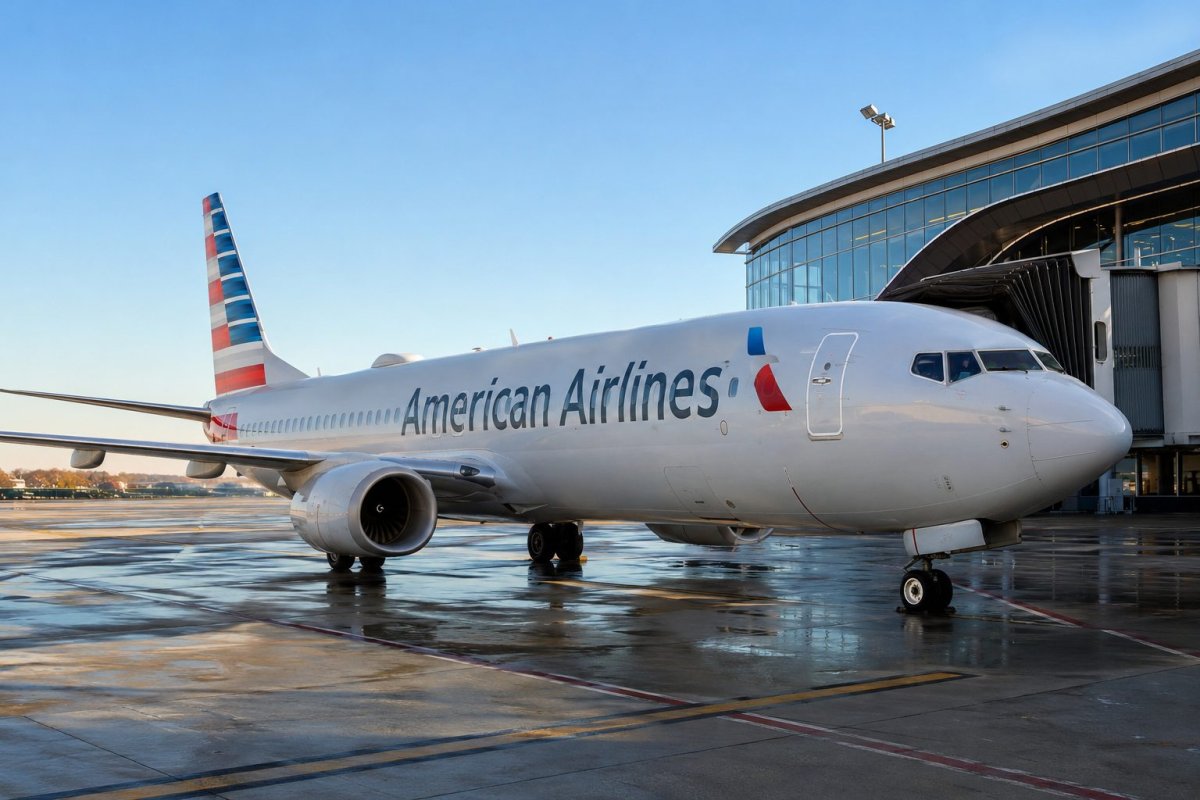
American Airlines Group Inc. (NASDAQ: AAL) saw its shares climb 1.9% on Tuesday, reaching $15.29, after one of its Boeing 737-800 aircraft made a safe emergency landing following a bird strike. The incident, involving Flight 1760 bound for Myrtle Beach, drew over 100,000 U.S. Google searches and highlighted the airline's operational resilience. All 172 passengers and crew were unharmed, and the Federal Aviation Administration has opened an investigation.
While the bird strike event captured public attention, the financial impact is minimal. The affected aircraft represents just 0.33% of American's 303-plane 737-800 fleet, and the airline's total mainline fleet comprises 1,013 aircraft. The direct cost of repairs or inspections is unlikely to move the needle for a company with a market capitalization of approximately $10.1 billion.
However, the real challenge for American Airlines lies in fuel costs. The company projects a nearly $6 billion year-over-year increase in fuel expenses for 2026. This figure is staggering when compared to the airline's market value. At Tuesday's close, the anticipated fuel headwind equates to about 59% of American's equity value, underscoring the severity of the cost pressure.
In the second quarter, American reported revenue of $16.7 billion, up 16.3% year-over-year, and adjusted net income of $99 million, or $0.15 per diluted share. Yet, fuel expenses soared by more than $2.2 billion, an 83% jump, outpacing adjusted net income by over 22 times. The company expects a further $1.7 billion increase in fuel costs in the third quarter alone.
CEO Robert Isom attributed the revenue growth to strong demand and the success of the company's commercial strategy, with premium passenger unit revenue up 13.4% and managed corporate revenue rising 26%. Higher ticket prices absorbed nearly half of the $2.2 billion fuel cost increase, but the pressure remains intense. American's full-year adjusted EPS outlook ranges from a loss of $0.65 to a profit of $0.65, with the midpoint at breakeven.
On Tuesday, airline stocks broadly outperformed the market. United Airlines (NASDAQ: UAL) rose 2.06%, Delta Air Lines (NYSE: DAL) gained 1.35%, and Southwest Airlines (NYSE: LUV) advanced 1.38%, while the S&P 500 slipped 0.32%. This sector strength suggests investors are cautiously optimistic about airlines' ability to manage fuel costs through pricing power.
Wall Street's view on American Airlines remains mixed. The average analyst rating is Hold, with a consensus price target of $19.03, implying a potential upside of 24.4% from Tuesday's close. However, the low end of the range, $12.50, suggests a possible 18.2% decline. Of 21 analysts, 47.6% rate the stock a Hold, 38.1% recommend Buy, and 9.5% say Sell.
Looking ahead, the market will closely watch jet fuel prices and fare trends. The FAA's investigation into the bird strike could reveal additional maintenance requirements, but none have been identified so far. For investors, the viral video of the safe landing is a positive brand moment, but the fundamental issue remains whether American's revenue growth can outpace the soaring cost of fuel, which now looms as large as the company's entire market value.