American Airlines Group Inc. (NASDAQ: AAL) saw its shares climb 1.6% to $13.74 during Friday trading, partially recovering from Thursday's 2.45% decline that dragged the stock down to $13.52. The uptick came amid a broader market rebound, but the airline's ambitious premium-cabin strategy presents a multi-year wait for investors seeking returns.
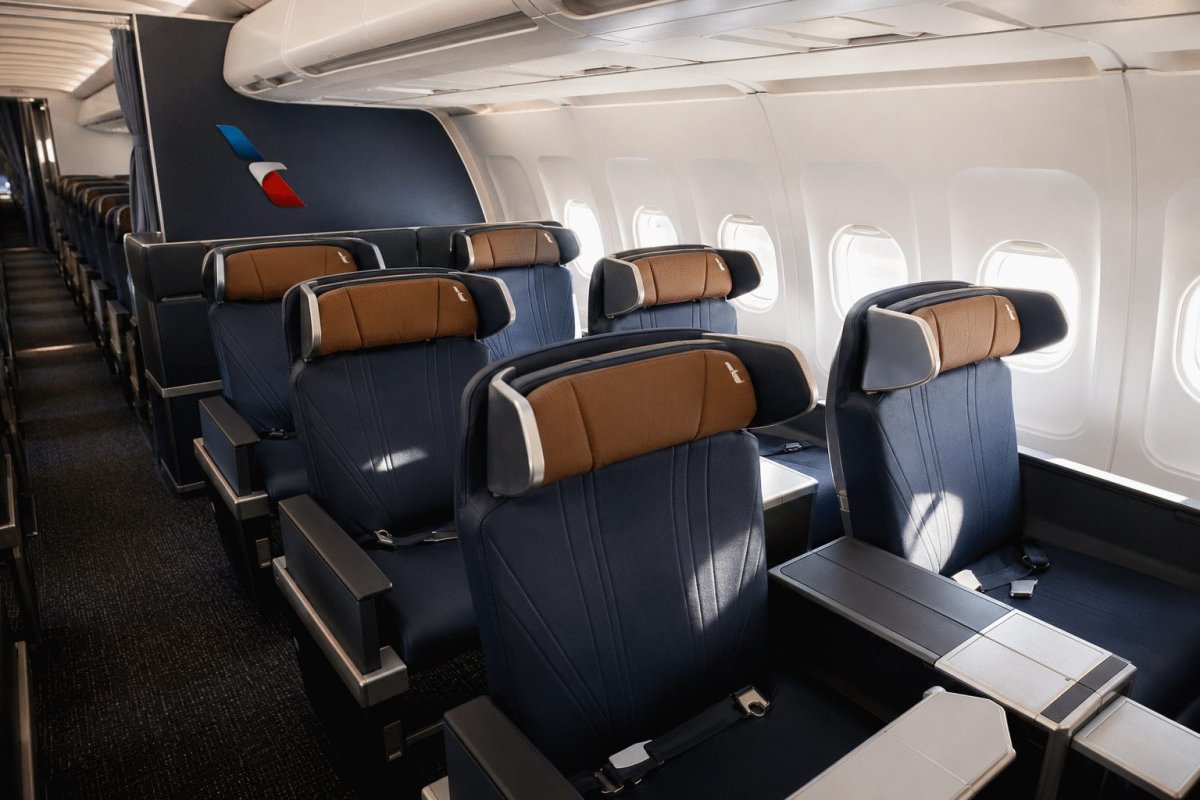
The Fort Worth-based carrier outlined plans to expand premium seating to roughly 40% of narrowbody capacity, up from the current 25%—a 60% increase in proportional terms. However, major cabin modifications are not slated to begin until 2028, with the full retrofit program targeting more than 800 aircraft equipped with seatback screens by the early 2030s. The company has not disclosed the total cost of this initiative.
Premium Revenue Momentum
Despite the long timeline, the shift toward premium seating is backed by strong recent performance. In the second quarter, premium passenger unit revenue surged 13.4% year-over-year, outpacing Main Cabin's 8.8% growth. Managed corporate revenue advanced 26%, marking the fifth consecutive quarter of double-digit gains. Premium passengers contributed nearly half of all ticket revenue during the period.
Chief Executive Robert Isom emphasized that "revenue growth was strong across all entities and cabins," reinforcing the rationale behind the premium push. Yet the strategy does little to address near-term headwinds, particularly fuel costs and the capital expenditure required for cabin upgrades.
Financial Snapshot and Guidance
American reported second-quarter revenue of $16.7 billion, a record high and a 16.3% increase from the prior year. Adjusted net income came in at $99 million, or $0.15 per diluted share, a thin margin amid a fuel expense surge of over $2.2 billion—an 83% jump. The company projects third-quarter revenue growth between 16% and 19%, with fuel guidance at approximately $3.75 per gallon.
For the full year, adjusted earnings are estimated to range from a loss of $0.65 to a profit of $0.65 per share, essentially a break-even scenario. This wide range underscores the uncertainty surrounding fuel prices and operational performance.
Analyst Divergence and Valuation
Wall Street remains split on American's prospects. The average price target stands at $19.03, implying a potential upside of 38.5% from Friday's close. Targets range from a bearish $10.30 to a bullish $25.00. Recent analyst actions show a mixed bag: UBS lowered its target to $18 from $21, while JPMorgan raised its rating to $24 from $22. Goldman Sachs maintains a sell rating with a $13 target, citing persistent cost pressures.
Market Context and Technicals
American shares remain 12.8% below their 50-day moving average and 26.9% off the 52-week high. The stock is also trading 1.2% under its 200-day average, reflecting the broader weakness in airline equities. Peer carriers Delta Air Lines (NYSE: DAL) and United Airlines (NASDAQ: UAL) also experienced declines on Thursday, closing at $81.06 and $111.71, respectively.
The company's liquidity position stands at $11.3 billion, which supports its investment program, but the extended timeline for cabin retrofits means investors must be patient. Free onboard Wi-Fi has already been rolled out to a large portion of the narrowbody fleet, with Starlink installations scheduled to begin in 2027. Seatback screens and expanded cabin modifications follow in 2028.
Key Risks Ahead
Several risks could derail the premium strategy. Fuel prices may remain above forecasts, squeezing margins. Retrofit costs could strain cash flow, and any delays in aircraft deliveries would postpone revenue benefits. Additionally, if the economy slows, premium demand could soften, undermining the entire thesis.
For now, American's stock offers a relatively low-cost entry point for investors betting on improved premium economics. But with fuel costs driving short-term results and cabin upgrades years away, the payoff remains a distant prospect.