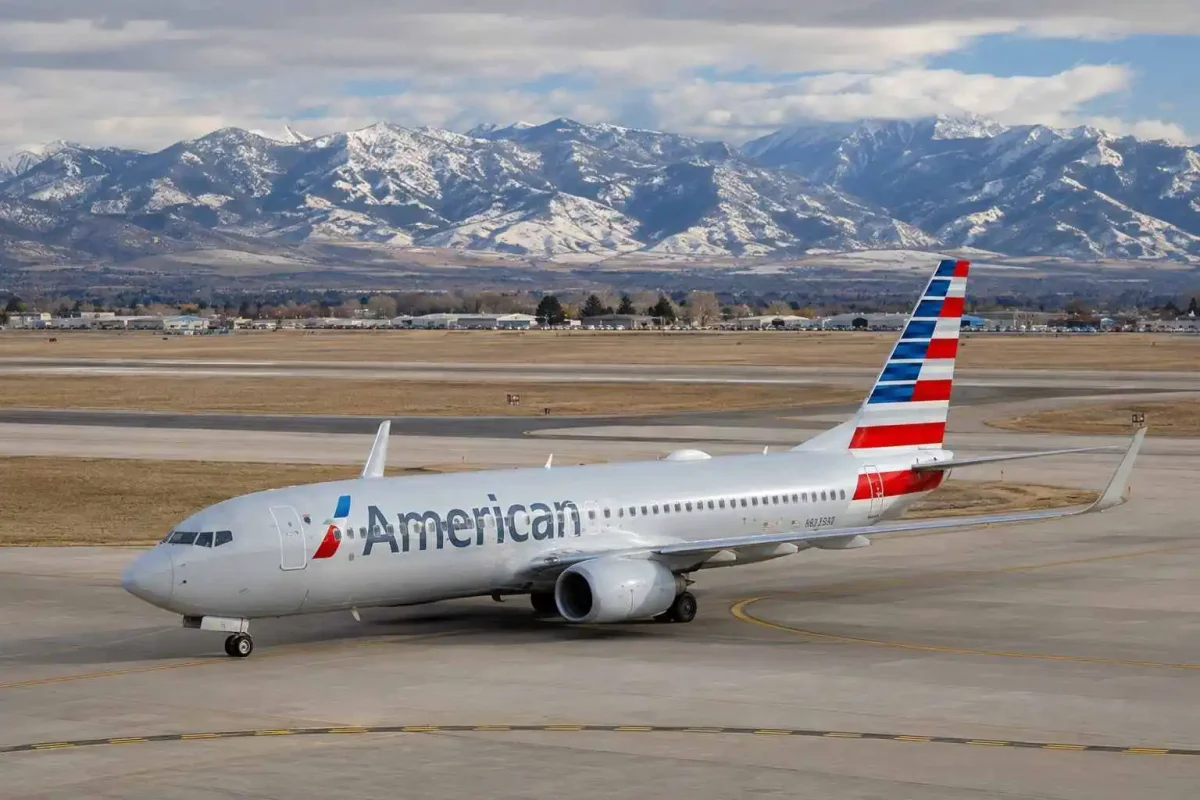
American Airlines Group (AAL) shares were trading at $16.14 ahead of Wednesday's regular session on the Nasdaq, just above the average sell-side target of $16.10. The stock saw a relatively muted move on Tuesday compared to its peers, with United Airlines (UAL) surging 2.42%, Southwest Airlines (LUV) gaining 1.73%, and Delta Air Lines (DAL) rising 0.93%. American Airlines closed up just 0.37% on the day.
UBS raised its price target on American Airlines to $21 from $18 on Tuesday, maintaining a Buy rating. The firm now projects third-quarter earnings per share (EPS) of $0.54, well above the Street estimate of a $0.12 loss. For the full year 2026, UBS expects EPS of $0.84, beating the consensus of just a penny. However, the average analyst target on Google Finance stands at $16.10, leaving little room for upside unless analysts revise their forecasts upward. Other analysts have mixed views: Morgan Stanley has a $24 target, while Wells Fargo sits at $12 and Jefferies at $15.
The key catalyst for American Airlines lies in whether lower jet fuel prices translate into upgraded earnings guidance. On June 17, U.S. jet fuel spot prices fell to $2.85 per gallon, down sharply from $4.88 in early April, according to Reuters. Jefferies estimates that every 5% decline from its near $3-a-gallon 2027 fuel assumption could boost EPS by 10%-15% for Delta, Southwest, and United, but nearly 50% for American Airlines, given its higher sensitivity to fuel costs.
Melius Research analyst Conor Cunningham highlighted "the ability to hold price" as critical. United Airlines CEO Scott Kirby stated that the carrier is "on a path" to cover fuel costs by year-end. Meanwhile, American Airlines CEO Robert Isom reaffirmed the company's forecast at the Bernstein investor conference in May, noting that the airline is "not making any changes" despite $4 billion to $5 billion in higher fuel costs this year. Isom pointed to strong demand, with the carrier about 80% booked for the second quarter, corporate travel up 13% year over year, and a goal to "repeat the profitability" posted last year.
American Airlines' own guidance reflects the uncertainty. In April, it projected jet fuel costs near $4.00 per gallon for the second quarter and guided for 2026 adjusted EPS in a wide range from a $0.40 loss to a $1.10 profit. The airline also expects second-quarter revenue to rise 13.5% to 16.5% and available seat miles to increase 4% to 6%.
Valuation presents a mixed picture. American Airlines has a market capitalization of approximately $10.7 billion, far below Delta's $57.0 billion and United's $39.5 billion. However, its trailing price-to-earnings (P/E) ratio stands at around 52, compared to 12.7 for Delta and 10.9 for United. This high P/E reflects the market's pricing of hopes for an earnings recovery from a low base, rather than steady profitability.
Risks remain if fuel prices rebound, fares decline, or capacity becomes excessive. Unlike Delta and United, American Airlines has less earnings flexibility. The stock trades near analyst expectations, and investors are looking for stronger guidance, not just lower fuel costs, to drive further upside.