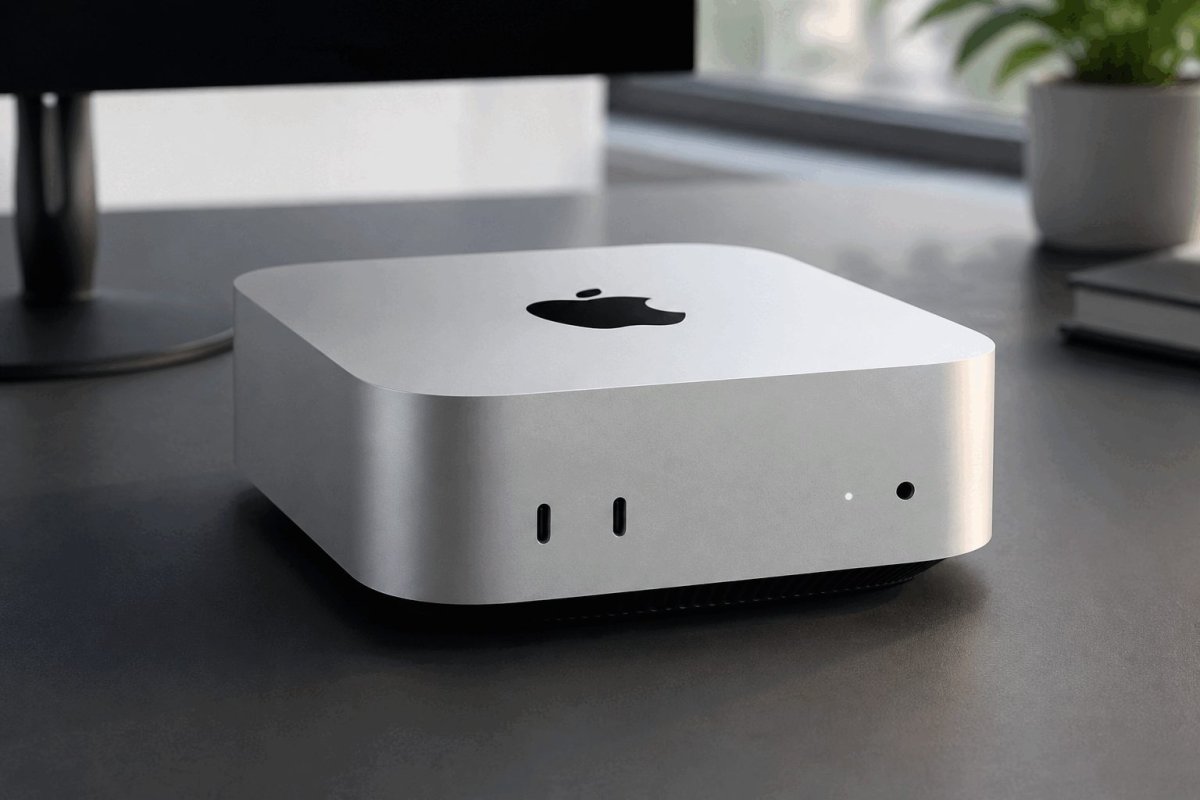
Apple Inc. (NASDAQ: AAPL) has introduced its latest Mac mini lineup with a notable price adjustment, setting the base M6 model at $899. This represents a 12.5% increase over the previous M4 version's $799 starting price. The company is positioning the new device as a key offering for developers working on local AI applications, testing whether demand remains robust despite higher component costs.
The price hike comes as Apple's Mac division continues to deliver impressive growth. In the June quarter, Mac revenue reached $10.35 billion, a 29% year-over-year increase compared to $8.05 billion in the same period last year. Macs now account for 9.5% of Apple's total revenue of $109.42 billion, up from 8.6% a year earlier.
The M6 Mac mini features Apple's first 2-nanometer Mac processor, promising up to 40% faster multithreaded performance compared to the M4, and quadruple the speed on AI tasks. Storage speeds have doubled, and 2.5-gigabit Ethernet is now standard. The Pro model, starting at $1,699 with the M5 Pro chip, includes Thunderbolt 5 and up to 20 GPU cores, marking a 6.3% price increase over its predecessor.
For Apple, the price increase is strategically significant, though its impact on overall revenue is modest. Selling one million base units at the higher price would generate an additional $100 million, representing just 0.09% of Apple's most recent quarterly sales. However, the move is aimed at protecting margins, which have been under pressure from rising component costs.
The Mac mini's popularity has been a pleasant surprise for Apple. Earlier this year, CEO Tim Cook noted that demand for the Mac mini and Mac Studio had exceeded expectations, describing both as "amazing platforms for AI and agentic tools." However, supply constraints have persisted, and resolving the imbalance may take several months.
Investor reaction has been muted, with Apple shares rising just 0.1% to $310.65 in pre-market trading. The stock's trailing price-to-earnings ratio of 35.6 suggests that growth expectations are already priced in. Analyst opinions remain mixed: of 31 analysts covering Apple, 16 rate it a Buy, 11 recommend Hold, and 4 advise Sell. The consensus price target stands at $336.63, offering an 8.5% premium to Monday's closing price.
Key analyst ratings include Wamsi Mohan of Bank of America (Buy, target $380), Timm Schulze-Melander of Rothschild & Co Redburn (Buy, target $400), Brandon Nispel of KeyBanc (Sell, no target), Edison Lee of Jefferies (Sell, target $263.66), and Jim Hin Kwong Au of DBS (Hold, target $300).
Looking ahead, investors will be monitoring order volumes and delivery schedules. Extended wait times would signal strong demand but could limit near-term sales, while shorter wait times might boost revenue but suggest the scarcity-driven premium is fading. Apple does not disclose unit sales for the Mac mini, adding uncertainty around product mix and component costs.
The June quarter's 50.1% group margin was aided by approximately two percentage points from tariff refunds, but the Mac's growth trajectory remains a bright spot. As Apple continues to expand its AI-focused product lineup, the Mac mini's price increase will be a key test of whether the company can maintain its momentum in the fastest-growing hardware segment.