Archer Aviation Inc. (NYSE: ACHR) saw its stock price climb sharply on Monday, closing at $5.55, a gain of 9.25% from the previous session. The stock traded between $5.32 and $5.62 during the day and was unchanged in early premarket trading on Tuesday. The move occurred without any new company-specific announcements, suggesting the rally was tied to broader market dynamics.
Global equities rallied on Monday after a preliminary agreement between the U.S. and Iran helped push oil prices lower and eased inflation concerns. The S&P 500 advanced 1.7%, the Nasdaq Composite surged 3.1%, and the Russell 2000 index of smaller companies added 0.7%. For high-growth, unprofitable companies like Archer, such a risk-on environment often boosts investor appetite for long-dated growth stories, as lower inflation expectations reduce the discount applied to future cash flows.
FAA Certification Progress Remains Central
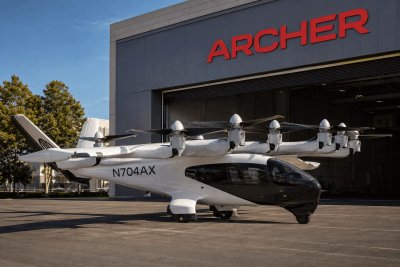
Investors continue to focus on Archer's progress through the Federal Aviation Administration's (FAA) Type Certification process. The company became the first eVTOL (electric vertical takeoff and landing) company to complete Phase 3 of the four-phase certification process for its Midnight aircraft and is now advancing through Phase 4, which involves formal testing and analysis to demonstrate compliance with safety standards. Founder and CEO Adam Goldstein described the first quarter as "another banner quarter for Archer," citing record certification progress.
The next major catalyst will be visible progress toward initial U.S. operations under the White House's eVTOL Integration Pilot Program (eIPP). Any delays in Phase 4 or setbacks in the eIPP could weigh on the stock, while successful milestones would likely provide a significant boost.
Financial Challenges and Cash Burn
Despite the certification momentum, Archer's financial picture remains challenging. The company generated only $1.6 million in revenue during the first quarter while posting a net loss of $217.7 million. Cash, cash equivalents, and short-term investments fell by $188.8 million from the fourth quarter to $1.7759 billion, primarily due to operating cash use and capital spending. Management has guided for a second-quarter adjusted EBITDA loss of between $170 million and $200 million.
Analysts have highlighted that the company's valuation hinges on successful certification and early operations. A recent analysis by MoneyWeek pointed to certification risk, production scaling, demand uncertainty, and cash burn as key factors behind the stock's valuation. The company's market capitalization stood at approximately $4.22 billion, according to Google Finance, with a wide 52-week range of $4.80 to $14.62, underscoring the stock's high volatility.
Outlook and Risks
Looking ahead, the market will closely watch Archer's second-quarter results, particularly whether spending remains within guidance. The bull case rests on the company achieving certification and launching initial operations, which could unlock substantial long-term value. However, the bear case is equally clear: continued cash burn, potential dilution, execution delays, and any reversal in speculative growth stock sentiment could push the stock lower.
With no company-specific news driving Monday's rally, the stock's direction in the near term will likely depend on broader market conditions and tangible progress on FAA milestones. For now, Archer remains a high-risk, high-reward play in the emerging air taxi sector.