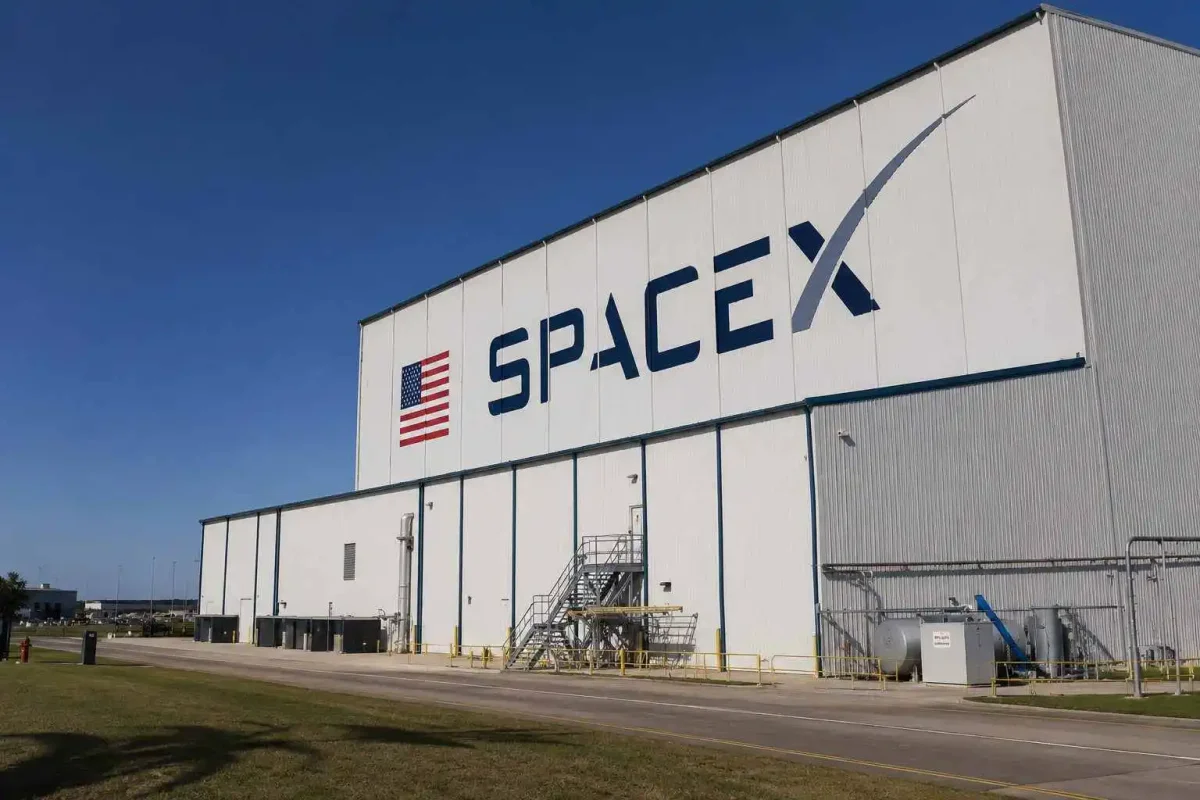
Space Exploration Technologies Corp. (NASDAQ:SPCX) begins Friday's premarket session following the announcement of a new $1.6 billion contract from the U.S. Space Force. Despite the headline-grabbing award, the company's stock closed Thursday down 0.3% at $112.20, reversing an earlier advance that saw shares peak at $118.93. The market's muted reaction underscores a growing divergence between SpaceX's government launch business and its higher-growth ventures in satellite internet and artificial intelligence.
The contract, awarded under the Space Force's Phase 3 Lane 1 initiative, covers 18 Falcon 9 missions to be conducted from Vandenberg Space Force Base, with all launches slated for completion by the end of 2027. The deal implies an average value of approximately $88.9 million per launch, a figure consistent with historical Falcon 9 pricing. Col. Eric Zarybnisky, the Space Force's acting acquisition executive for space access, emphasized the strategic importance of the missions, stating that "sensing and targeting of airborne objects from space ... are vital to the defense of our nation."
While the contract represents a substantial addition to SpaceX's government order book, its financial impact on the company's overall valuation remains limited. The $1.6 billion order accounts for roughly 39.2% of the projected 2025 revenue for SpaceX's Space segment, which includes launch services. However, when measured against the company's estimated $1.48 trillion market capitalization, the deal represents just 0.11% of total equity value. This disparity highlights the market's belief that future growth will be driven primarily by Starlink and AI initiatives rather than traditional rocket launches.
The investor sentiment is reflected in recent stock performance. Since its June IPO price of $135.00, shares have fallen 16.9%, and the stock now trades 50.3% below its post-IPO intraday high of $225.64. The stock remains just 4.9% above the record low of $107.01 set on Tuesday. Thursday's brief rebound, fueled by the contract news, failed to sustain momentum, suggesting that the market is looking for more substantial catalysts.
SpaceX's financials reveal the shifting dynamics within its business segments. In 2025, the Connectivity segment, which encompasses Starlink, generated $11.387 billion in revenue and $7.168 billion in adjusted EBITDA, representing a 62.9% margin. In contrast, the Space segment posted $4.086 billion in revenue with $653 million in adjusted EBITDA, a 16.0% margin. The AI segment, while generating $3.201 billion in revenue, reported a negative adjusted EBITDA of -$1.237 billion, reflecting significant investment in capital expenditures that totaled $12.727 billion—61% of the company's total capex.
These figures explain why a new Falcon contract, while operationally significant, fails to move the needle on valuation. Connectivity now accounts for 61% of total revenue, and its high-margin, cash-generative business model is what investors are betting on. Meanwhile, the AI segment, though loss-making, represents the company's future growth potential, albeit with heavy capital requirements.
Operationally, SpaceX continues to execute flawlessly. The company successfully launched the classified NROL-95 mission early Thursday, with the Falcon 9 booster completing a flawless return landing in Florida. This reliability stands in contrast to competitors facing challenges: United Launch Alliance, a joint venture between Boeing (NYSE:BA) and Lockheed Martin (NYSE:LMT), is investigating a booster-separation issue with its Vulcan rocket, while Blue Origin's New Glenn remains grounded through at least year-end.
Wall Street remains cautiously optimistic. Colin Canfield, an analyst at Cantor Fitzgerald, maintains a Buy rating with a price target of $246, implying a 119% upside from Thursday's close. Canfield noted that greater clarity on AI profit margins and capital-raising strategies could "significantly alleviate some of these concerns."
Investors will get their next opportunity to assess SpaceX's trajectory when the company reports second-quarter earnings on Tuesday, August 4, after the market close. Management is scheduled to host a webcast at 4:30 p.m. EDT. Key questions will revolve around Starlink's cash flow generation and its ability to fund AI investments while maintaining balance sheet strength. Risks include the potential sale of nearly 911.5 million shares held by employees and early investors, Starship deployment timelines, AI-related expenditures, and reliance on government contracts.
As the market digests the implications of the Space Force deal, the focus remains on SpaceX's ability to transform its high-flying ambitions into sustainable profitability. The contract, while a testament to the company's launch capabilities, is a small piece of a much larger puzzle that investors are eager to see solved.