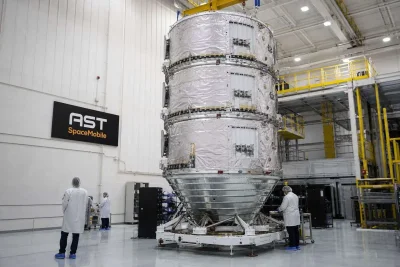
AST SpaceMobile (NASDAQ: ASTS) is set to report its first-quarter 2026 earnings on Monday, May 11, after the market close. The report comes on the heels of a major regulatory win—a U.S. license to deploy up to 248 satellites for direct-to-phone connectivity—and a significant operational setback: the loss of its BlueBird 7 satellite due to a Blue Origin launch failure. Investors will be closely watching the earnings call at 5:00 p.m. ET for updates on the company's rollout timeline and financial health.
Financial Expectations and Market Performance
According to consensus estimates from MarketBeat, AST SpaceMobile is expected to report a first-quarter loss of $0.23 per share on revenue of $39.01 million. The stock closed at $75.05 on Friday, May 8, but was trading at $76.75 in premarket activity on Monday morning, suggesting cautious optimism. The company's shares have surged approximately 6,000% from earlier levels, a rally that Bloomberg has noted is driven more by online buzz and execution headlines than by current revenue fundamentals.
FCC License and Regulatory Milestones
On the regulatory front, AST SpaceMobile received approval from the Federal Communications Commission (FCC) to launch and operate its low-Earth orbit satellite fleet. The license permits the company to provide Supplemental Coverage from Space (SCS), using spectrum in the 700 MHz and 800 MHz bands coordinated with partners Verizon, AT&T, and FirstNet. CEO Abel Avellan called the approval an "important step" that brings the company "closer to commercial service." The FCC order imposes strict deadlines: half of the approved satellites must be launched and operational by August 2, 2030, with the remainder by August 2, 2033. Failure to meet these milestones could result in the loss of authorization for undeployed satellites and forfeiture of a surety bond.
Blue Origin Launch Failure and Operational Impact
AST SpaceMobile's progress was dealt a blow when Blue Origin's New Glenn rocket failed to deliver the BlueBird 7 satellite to its intended orbit. The satellite separated and powered up, but the upper stage's insufficient thrust left it in an orbit too low to sustain operations, leading to its eventual deorbit. AST has stated that insurance will cover the loss. Meanwhile, BlueBirds 8 through 10 are nearing completion and are expected to ship within approximately 30 days, with production continuing through BlueBird 32. Blue Origin is now under an FAA-mandated mishap investigation, grounding New Glenn until the agency approves the final report and any corrective actions.
Analyst Sentiment and Competitive Landscape
Wall Street analysts are divided on AST's prospects. Clear Street's Greg Pendy reiterated a Buy rating with a $115 price target following the FCC news. BofA Securities and UBS maintain Neutral ratings with targets of $100 and $85, respectively, while Scotiabank holds a Sector Underperform stance. Seeking Alpha contributor Chris Lau, an individual investor and economist, rates the stock a "Strong Buy," projecting 2026 as an "inflection year" with revenue at least doubling from 2025 levels. The competitive landscape is intensifying: SpaceX's Starlink has already secured the first FCC SCS approval for its T-Mobile partnership, and Amazon recently announced an $11.57 billion deal to acquire Globalstar, adding direct-to-device capabilities to its Project Kuiper satellite system.
Key Risks and Investor Focus
The company faces significant risks, including the challenge of scaling satellite production, launching, and activation. While a single launch failure is not a dealbreaker, a series of delays could push commercial service further out, increase cash burn, and make its lofty valuation harder to justify. TipRanks highlights the bear case: delays, steep costs, and a wide gap between current revenue and long-term goals. Monday's earnings call is expected to zero in on satellite shipment counts, launch speed—including potential shifts to alternative providers—timelines for partner-backed service, and the cash burn required to reach that point.
Recent Insider Activity
One source of potential selling pressure has subsided. According to an SEC filing, Rakuten Mobile, Hiroshi Mikitani, and Rakuten Group have completed a trading plan, selling shares between April 27 and May 5. Their combined stake in AST now stands at 15.5 million shares, representing 5.3% of the company's Class A stock.